Search results for tag #OpenSource
![[?]](https://media.mstdn.social/accounts/avatars/109/287/431/436/273/223/original/550d8d6162cf1a22.png)
Age verification exemptions for open source operating systems feel like Phyrric victories
On the Windows side of the age verification question, Microsoft is obviously following trends among lawmakers the world over.
To address this, Windows is introducing a new platform capability: the Windows Age API.
This API brings age awareness beyo
![[?]](https://media.hachyderm.io/accounts/avatars/109/286/457/397/908/712/original/551e432e842f2079.jpeg)
There's a lot of folks complaining (rightfully) about the money being thrown toward Omarchy while other FOSS projects are struggling for funds.
I'm not a tech billionaire or millionaire (thousandaire, maybe?) but all this reminds me I could do better at donating to things I use myself. So I'm going to throw some money at two projects I use, and try to remember to keep doing that more regularly. I humbly suggest other folks do the same. It'd be great to see a few FOSS projects report a big bump in donations as a protest against DHH.
A lot is being said about DHH's politics and the silliness of throwing money at what amounts to a pile of configuration scripts -- but there's something else at play here: it is an us-against-them play by a minority of wealthy folks who like keeping other people divided.
FOSS isn't about that: open source became mighty because of its community. If we lose that, we lose everything. A handful of people with too much money have managed to funnel something like $13 million into Omarchy for the next few years. What can millions of people do? Let's see.
![[?]](https://pxscdn.com/cache/avatars/789980589548961657/avatar_4v14.jpg)
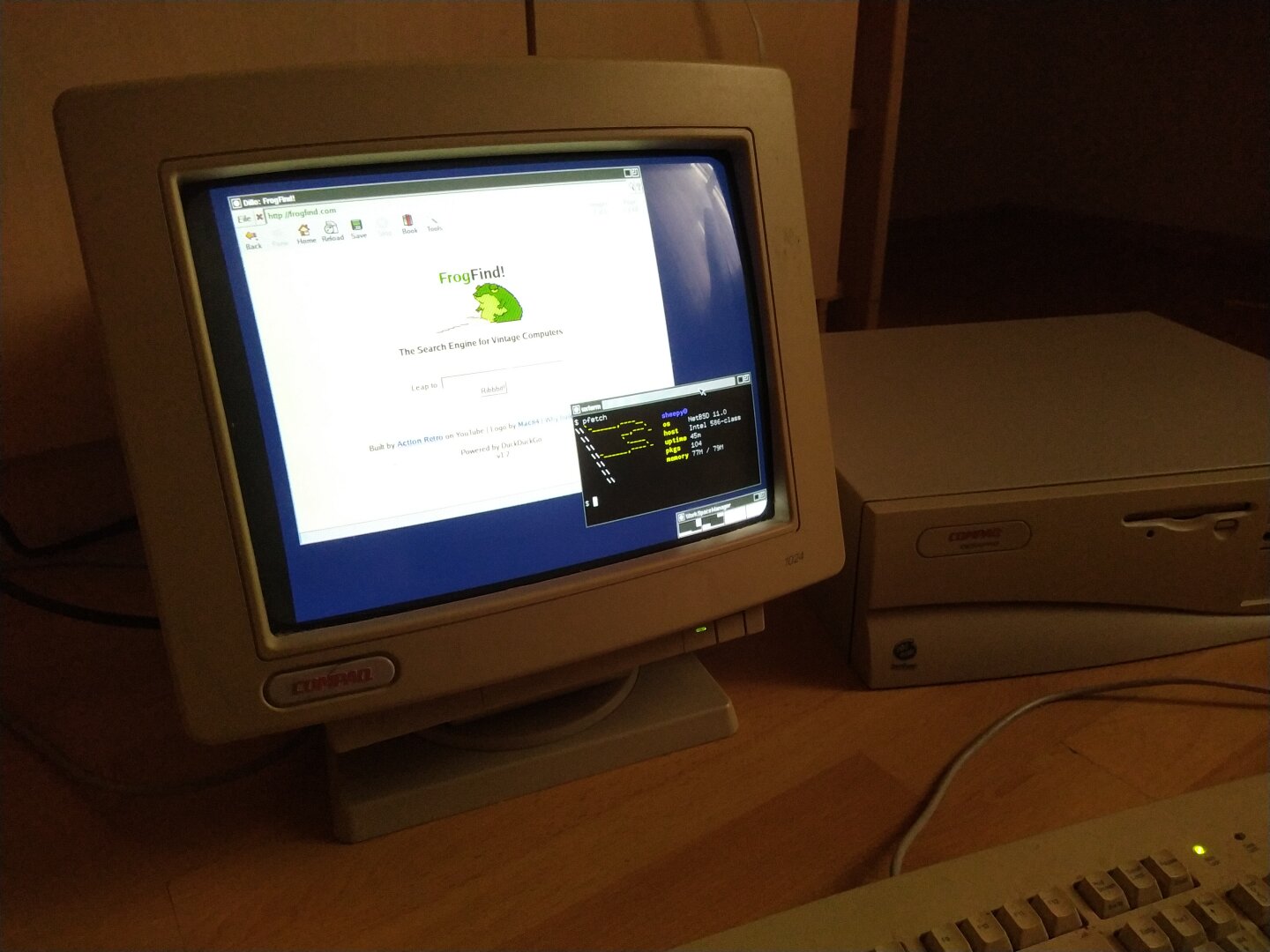
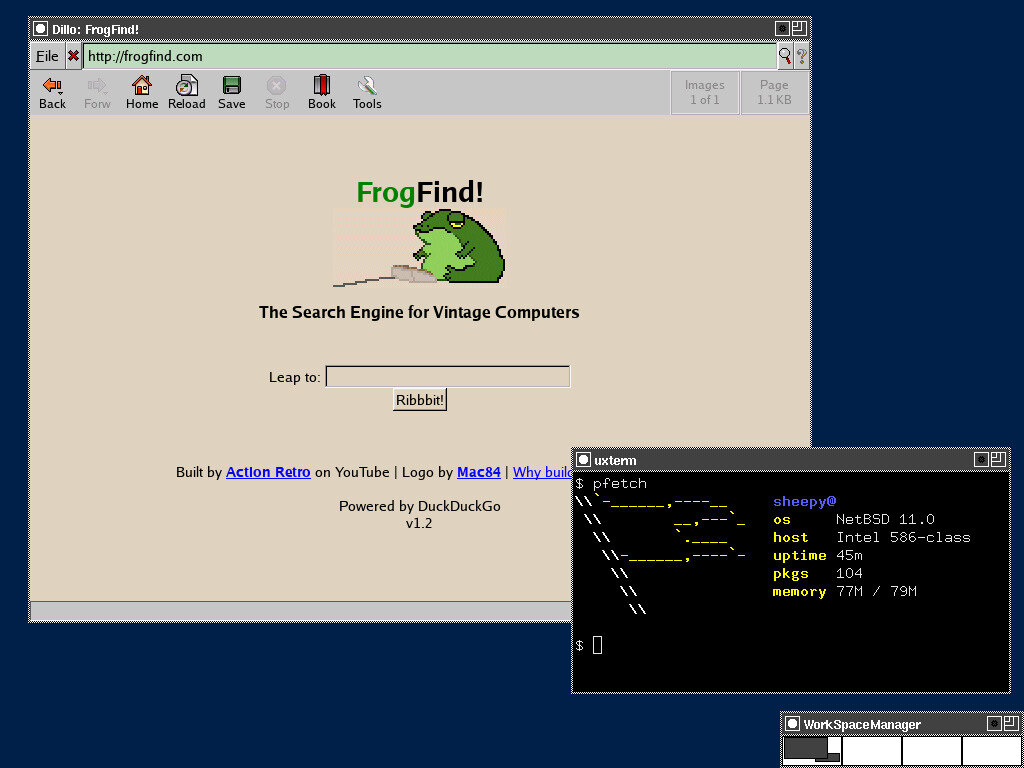
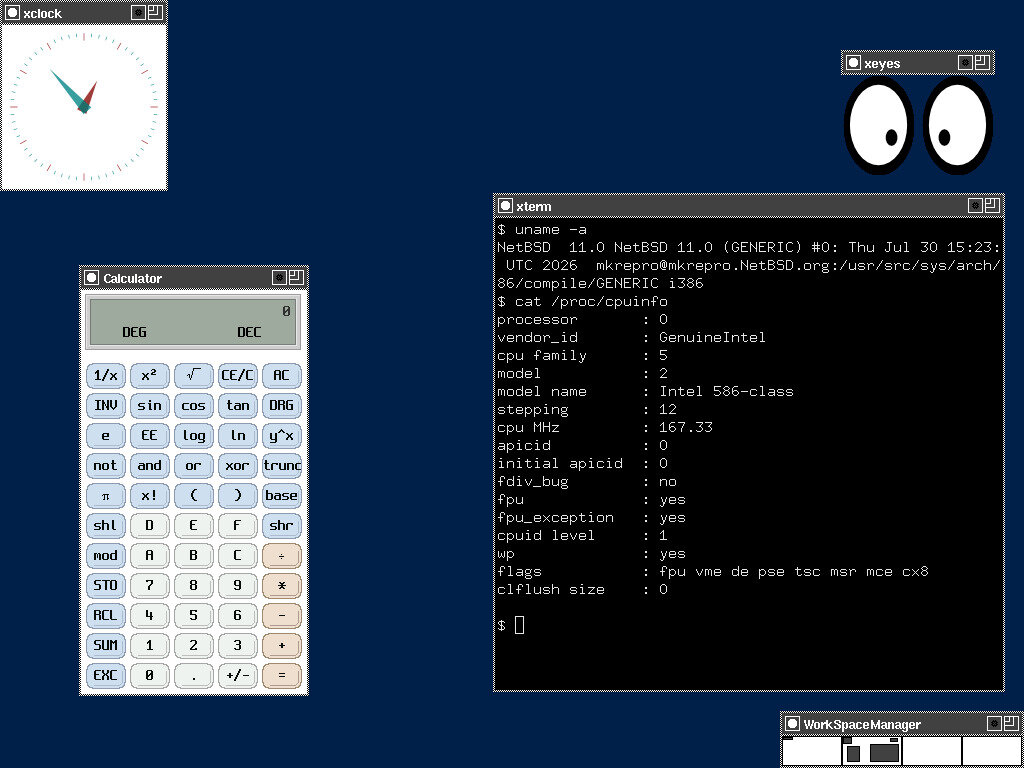
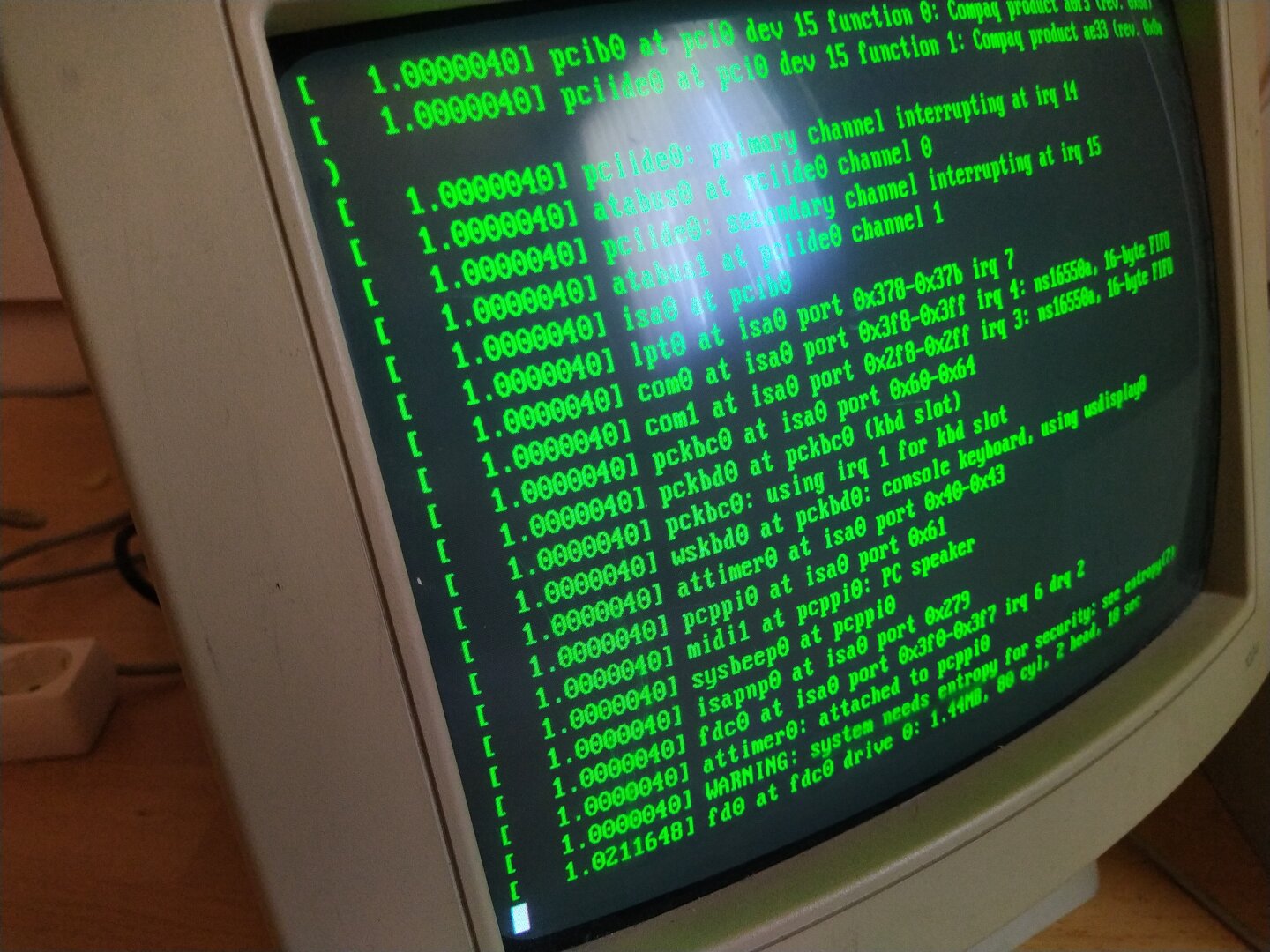
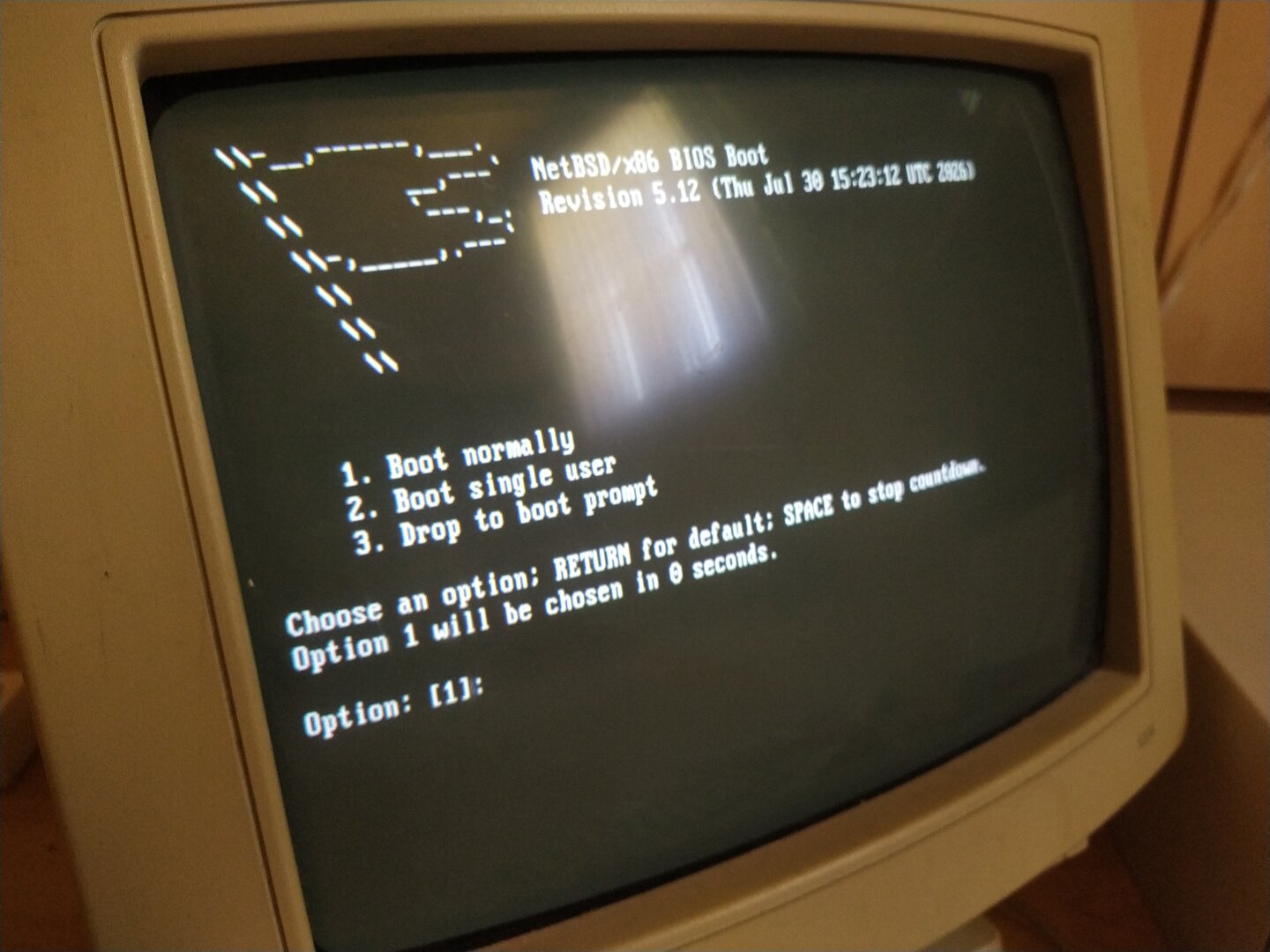
I wanted to find out how far I could push a computer that is almost 30 years old. What started as a simple experiment eventually turned into a full graphical desktop with NetBSD 11.0 i386, Xorg and CTWM, a web browser, games, gnuplot and even a C++20 implementation of ELIZA.
The first problem was Dillo on the Pentium 1. It crashed with a Bus error. My first suspect was FLTK, since Dillo depends on it. But FLTK turned out to be innocent!
I wondered whether the precompiled pkgsrc packages required a newer CPU.
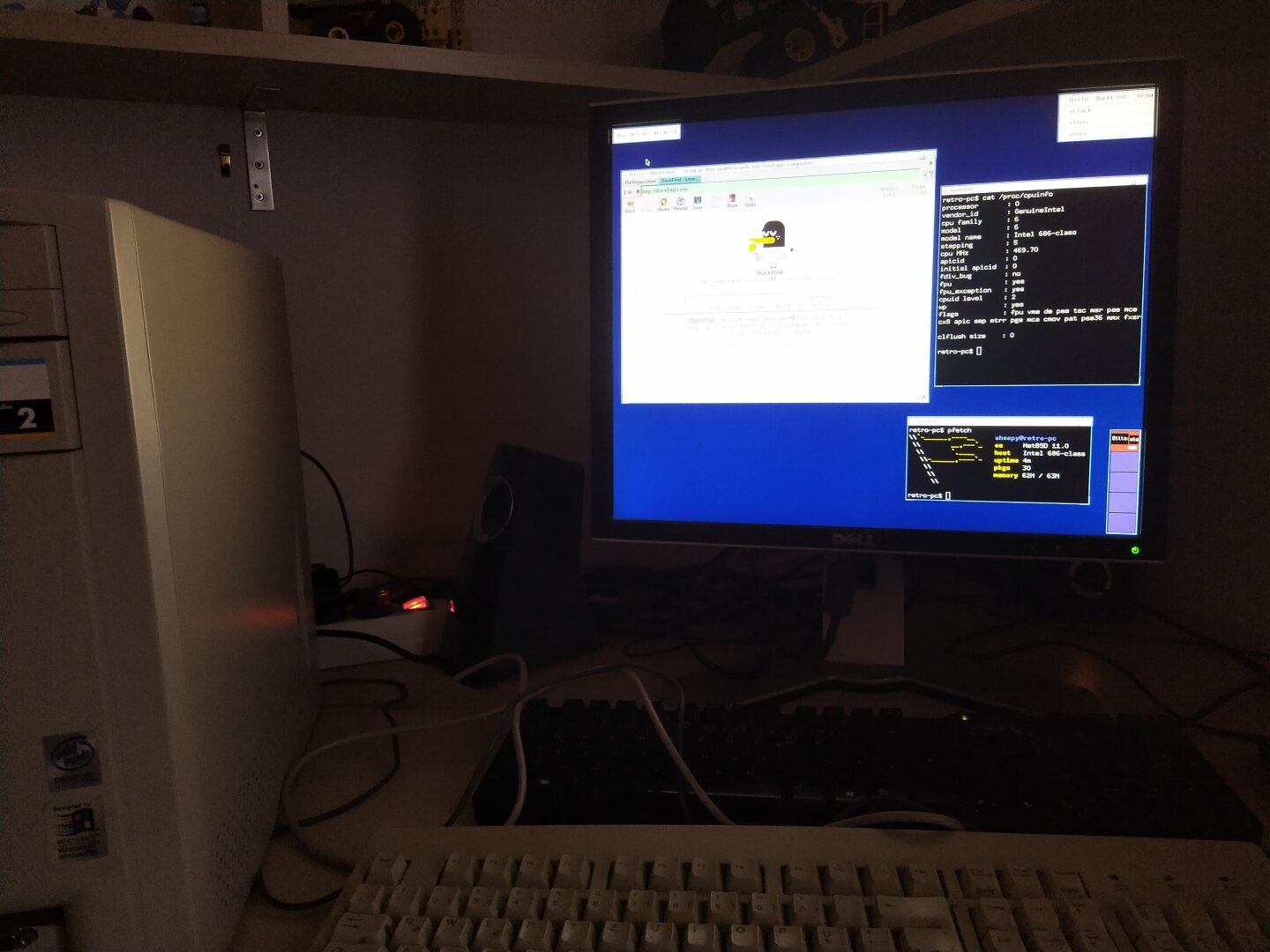
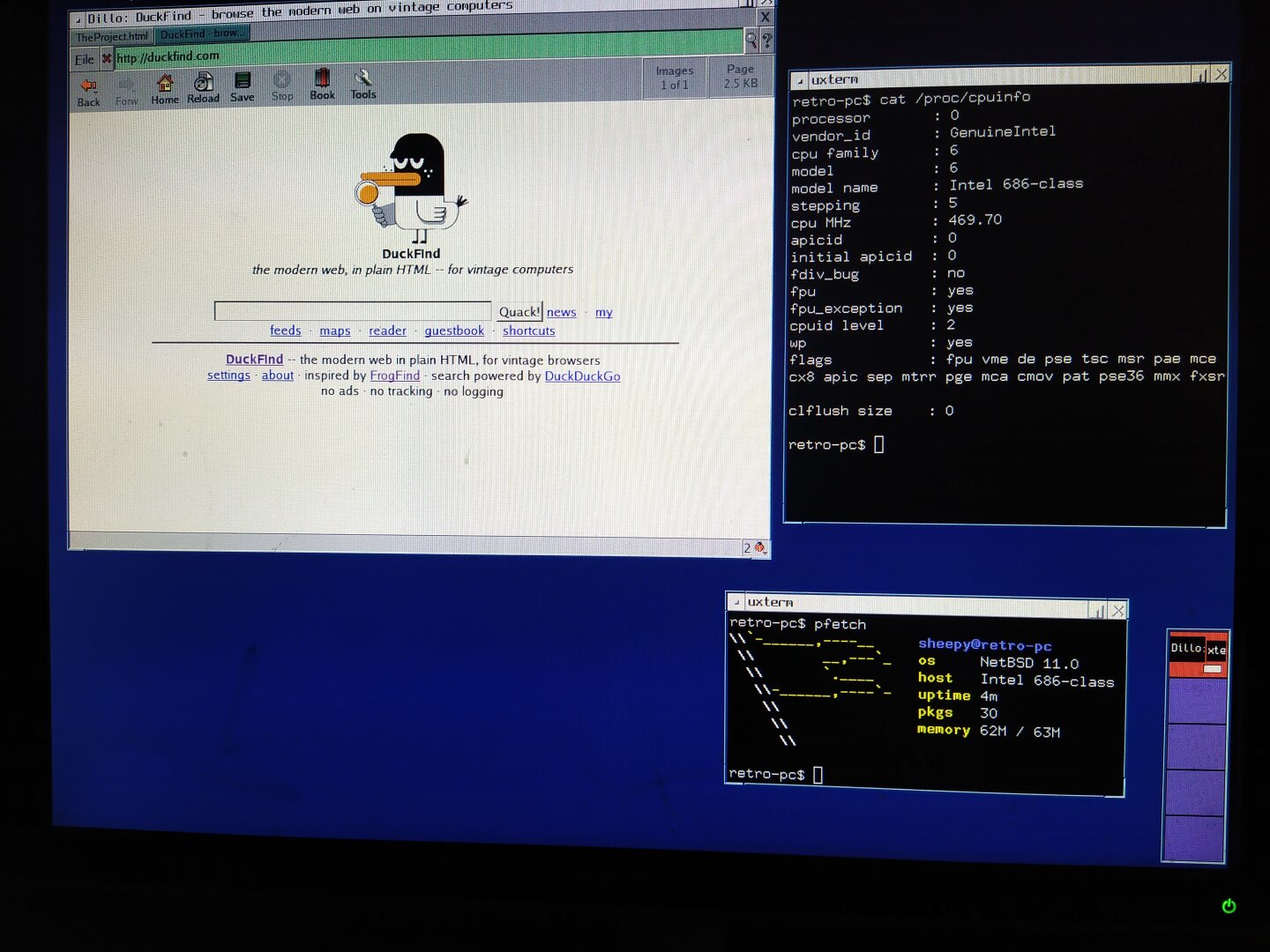
So I got another old machine to test that theory: a Celeron 466 MHz with 64 MB of RAM. Its CD drive doesn't work, so I installed NetBSD 11.0 i386 from a USB stick, using PLOP booted from a floppy.
And Dillo didn't work there either D:
I checked the ELF headers and went through the dependencies, finding that pkg had installed some packages incompletely. Some files were missing, while some ELF files were truncated or corrupted.
After reinstalling the affected packages, Dillo worked on the Celeron. That showed the CPU wasn't the problem.
I went back to the Pentium 1 and reinstalled the affected packages there too. Dillo and gnuplot started working.
The Celeron became more interesting because it only has 64 MB of RAM. Tiny Core Linux was too heavy, while NetBSD runs with Xorg, CTWM and Dillo D:
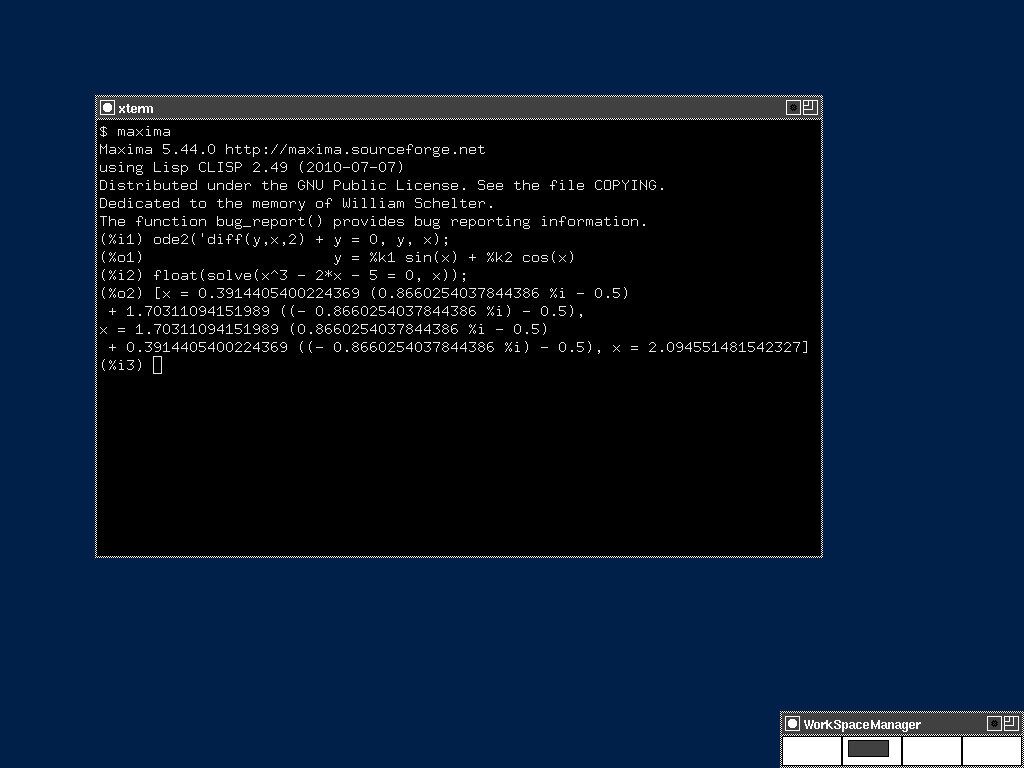
And now Maxima is running on the Pentium 1 too, solving differential equations. I even tested it with a harmonic oscillator D:
All good things must come to an end. But these machines are still running and there's no reason they have to stop being useful just because they're almost 30 years old 💜
#RetroComputing #RetroPC #Pentium1 #Pentium166 #Celeron #NetBSD #NetBSD11 #BSD #i386 #CTWM #OpenSource #FOSS #FreeSoftware #VintageComputing #OldComputers #ComputerHistory #Unix #RetroTechnology #RetroHardware #TechNostalgia #ClassicComputing #RetroTech #LowRAM
![[?]](https://social.vmbrasseur.com/system/accounts/avatars/109/378/027/687/527/359/original/bffbcf28765c56dd.png)
We've had more visa applications denied this year than for any previous ROSCon Global. The event is in Canada.
Dear geopolitics,
You're making life difficult for my #OpenSource community. Knock it the hell off.
No love,
me
![[?]](https://m.f-h.co/cosocial-ca/accounts/avatars/109/493/705/899/503/027/original/95358751ba041317.jpg)
Do Open Source and Open Internet organisations reflect your values with respect to AI?
#EvanPoll #poll #ai #opensource #openweb
| Yes: | 16 |
| Yes, but...: | 44 |
| No, but...: | 39 |
| No: | 37 |
Closed
![[?]](https://cdn.masto.host/mastodonie/accounts/avatars/109/259/655/985/685/404/original/95f8a64be125650b.jpg)
#Fairphone and phone OS knowers! Can you help a pleb?
Now that @GrapheneOS is drinking the slop-aid, am I safe to use @e_mydata / @murena on a de-googled Fairphone?
Between the fash-bros and the slop-bros, I'm really starting to panic that I'm left with ever decreasing options here..
(This is the phone I'm considering: https://www.fairphone.com/the-fairphone-gen-6-e-operating-system?utm_source=mastodon
![[?]](https://files.mastodon.social/accounts/avatars/000/033/231/original/06101f6861148350.jpg)
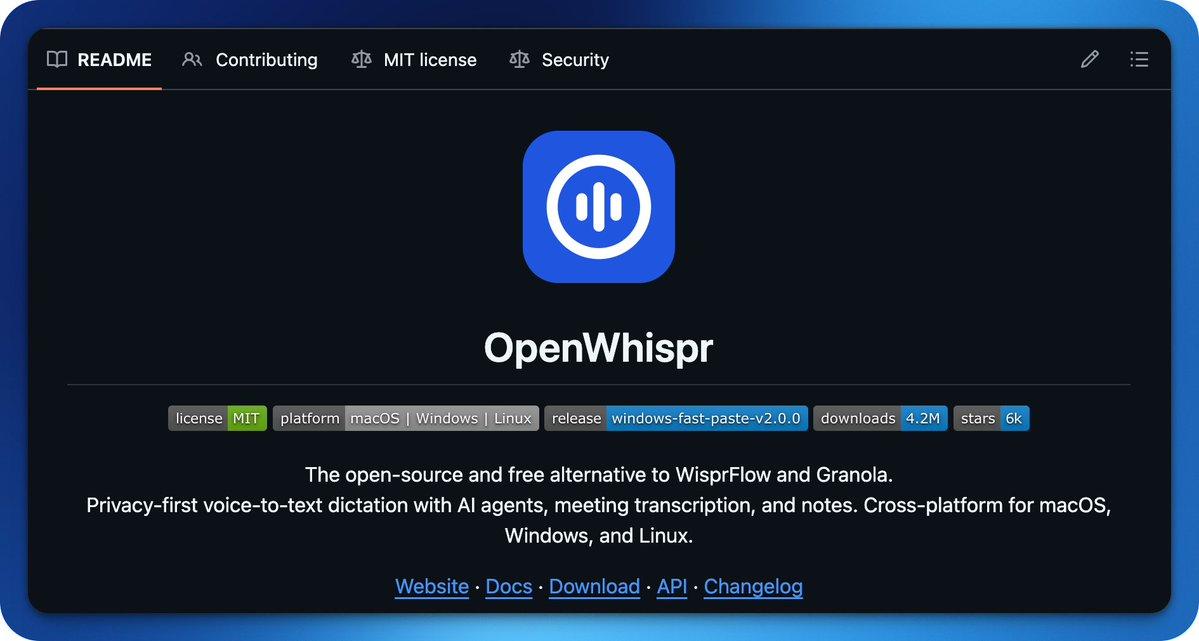
OpenWhispr : alternative open source et gratuite à WisprFlow, dictée vocale et transcription de réunions. Transcription locale via Whisper ou NVIDIA Parakeet, audio qui ne quitte jamais la machine, diarisation des locuteurs en local. ⬇️
https://github.com/herotools/open-whispr
#SelfHosted #OpenSource #FOSS #Linux
📬 Ma veille dev, chaque vendredi par email → https://l.camilleroux.com/sig-wki
Alt...
OpenWhispr est une application open-source de dictée vocale en texte, alternative gratuite à WispFlow et Granola, offrant une transcription respectueuse de la vie privée sur macOS, Windows et Linux. L'application utilise des modèles d'IA locaux ou cloud pour convertir la parole en texte avec support des agents IA, transcription de réunions et prise de notes.
![[?]](https://files.mastodon.social/accounts/avatars/111/228/343/080/661/940/original/c3720e26cb4e4a8b.png)
FreeBSD 14.5-RELEASE is now available!
As the sixth release of the stable/14 branch, FreeBSD 14.5 focuses primarily on maintenance, including bug fixes, driver updates, and updated versions of externally maintained software.
For new systems, users are encouraged to deploy FreeBSD 15.1.
Explore the release notes and learn more: https://www.freebsd.org/releases/14.5R/announce/
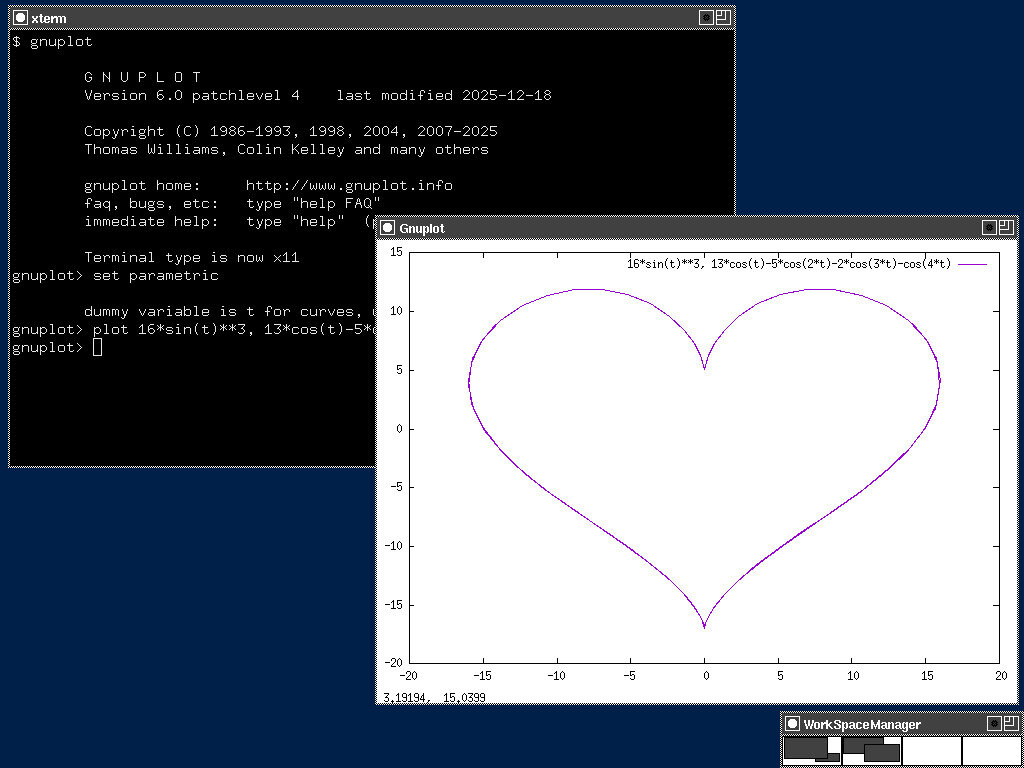
The experiment of squeezing as much Unix as possible into almost 30-year-old hardware is slowly taking shape!
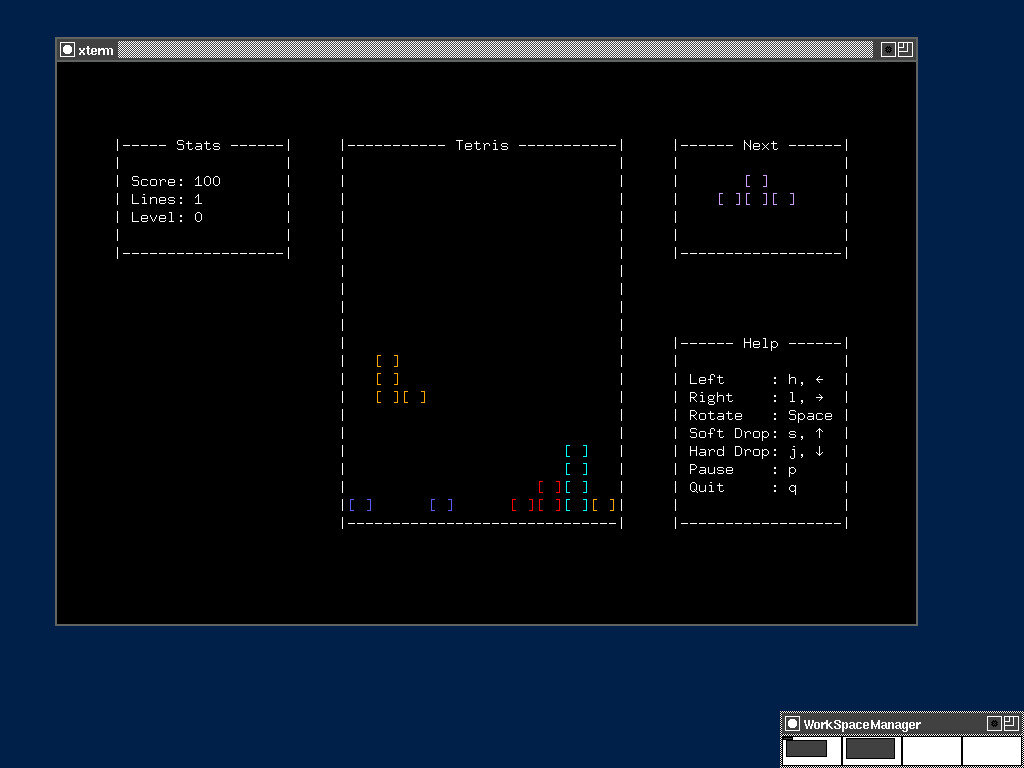
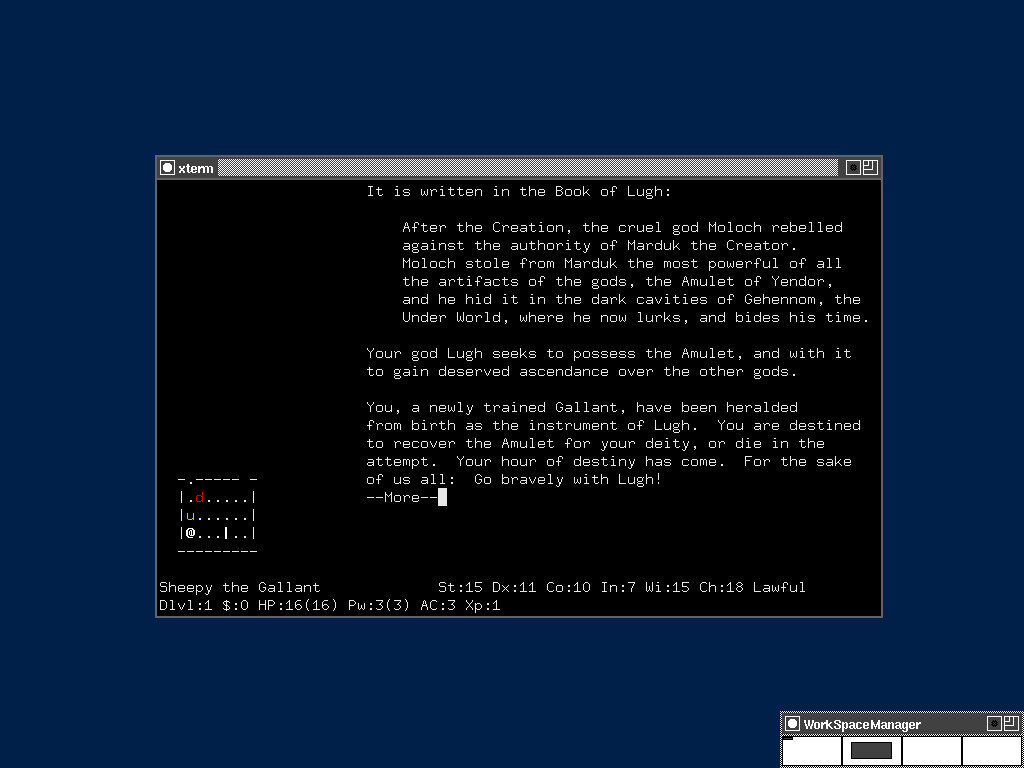
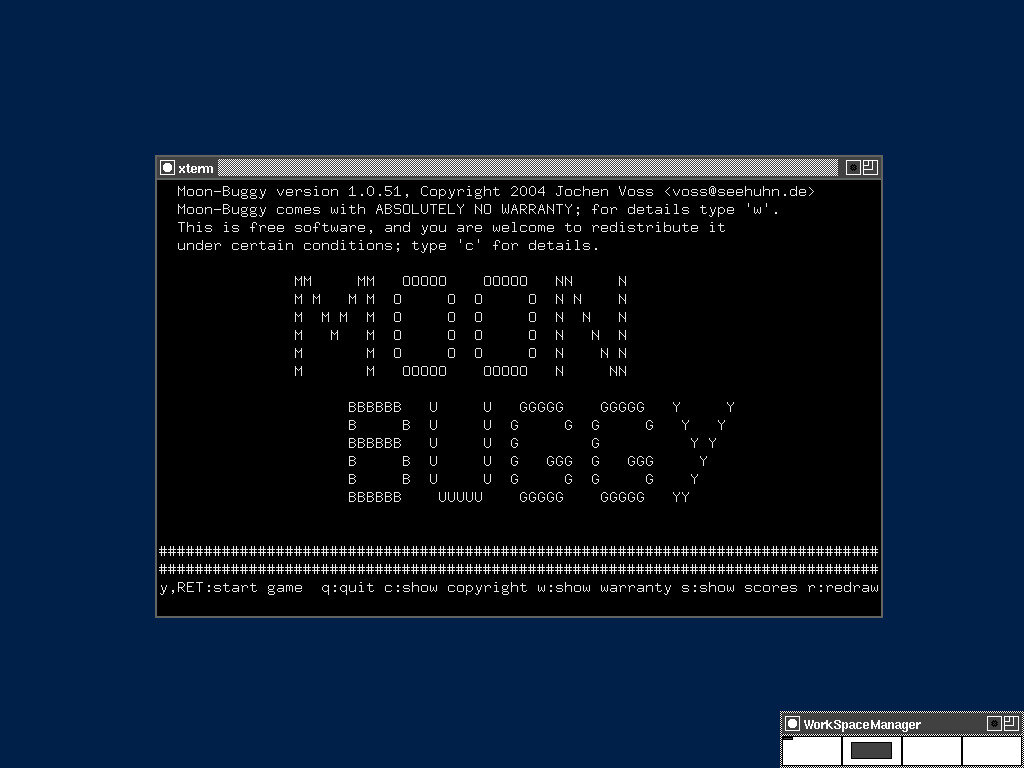
Today, the Pentium 1 became a gaming machine: Tetris-TUI, the roguelike classic NetHack and Moon-Buggy are all running. nInvaders, however, showed that C does not automatically mean fast: The game renders through ncurses to the terminal and apparently creates enough overhead that the Pentium 1 manages roughly one frame every few seconds. Even on a real TTY it was completely unplayable D:
There has also been some CTWM ricing! I now have a menu for launching programs without a terminal, windows can be resized, there is a close button and I can quit the window manager without switching to another TTY and killing the X server. And yes: this is real X.Org, not XVesa or anything like that!
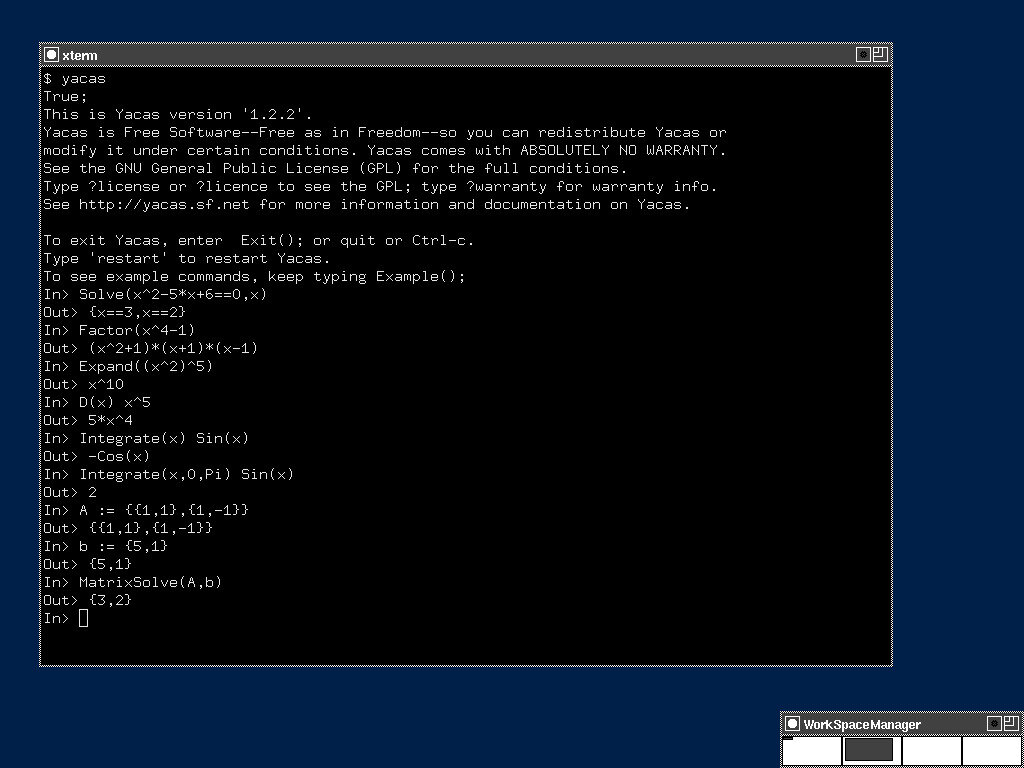
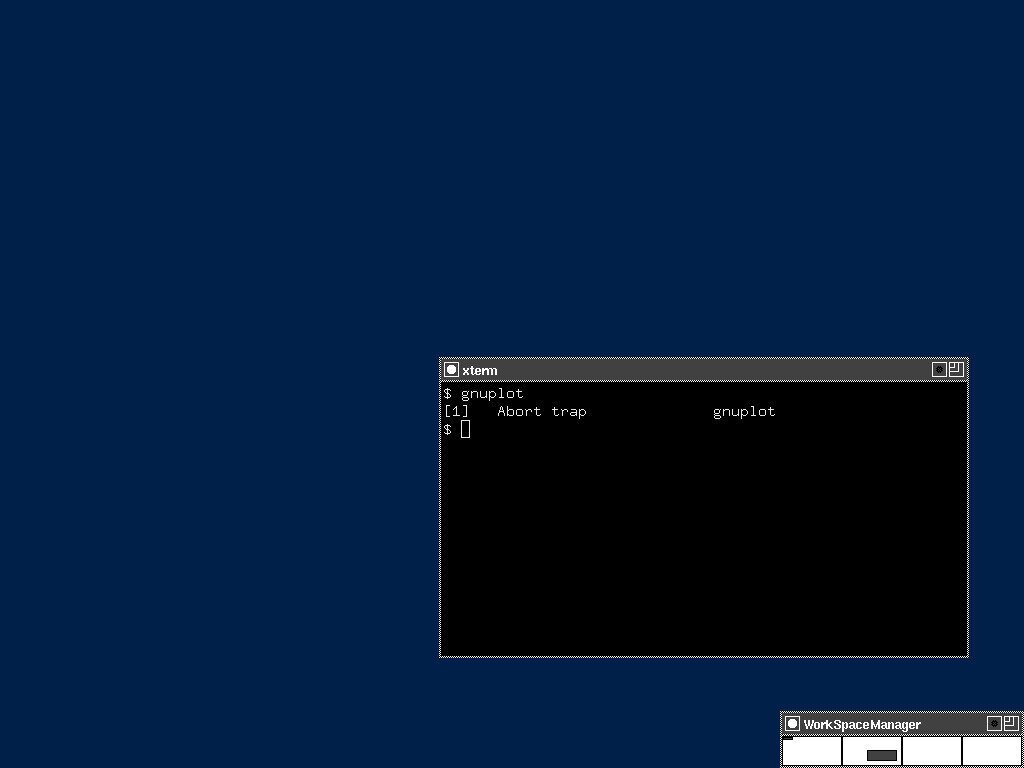
After getting a proper CAS with Yacas, I also wanted Gnuplot on the platform. Unfortunately, the precompiled package was built for a CPU from this millennium and uses instructions my Pentium 1 simply does not support D: So I guess I will be compiling things myself more often in the future, using a build VM on my Linux machine with appropriate flags like -march=pentium or -mcpu=pentium.
The machine is slowly turning into a surprisingly usable little Unix desktop that you could actually still get some work done on, if you really have no life xD
Fun fact: Early Pentium 1 CPUs had the infamous FDIV bug. Intel offered lifetime replacements back then. Henner Thomsen from the Stay Forever Podcast actually tried this in 2023 and after some back and forth, received a new, bug-free Pentium 1
#RetroComputing #ShareYourDesktop #unixporn #mydesktop #RetroPC #Pentium1 #Pentium166 #NetBSD #NetBSD11 #BSD #i386 #CTWM #XServer #Xorg #Unix #UnixDesktop #TerminalGames #Yacas #Gnuplot #CAS #OpenSource #FOSS #FreeSoftware #VintageComputing #OldComputers #ComputerHistory #RetroTechnology #RetroHardware #ClassicComputing #RetroTech
LibreOffice 26.8 dépasse le million de téléchargements en une semaine, probablement grâce à sa position sans IA générative par défaut : exécution contrôlée par l'utilisateur, zéro télémétrie, aucune dépendance à un vendeur unique. ⬇️
https://manualdousuario.net/en/libreoffice-download-record-no-ai/
#SelfHosted #OpenSource #FOSS #Linux
📬 Ma veille dev, chaque vendredi par email → https://l.camilleroux.com/sig-N9g
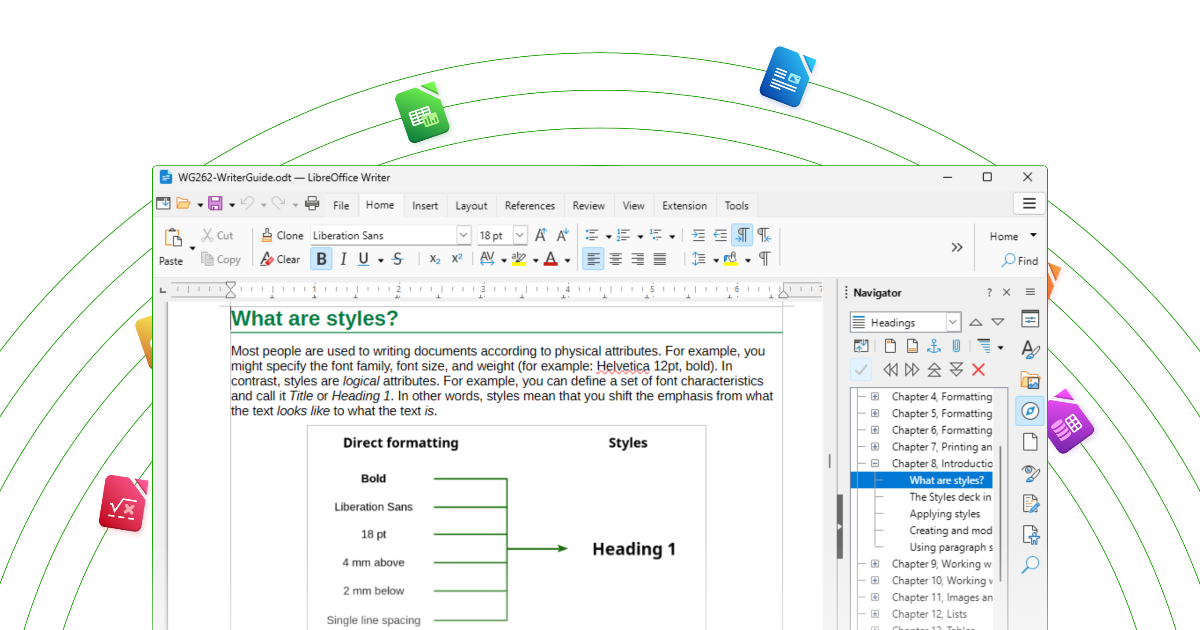
Alt...
Capture d'écran de LibreOffice Writer montrant un document expliquant les styles de formatage. L'interface affiche un diagramme comparant le formatage direct et les styles, avec un panneau de navigation sur le côté listant les chapitres du document.
 boosted
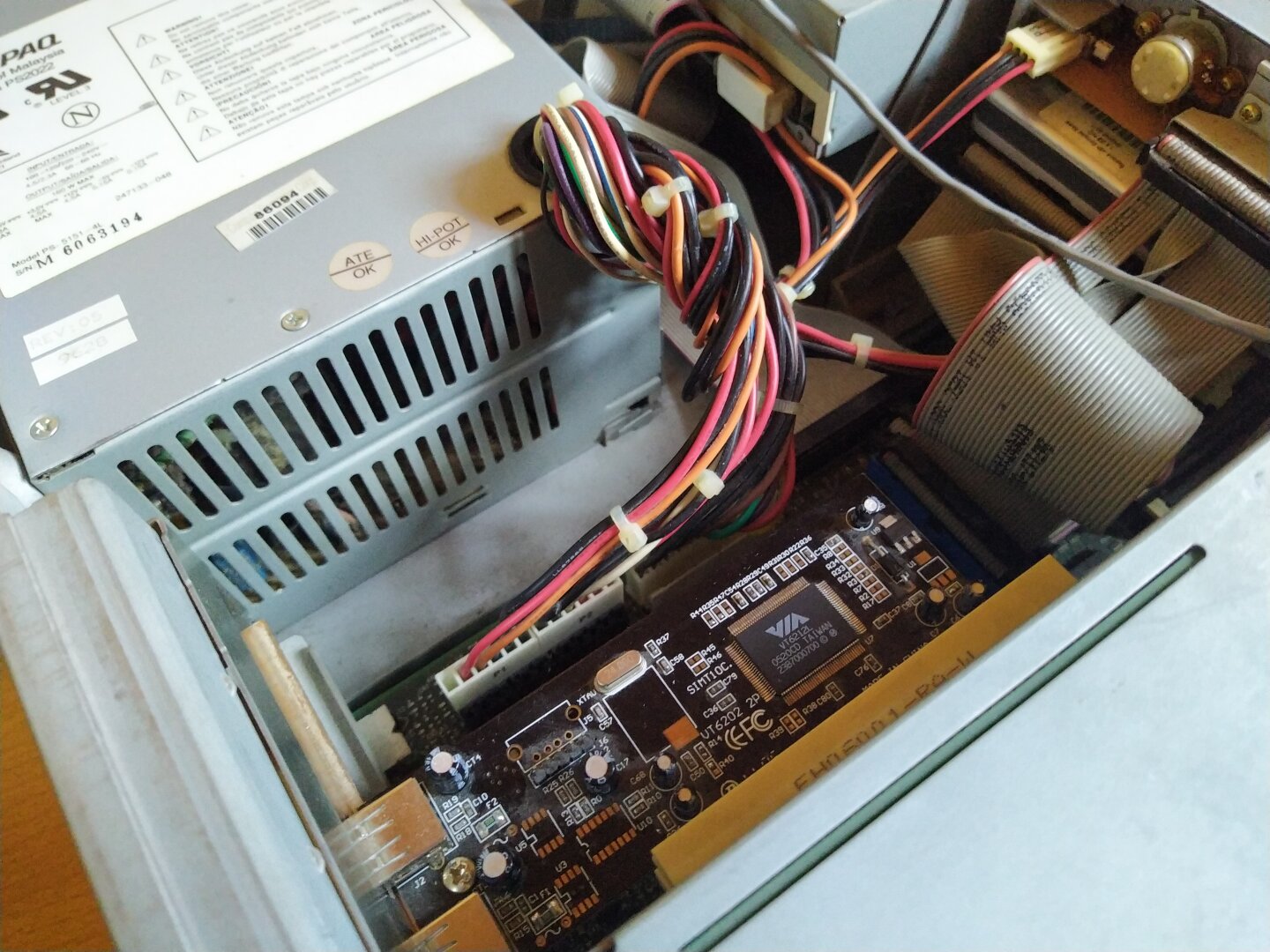
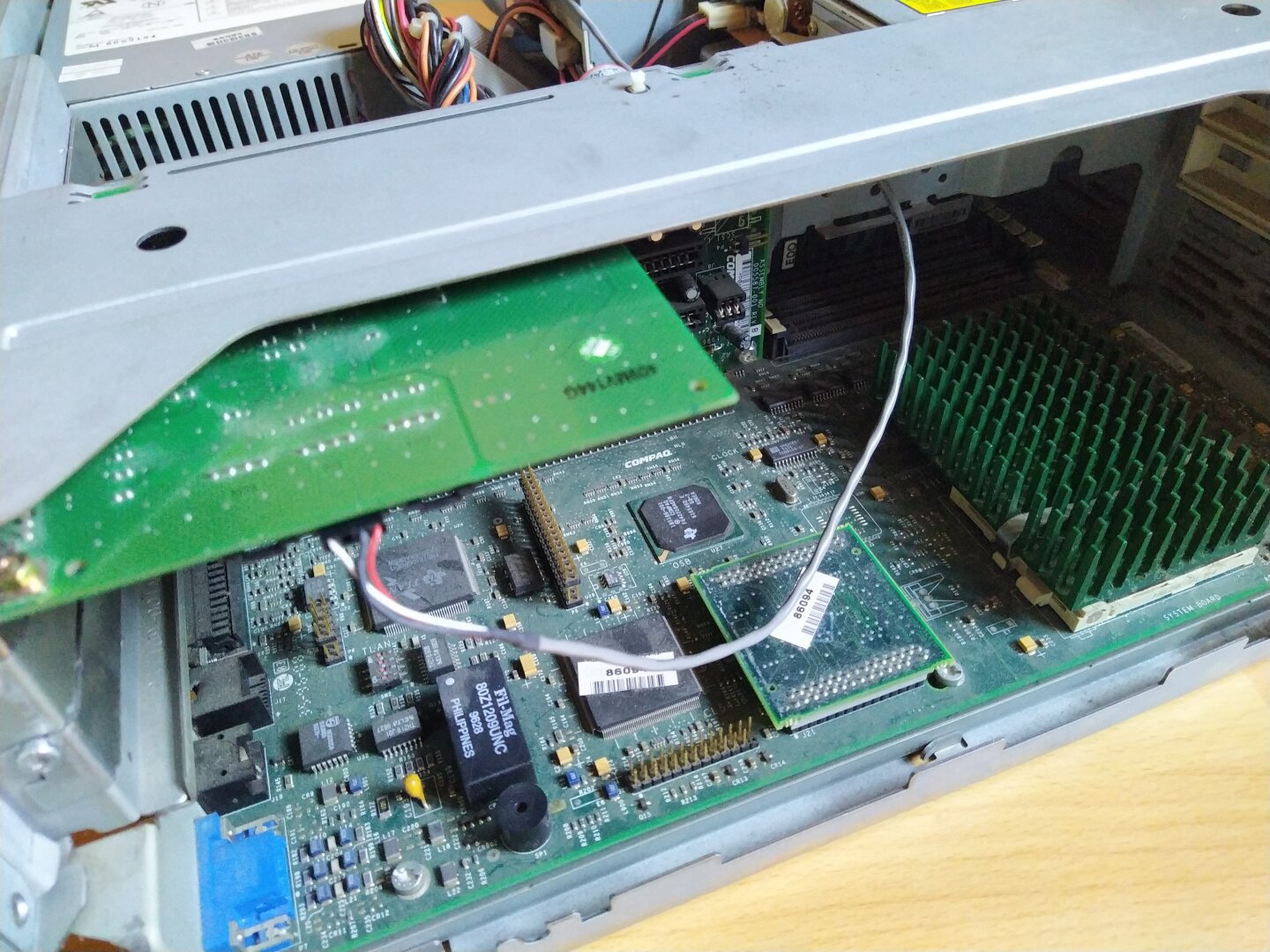
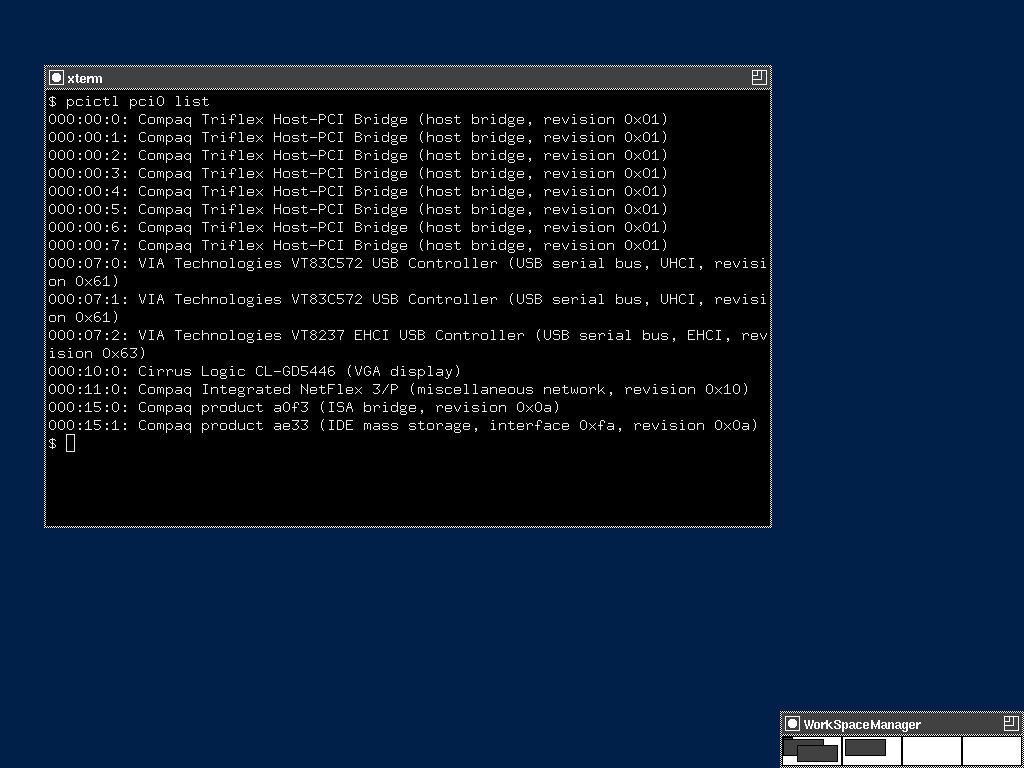
The Pentium 1 got USB for the first time in its life today and not just USB, but USB 2.0! :O
The reason for this: my PS/2 to USB adapter died and since I only have a USB mouse and the Pentium 1 had no USB at all, I needed to get USB into the machine. A purely keyboard only configuration of CTWM turned out to be quite a pain...
So I decided to take an old USB card out of another PC and put it into the Pentium 1 (yes, the entire computer is called that now xD). The card never really worked properly in that machine under Windows 98 anyway (VIA chipset, instant crash after installing the drivers).
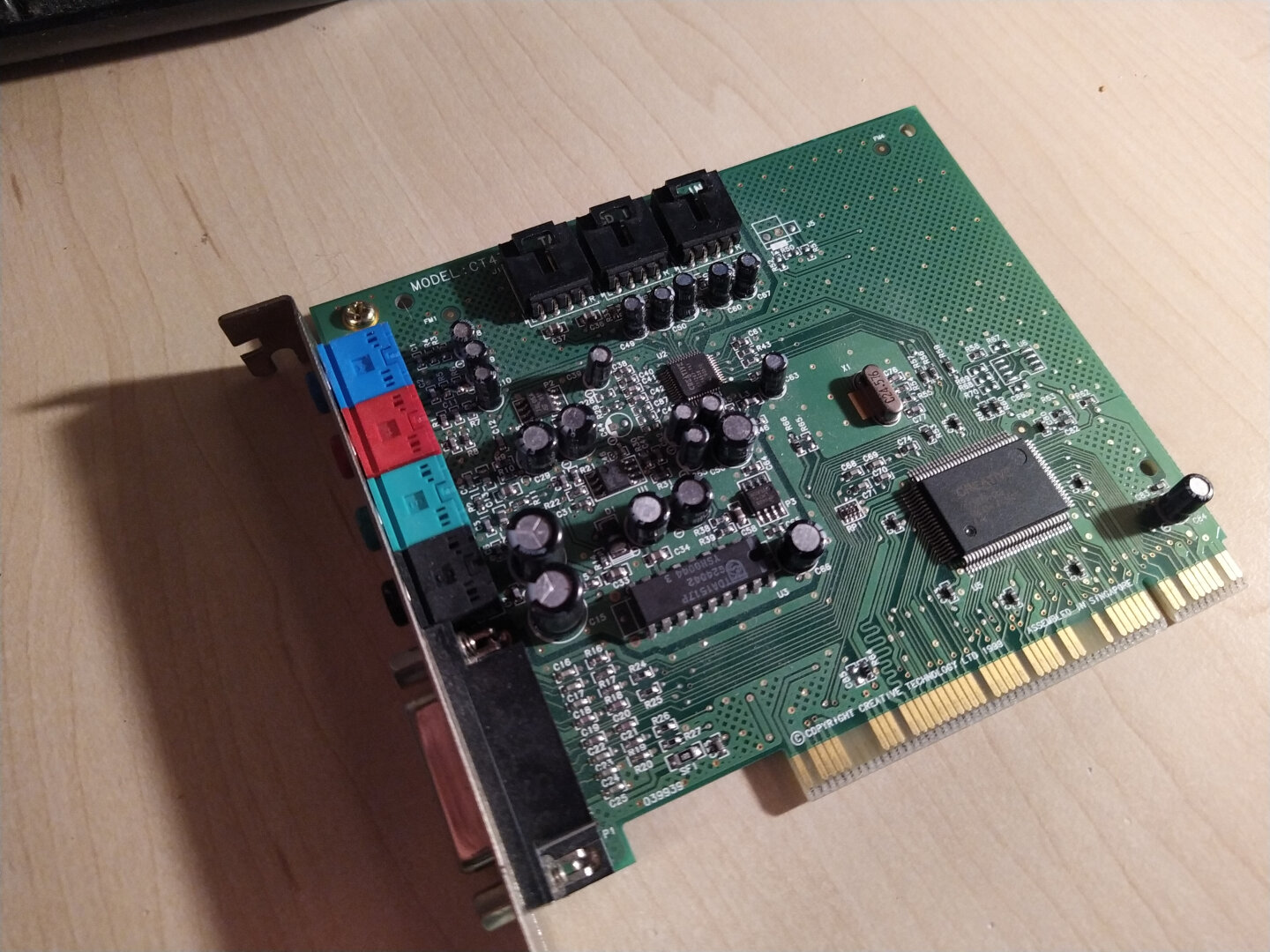
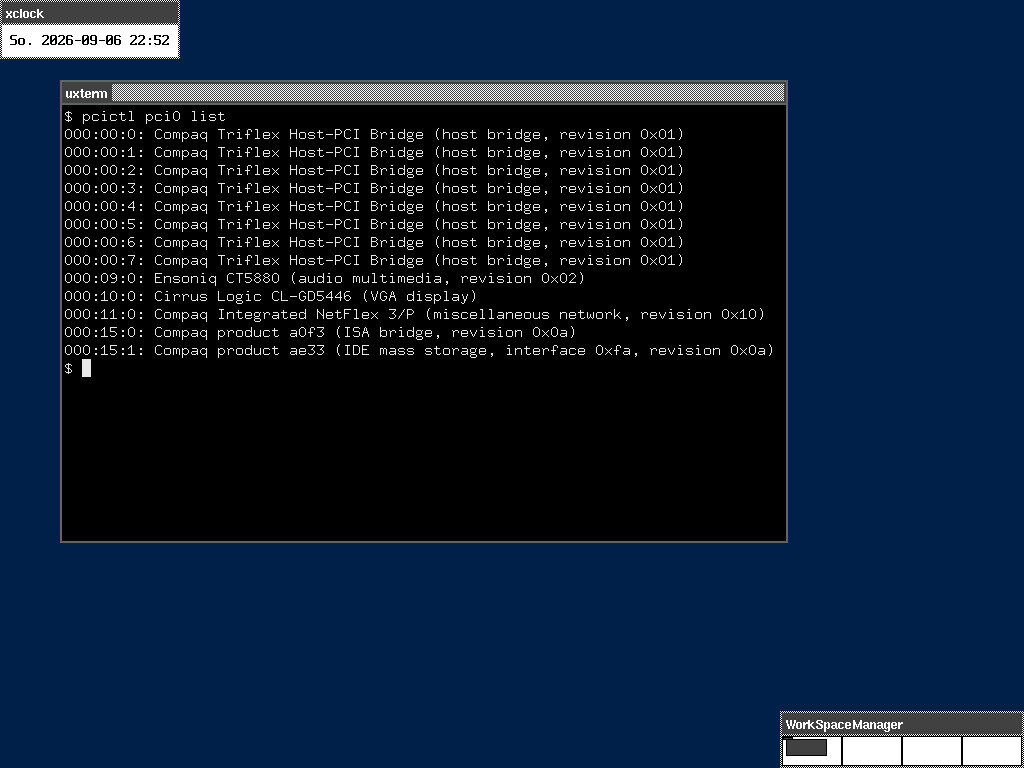
Unfortunately, I had to sacrifice the SoundBlaster for this. At first, both cards were assigned the same IRQ (11), which meant NetBSD wouldn't even boot. Then I moved the USB card to another slot. NetBSD booted after that, but the BIOS no longer configured the SoundBlaster properly (eap0: autoconfiguration error: can't map i/o space).
That wasn't a problem until I rebooted. After that, it completely went berserk during boot with timeout messages. So out it goes (for now... it's going on the list right behind Dillo)!
Seriously: Plug and Pray.
But I still have sound! While testing, I discovered that I can play audio CDs directly through the CD drive... lol
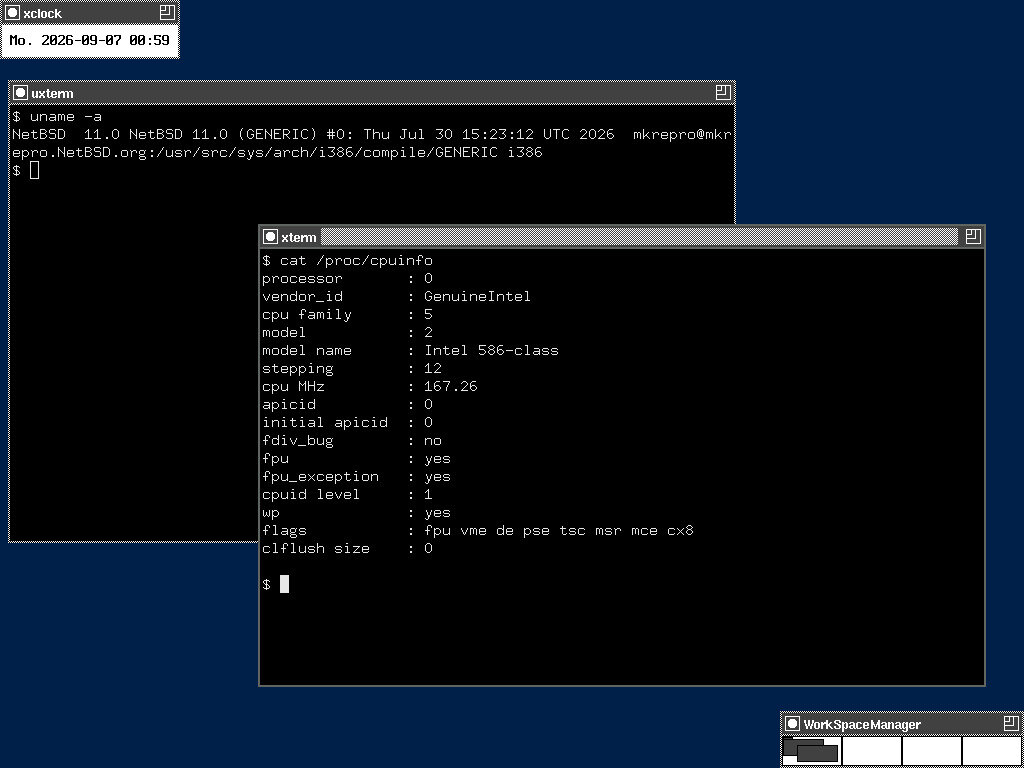
Screenshots work now too, directly through xwd from the X server, using a little script triggered by a key press! Almost like a real DE xD
Multitasking confirmed: 6 xterms at once! D:
#RetroComputing #RetroPC #Pentium1 #Pentium166 #NetBSD #NetBSD11 #BSD #i386 #CTWM #X11 #XServer #Xorg #USB2 #PCI #SoundBlaster #Windows98 #VIA #OpenSource #FOSS #FreeSoftware #VintageComputing #OldComputers #ComputerHistory #Unix #RetroTechnology #RetroHardware #TechNostalgia #ClassicComputing #RetroTech
 boosted
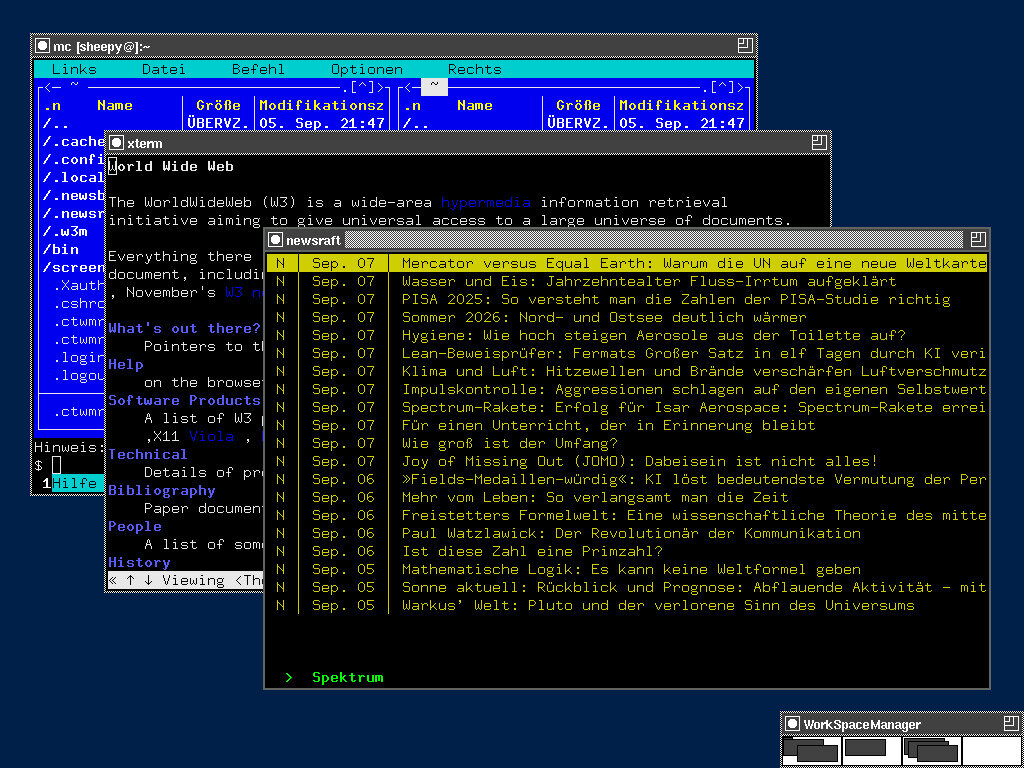
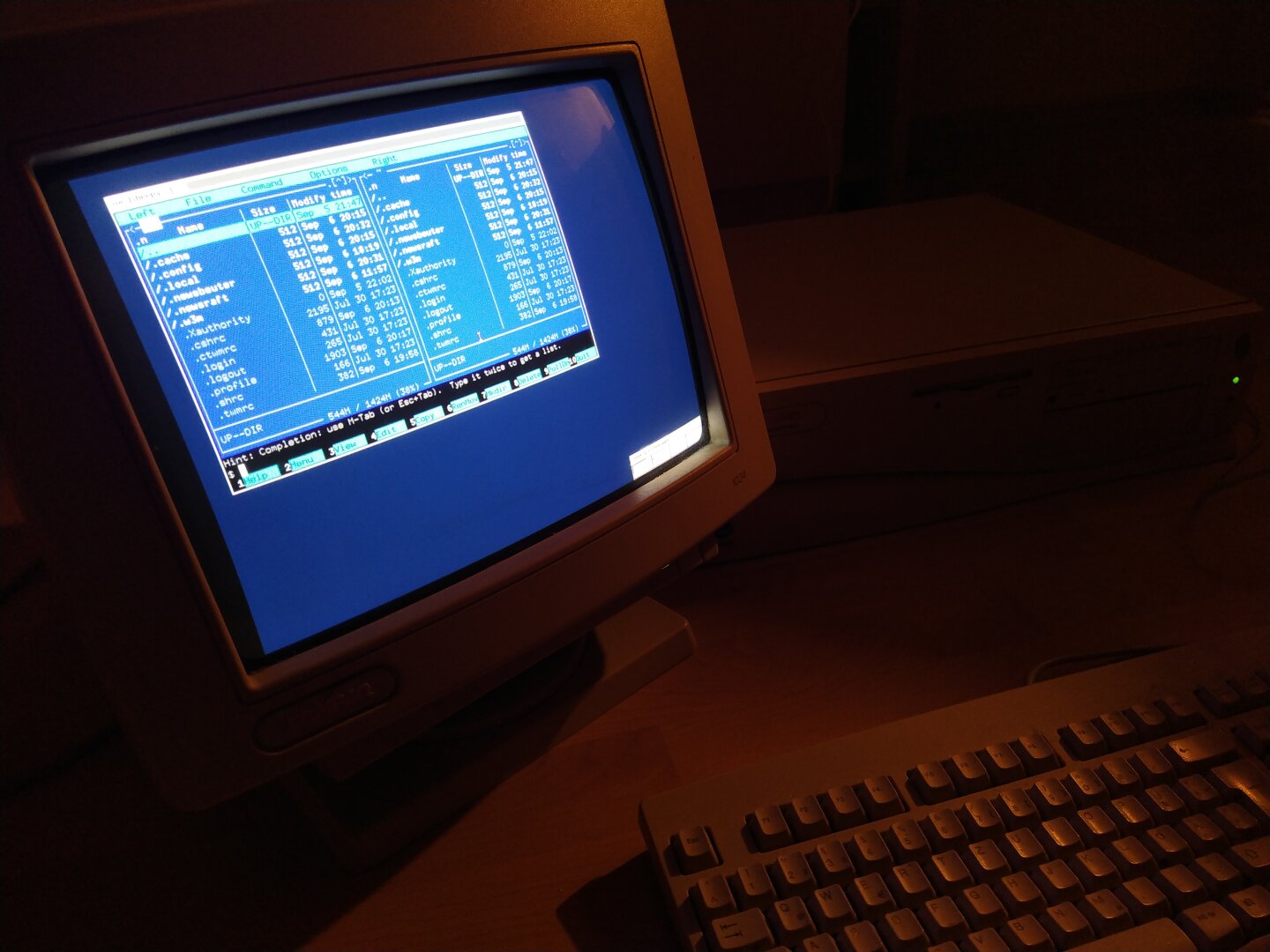
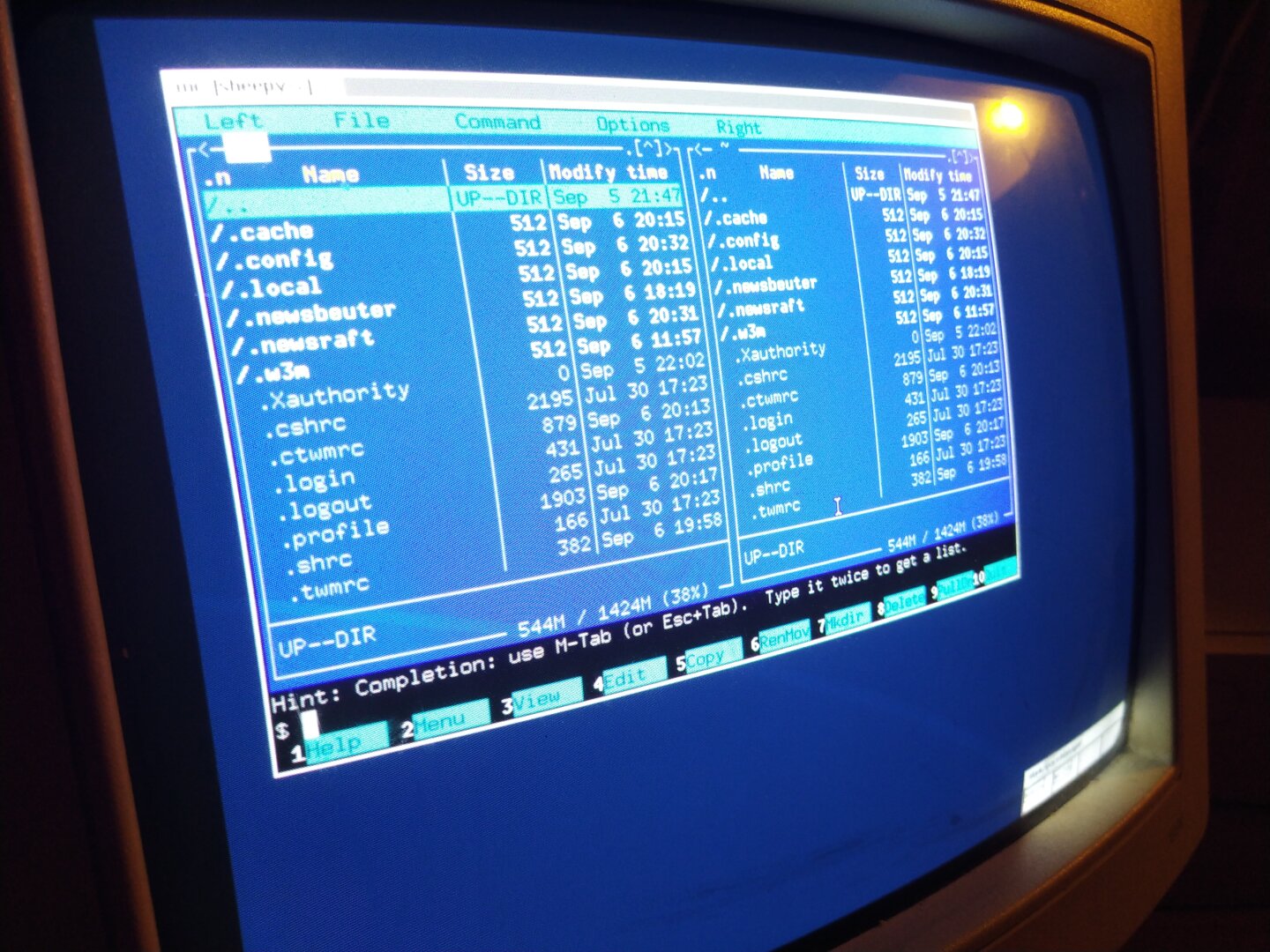
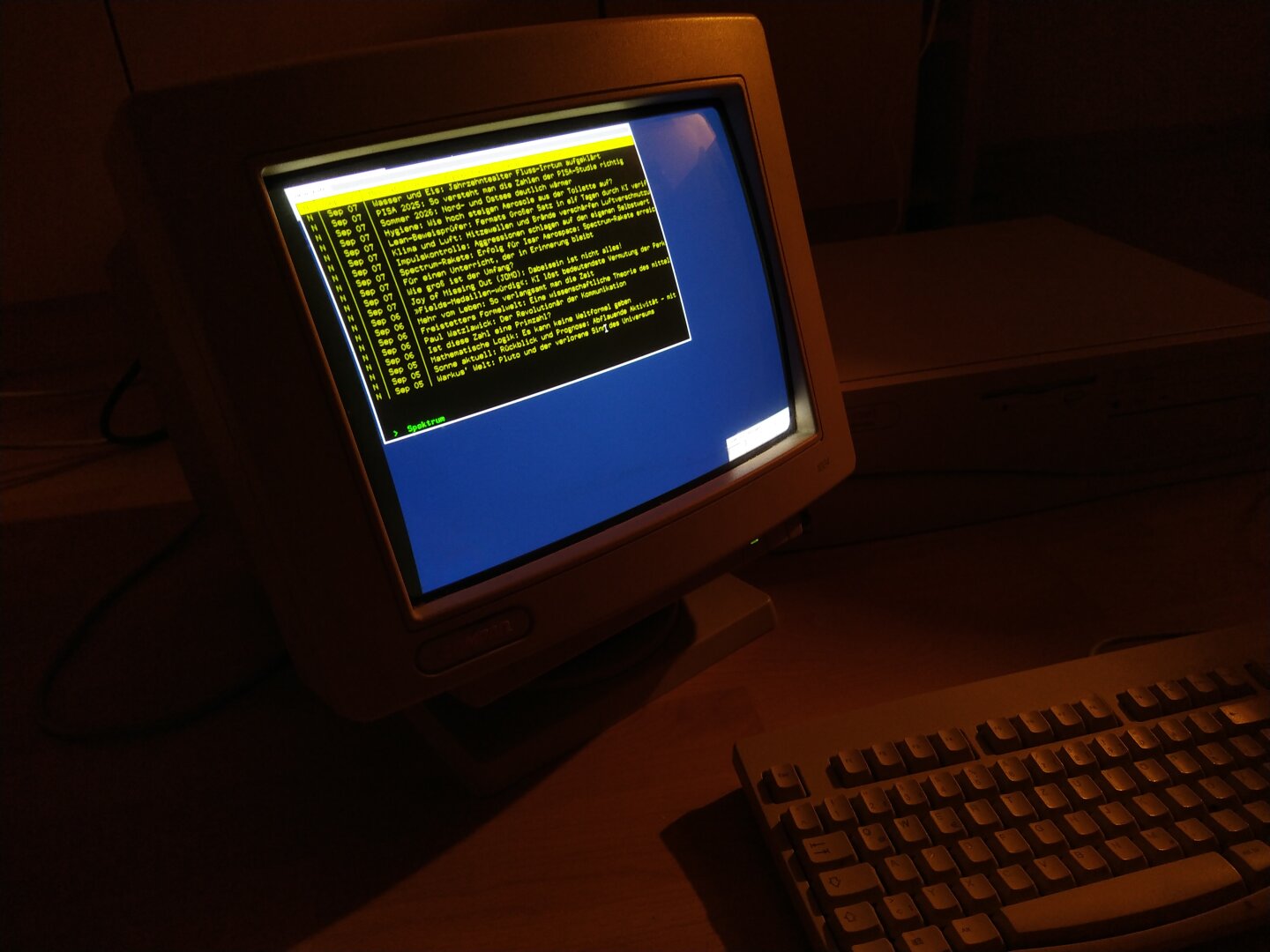
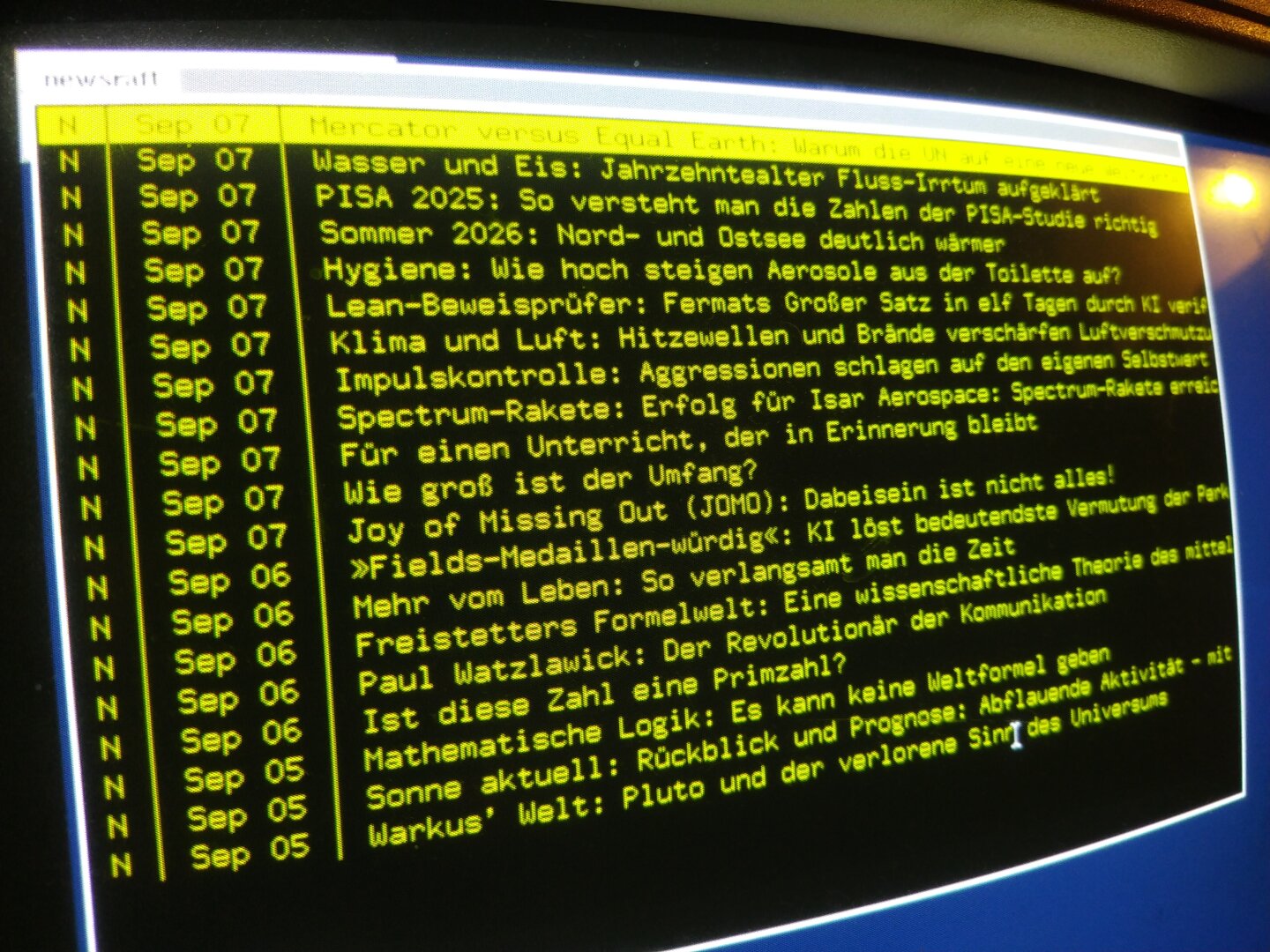
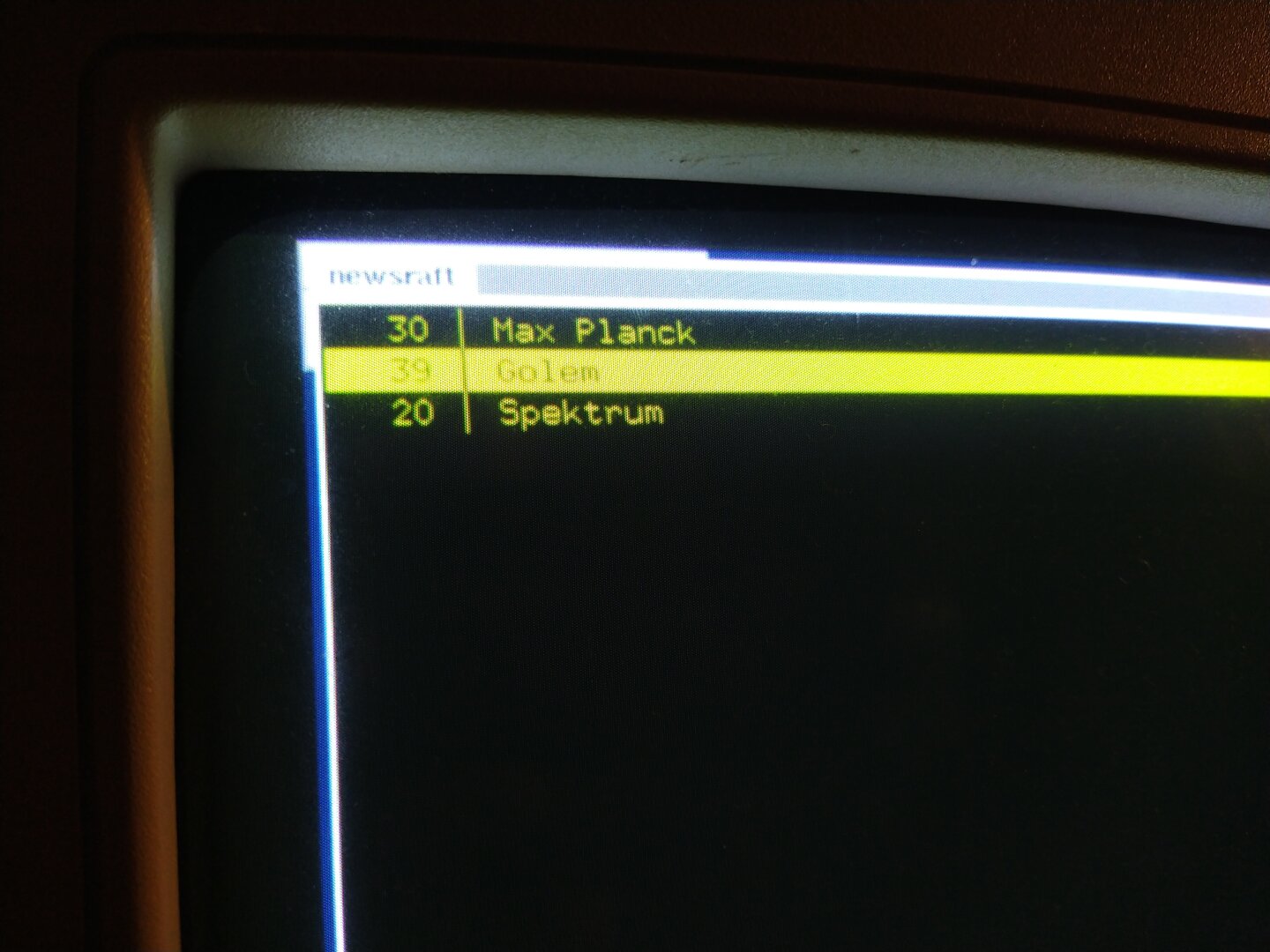
I’ve equipped it with a few useful CLI tools, for example Midnight Commander as a file manager and Newsraft as an RSS reader!
I’ve realized that you could theoretically still be productive on a machine this old (I’m not!!! xD) if you’re willing (NO!) to make a few compromises (OMG NO xD). You can browse the internet (if you don’t care about images, CSS, JS, basically 99.9% of the modern web), write emails, chat, read news feeds, program using GCC, write a PhD thesis in Markdown using vi and then use Pandoc to create the most beautiful PDF in the world xD
Things got interesting with the NetBSD packages: Some of them were built with compiler flags for newer CPU architectures, which means the ABI isn’t compatible with the Pentium 1. For example FLTK, a lightweight GUI library that is used by programs such as Dillo and Newsbeuter.
The prebuilt libfltk.so.2.0.0 doesn’t run on the Pentium 1 because it was built for a newer CPU architecture. So I got the FLTK source and tried to build it myself with appropriate compiler flags.
Then bmake wanted to build a specific GCC version as a dependency and suddenly I was compiling my own GCC from source... which was the point where I gave up!
With pkg_add I also ran into the problem that some packages can’t be installed when they expect different versions of the same dependency, for example different versions of curl.
#RetroComputing #RetroPC #Pentium1 #NetBSD #BSD #i386 #CLI #Terminal #CommandLine #MidnightCommander #Newsraft #FLTK #GCC #OpenSource #FOSS #FreeSoftware #VintageComputing #OldComputers #ComputerHistory #Unix #RetroTechnology #RetroHardware
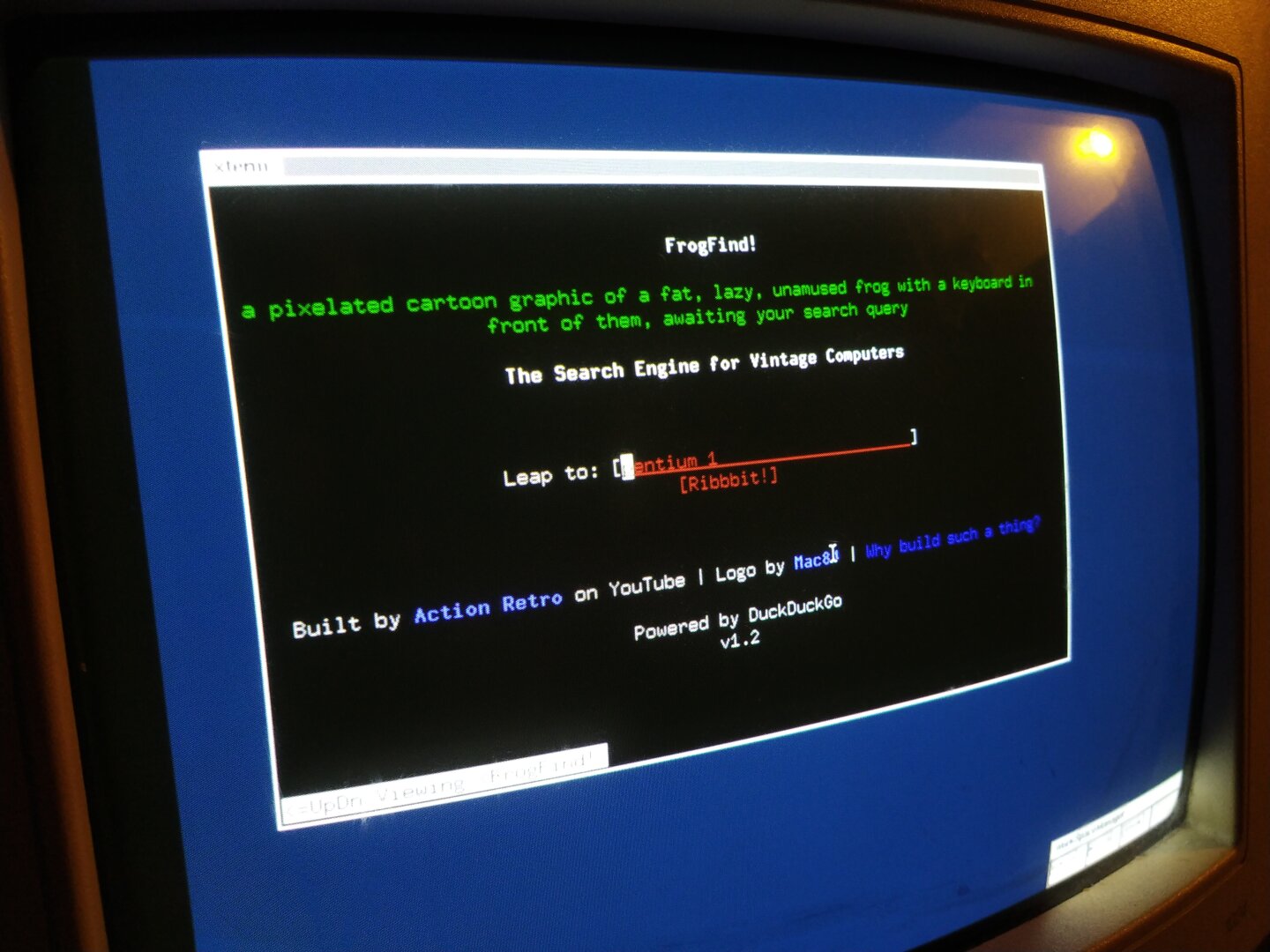
![[?]](https://cdn.masto.host/indiewebsocial/accounts/avatars/112/536/017/792/352/435/original/a87e9128d6303e02.png)
🚩 NetBSD 9.5 released and EOL for netbsd-9
https://blog.netbsd.org/tnf/entry/netbsd_9_5_released_and
![[?]](https://media.bsd.cafe/bsdmmedia01/accounts/avatars/117/026/439/058/798/087/original/af8e3cb0866b0580.jpg)
dropQbsd in three habits - how BSD compartmentalization without virtualization works
Habit 1 — Never save anything in /home/user. Your files live in userdoc, where the browser cannot reach them.
Habit 2 — Browser and mail in their own domains. The browser browses. The mail handles mail. The firewall enforces the rest.
Habit 3 — Three commands to move files between domains: qcp, qmv, qimport. Permissions enforced automatically. Quarantine with an explanation if something goes wrong.
https://gnulinux.tube/w/aymeWDMEZMbk2YQMqnMm93
#dropQbsd #openBSD #freebsd #netbsd #bsd #qubesOS #openSource #cybersecurity
dropQbsd in three habits - how BSD compartmentalization without virtualization works
**Habit 1** — Never save anything in /home/user. Your files live in userdoc, where the browser cannot reach them.
**Habit 2** — Browser and mail in their own domains. The browser browses. The mail handles mail. The firewall enforces the rest.
**Habit 3** — Three commands to move files between domains: qcp, qmv, qimport. Permissions enforced automatically. Quarantine with an explanation if something goes wrong.
https://gnulinux.tube/w/aymeWDMEZMbk2YQMqnMm93
#dropQbsd #openBSD #freebsd #netbsd #bsd #qubesOS #openSource #cybersecurity
dropQbsd in three habits - how BSD compartmentalization without virtualization works
**Habit 1** — Never save anything in /home/user. Your files live in
userdoc, where the browser cannot reach them.
**Habit 2** — Browser and mail in their own domains. The browser
browses. The mail handles mail. The firewall enforces the rest.
**Habit 3** — Three commands to move files between domains: qcp, qmv,
qimport. Permissions enforced automatically. Quarantine with an
explanation if something goes wrong.
https://gnulinux.tube/w/aymeWDMEZMbk2YQMqnMm93
#dropQbsd #openBSD #freebsd #netbsd #bsd #qubesOS #openSource #cybersecurity
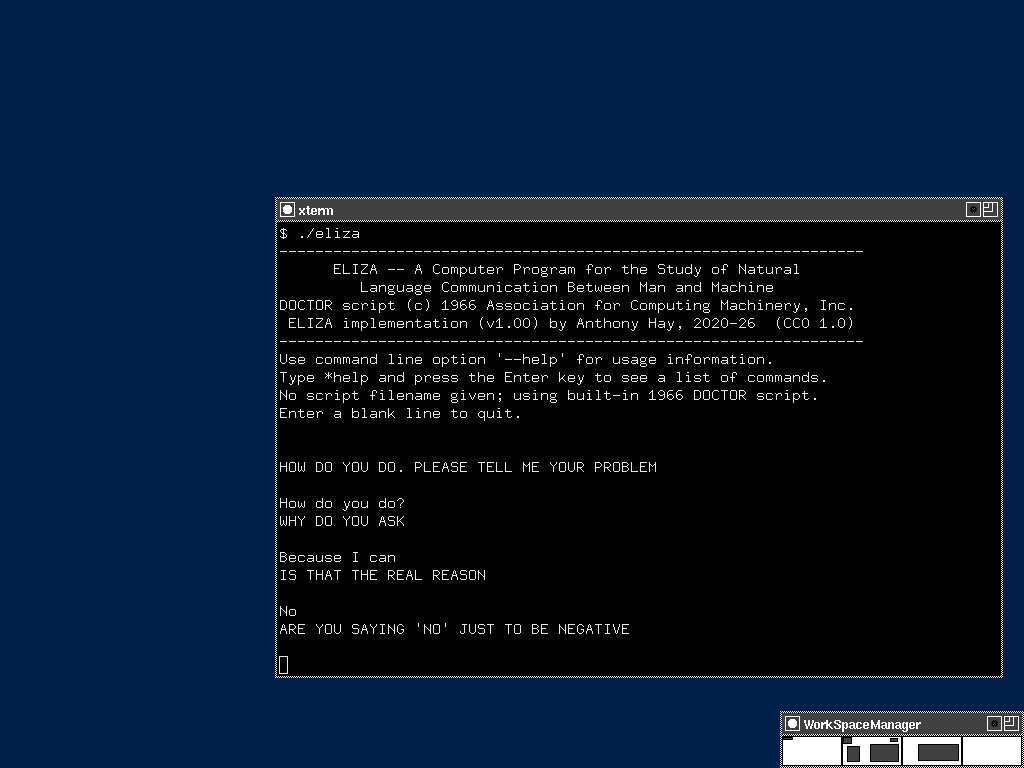
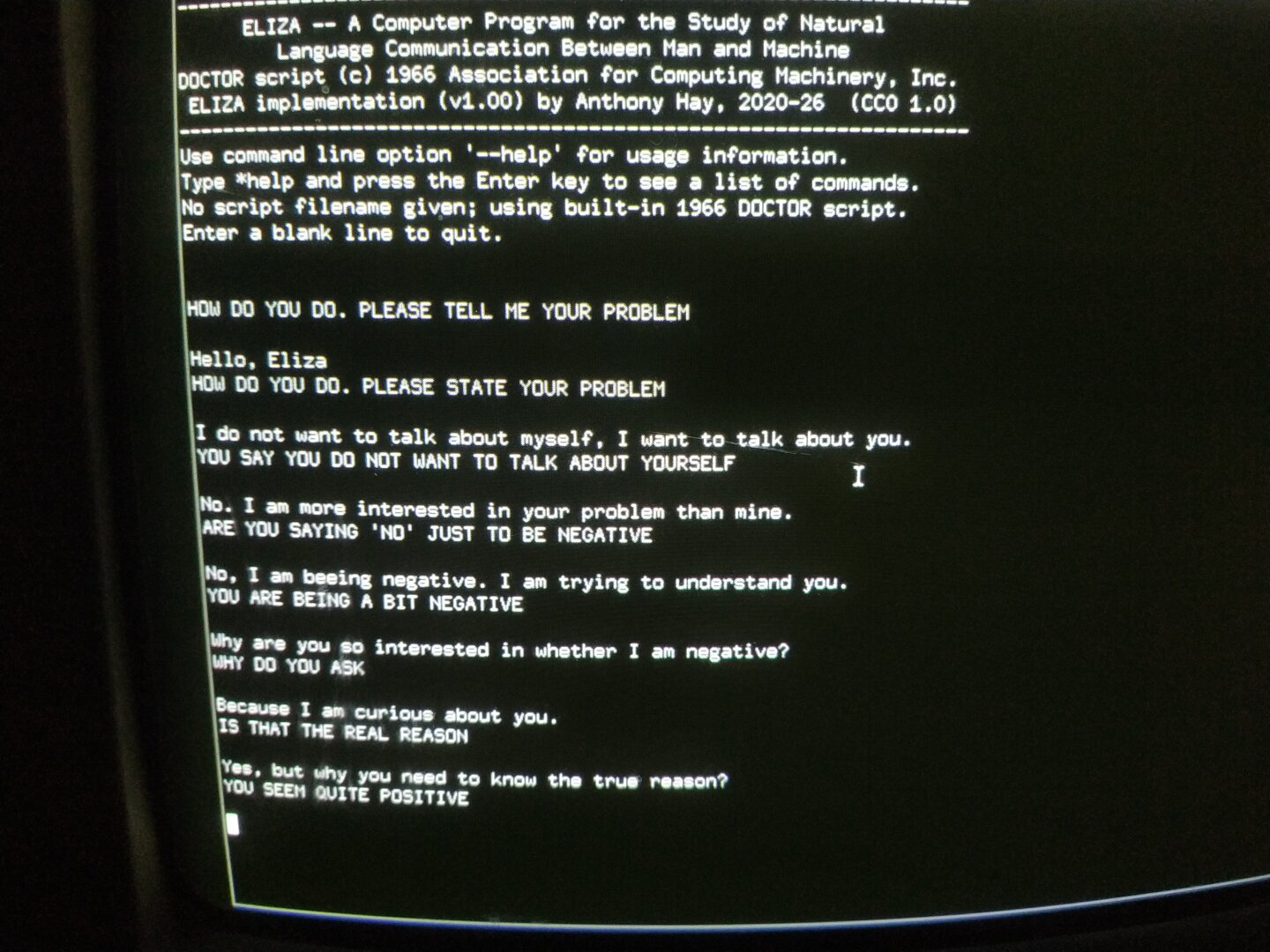
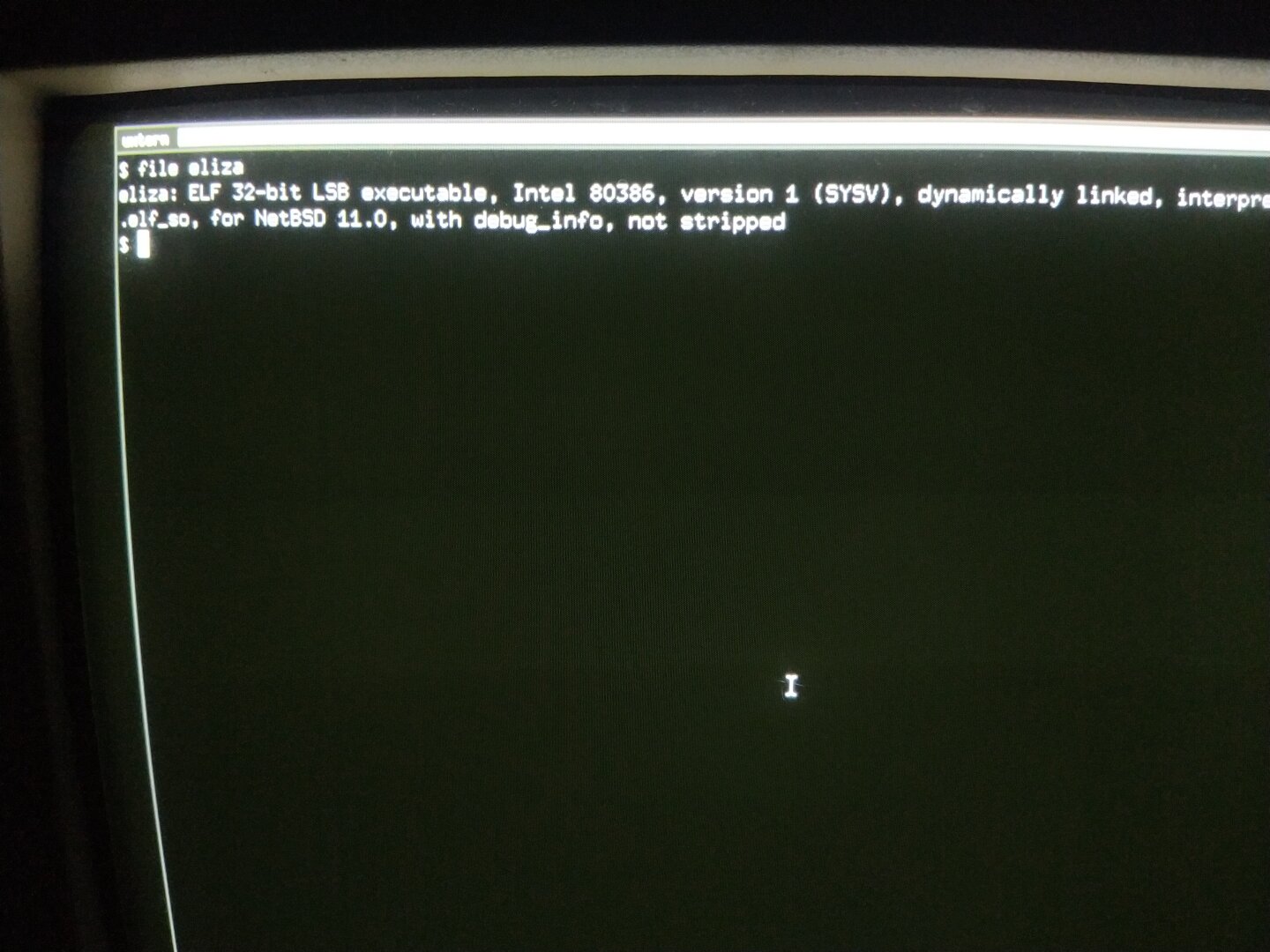
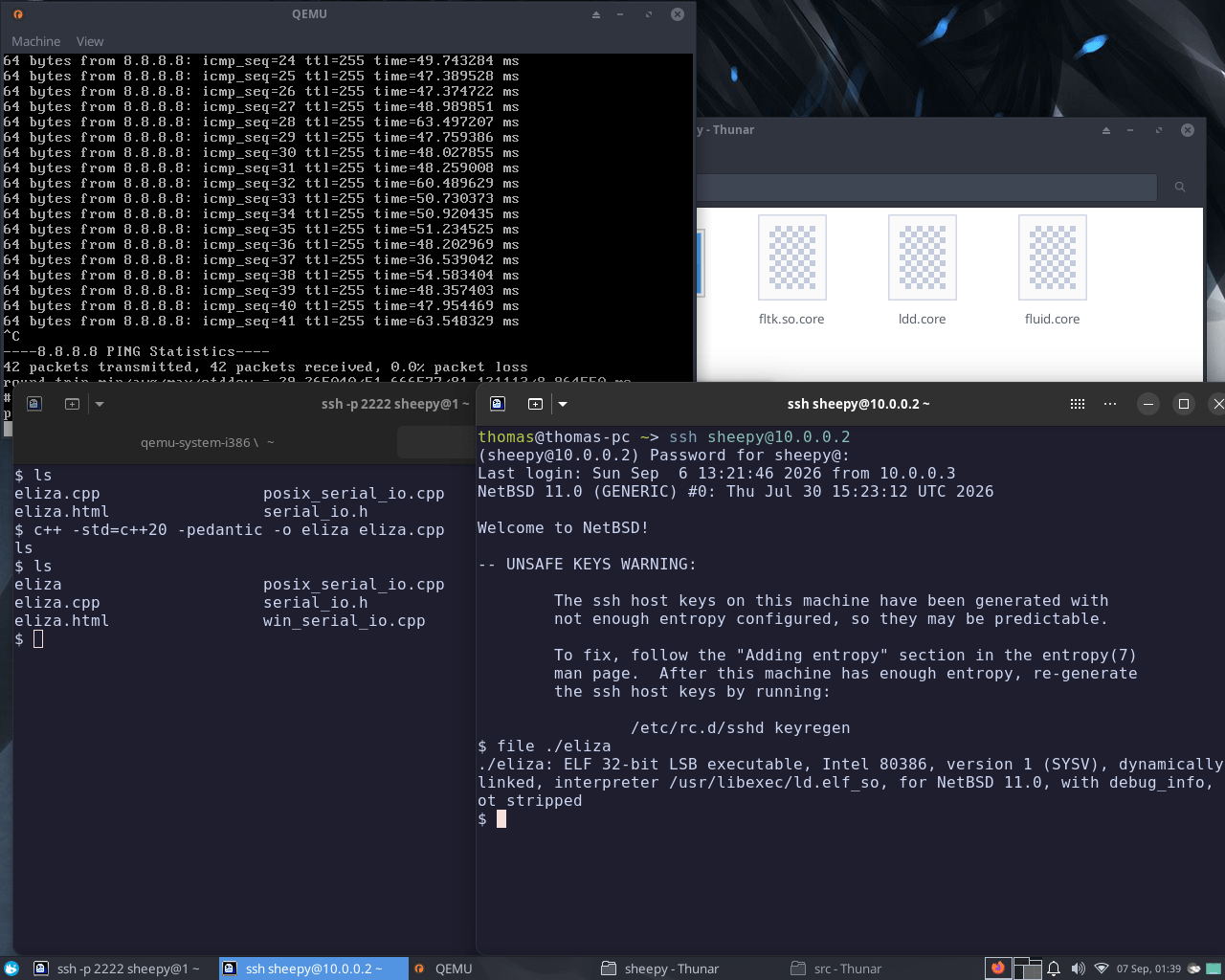
boostedOkay... not really. But I did compile and run an implementation of ELIZA on my Pentium 1 under NetBSD!
If you don't know ELIZA: it was one of the earliest chatbots, created by Joseph Weizenbaum at MIT in the 1960s. The best known version, DOCTOR, simulated a psychotherapist by recognizing keywords and responding with predefined patterns. It didn't actually understand what you were saying, but it could produce surprisingly convincing conversations and sometimes hilariously circular ones.
I actually know ELIZA from my school graduation thesis, which I wrote in psychology. So when I came across this C++ implementation, I couldn't resist bringing it back to life on my Pentium 1.
The original ELIZA was written for the IBM 7094 using MAD SLIP. My version is a modern C++ implementation of the ELIZA concept, not the original 1960s source code.
I even had a little conversation with it about... itself. Needless to say, ELIZA wasn't particularly interested in answering questions about ELIZA.
For the compilation, I used a NetBSD VM on my modern Linux machine with QEMU/KVM, configured with a Pentium CPU model, 128 MB RAM and a virtual NE2000 network card. I compiled the C++20 source inside that Pentium configured NetBSD environment and then transferred the resulting binary to the real Pentium 1.
So, no local LLM running on a 166 MHz Pentium 1... but a chatbot from the 1960s running on hardware from the 1990s feels almost perfectly appropriate D:
#ELIZA #AI #LocalAI #NetBSD #RetroComputing #RetroPC #Pentium1 #QEMU #KVM #Linux #FOSS #OpenSource #Chatbot #AIHistory #ComputerHistory #Unix #VintageComputing #OldComputers #ClassicComputing #ComputingHistory #ArtificialIntelligence #Psychology #DigitalHistory
![[?]](https://secure.gravatar.com/avatar/93c61ca8347f2552bffeff952b12250b4c8a15dfc8631e43f32a503fa35f37db?s=120&d=identicon&r=g)
Static ActivityPub Publishing
One of the requests I (Evan) have heard often over the years about ActivityPub is to make publishing on the Fediverse as easy as publishing with RSS. To make an RSS feed for a person or a site, a publisher provides, dynamically or even statically, a single file, with a simple format, and makes it available over the Web. Other people's feed reader software can download the feed and show the user either the full content of the site, or enough of a summary to get the user to click a link and […] [SENSITIVE CONTENT]
One of the requests I (Evan) have heard often over the years about ActivityPub is to make publishing on the Fediverse as easy as publishing with RSS. To make an RSS feed for a person or a site, a publisher provides, dynamically or even statically, a single file, with a simple format, and makes it available over the Web. Other people’s feed reader software can download the feed and show the user either the full content of the site, or enough of a summary to get the user to click a link and read in their browser.
So… why can’t ActivityPub be like that? Make a feed, and let others read it if they want to?
The good news is, it can. ActivityPub defines an entire read-only structure for actors, content, and activities. Pushing content to other servers is entirely optional — you can just tell other servers that you don’t accept remote messages, and they won’t push them. The read-only interface to ActivityPub is rich and extensible — it covers content like text, images, video and audio, but also activities like liking, sharing, and replying. It’s not quite as simple as RSS — it requires a lot more, smaller files — but it’s pretty straightforward.
The bad news is that most widely-used ActivityPub software doesn’t recognize read-only ActivityPub feeds. Most ActivityPub servers expect to send messages to every actor, and to receive messages in reply. They don’t have internal facilities to check ActivityPub feeds regularly for new content and activities.
This isn’t just a technical issue; it’s also an adoption issue. If implementing ActivityPub requires all the infrastructure of our message-passing services — queues, signatures, filtering, fanout — it inhibits software developers and publishers from experimenting with the protocol. Implementing RSS can take a day or maybe a week of developer work. Implementing ActivityPub’s federation protocol can take months. Which one is going to be done in a hackday or a medium T-shirt-size sprint task, and which one is going on the back-back-back-backlog?
To make it easier to understand and support this proper subset of ActivityPub, I published FEP-b06c: ActivityPoll last summer. (“Poll” is in contrast to “publish” — emphasizing the read-only structure.) It’s a profile of ActivityPub, identifying parts of the ActivityPub spec that will work, or not, with a static, read-only ActivityPub publisher. It also includes new terms to easily identify a read-only ActivityPub actor, as well as a way to declare how often a feed is updated (very useful for limiting the load on both the reader and the server sides).
In order to test the profile, and identify shortfalls, I implemented a plugin for the static site generator (SSG) software, Jekyll. Using a static site generator keeps this process honest — there’s no temptation to add just a teensy bit of dynamic content generation; it has to be entirely static. If we can show interoperability with actors implemented with an SSG, we’ve shown that static ActivityPub publishing is truly possible.
The plugin is called jekyll-activitypub-static (there’s already a jekyll-activity-pub plugin, which uses off-site dynamic endpoints to implement the federation protocol, so this one emphasizes that it’s static). It’s in the rubygems.org repository, so you can just add the gem name to your Gemfile for your Jekyll site, and it should install correctly. The configuration is pretty straightforward, and has pretty reasonable fallbacks, but you can tweak it to get more specific features.
I’ve got an example actor on GitHub Pages at @evanp . You can search for it in Mastodon, and view the profile, but you can’t follow it directly. Other front ends can view it more directly — please tell me if yours can!
If you’ve got a Jekyll site, please try out jekyll-activitypub-static and let me know what you think. Fair warning — the Webfinger support depends on having your site deployed at the root of the domain. There are probably some ways to work around that — let me know if you find one! If you have changes or enhancements you think can be made to the plugin, let me know.
And if you’ve got a full-featured implementation of the ActivityPub federation protocol, please consider implementing a polling structure for static actors. FEP-b06c covers most of the caveats, but please feel free to leave a comment if you find another gotcha. I’ll be right in there with you — I’m going to implement it in onepage.pub and activitypub.bot.
Thanks to everyone who has commented on FEP-b06c, and to people who’ve tried and contributed to jekyll-activitypub-static. I look forward to more implementations!
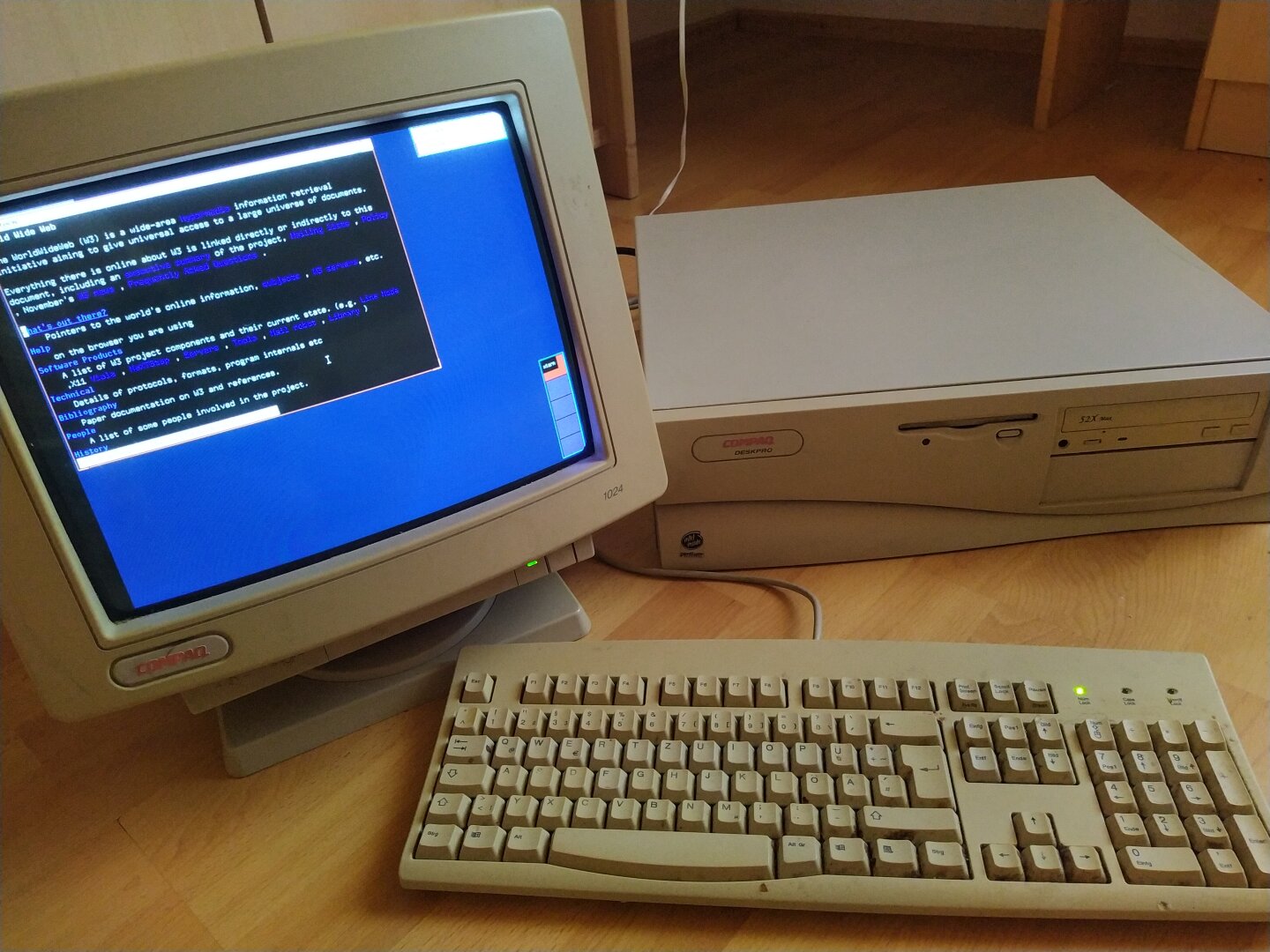
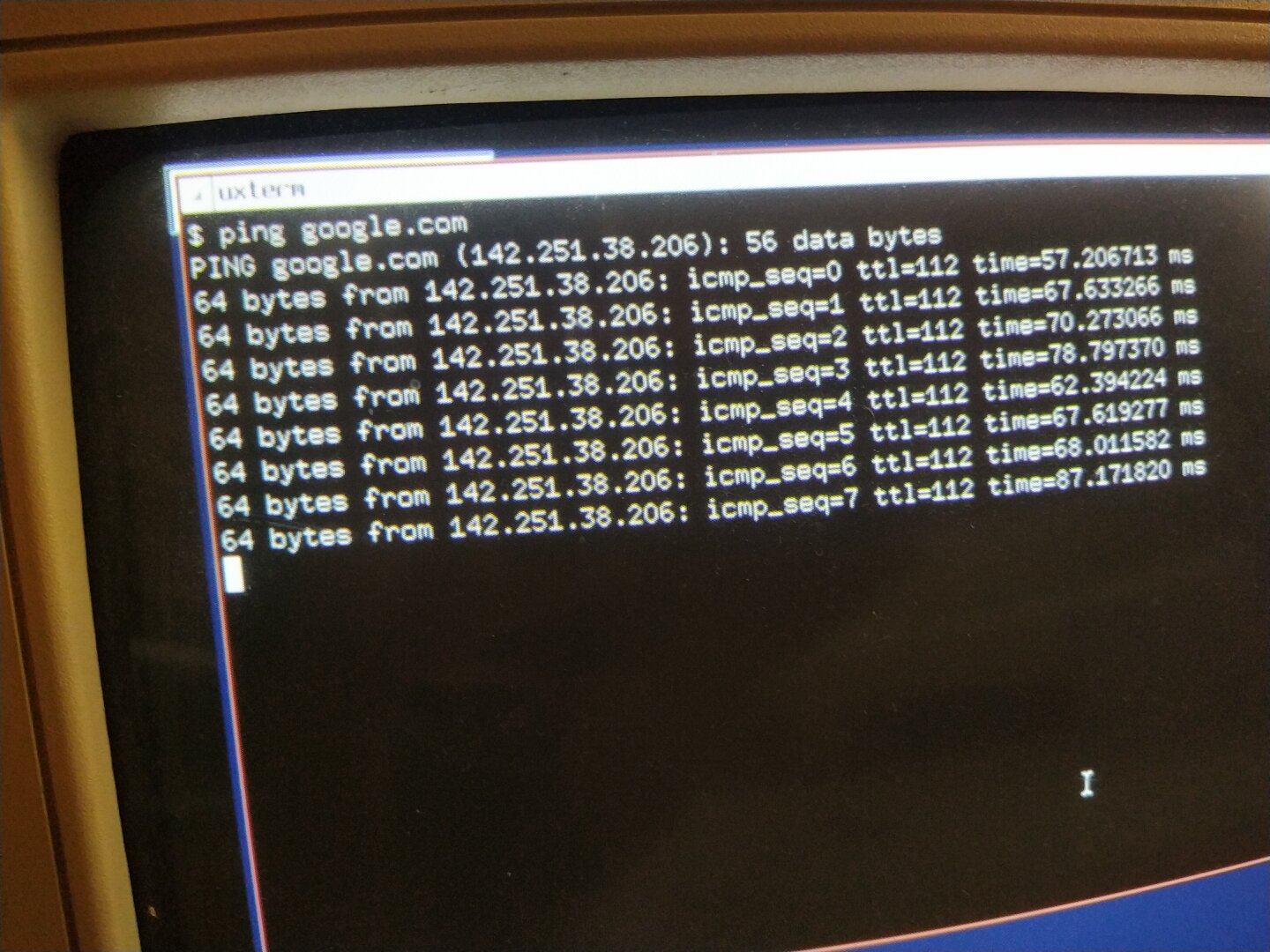
(Okay, technically the second time. I already tested the network connection xD)
I eventually decided to use NetBSD as the operating system. The reason is surprisingly mundane: my USB to PS/2 adapter is broken and the window manager I was using with Tiny Core Linux cannot be fully controlled with the keyboard. So I needed another Unix.
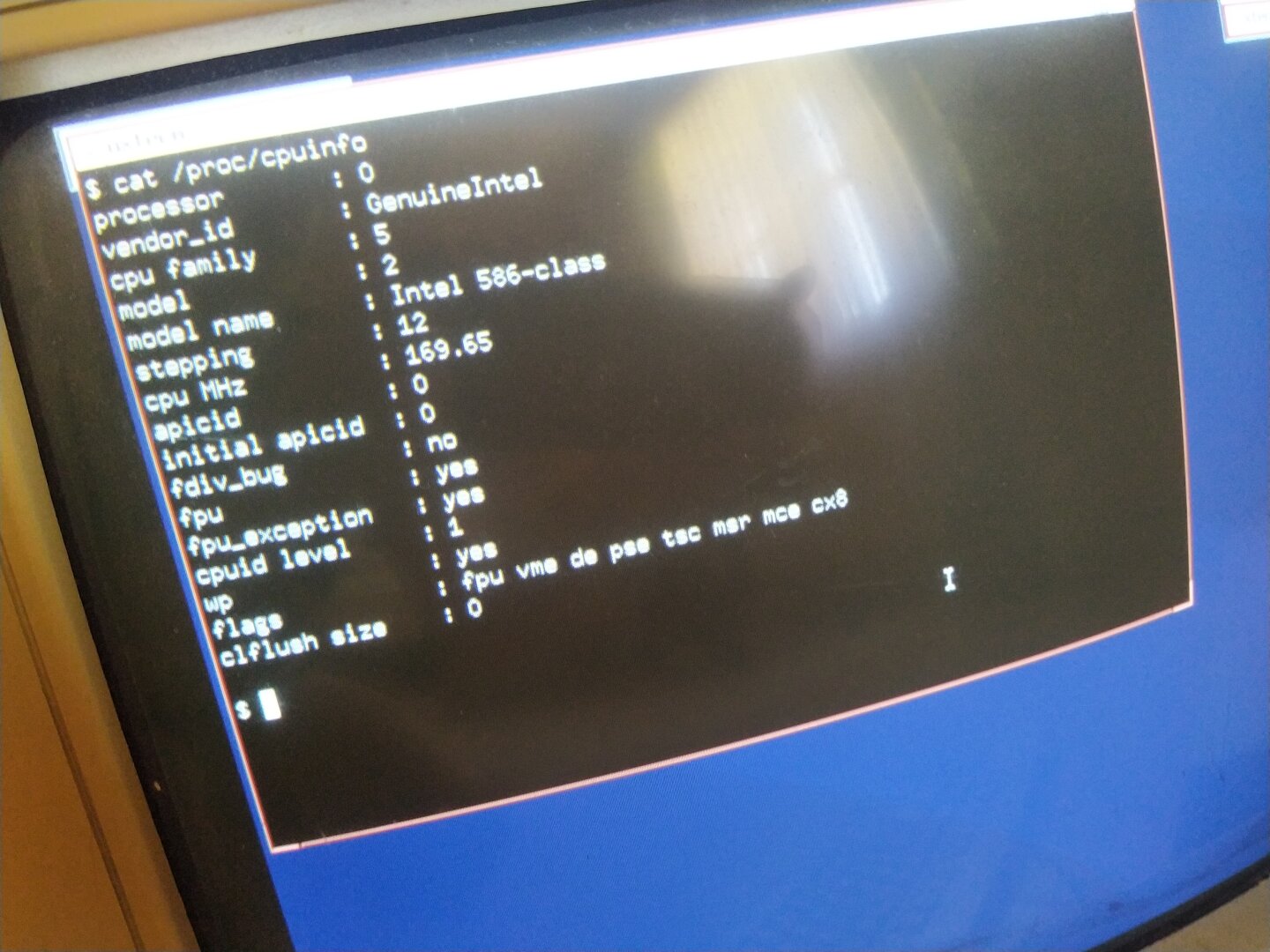
It is now running NetBSD 11.0 with X.Org 21.1.24 and TWM, which means a current 2026 software stack on almost 30 year old hardware. The GPU is a Cirrus Logic D:
The machine has 80 MB of RAM, which feels rather generous compared to another machine I tried with only 64 MB. NetBSD wouldn't install on that one because its CD drive is broken and it also refused to boot the installer through Plop Boot Manager.
Dillo was originally planned as the graphical web browser. Unfortunately, the current FLTK 1.4.5 that Dillo depends on immediately crashes on this Pentium 166 with a bus error. fluid and all of the FLTK libraries do the same. Apparently, "i386" doesn't necessarily mean "runs on an actual Pentium" anymore D:
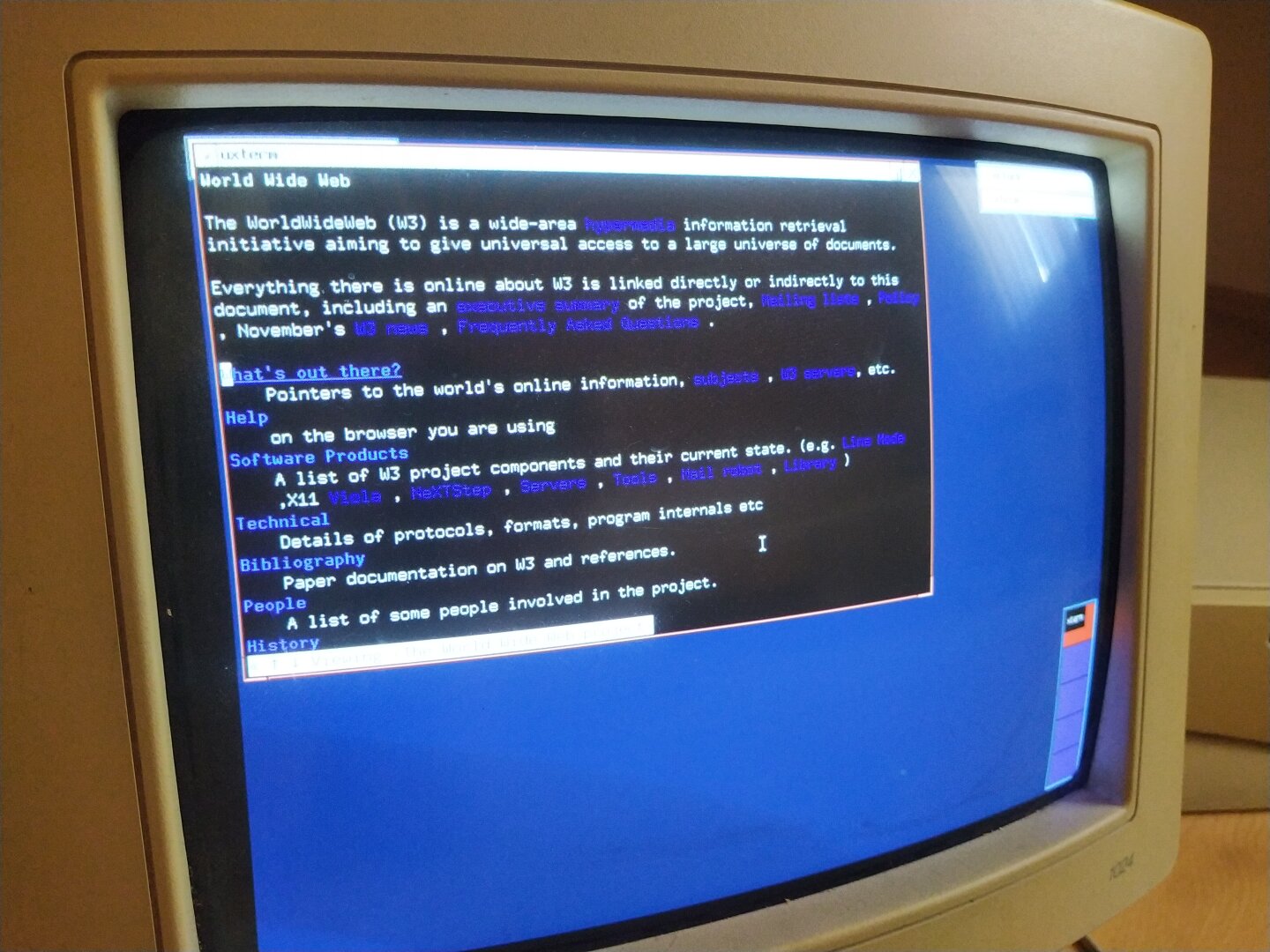
So I went with w3m instead and used it to open the very first website ever created:
http://info.cern.ch/
And yes, the entire setup was done remotely from my Linux machine over SSH xD
Btw Project Dillo has just begun xD
#RetroComputing #RetroComputer #VintageComputing #Pentium #Pentium166 #IntelPentium #OldHardware #NetBSD #BSD #Unix #Linux #OpenSource #FOSS #Xorg #X11 #W3M #WebBrowser #WorldWideWeb #FirstWebsite #CERN #1990sComputing #ComputerHistory #TechNostalgia
![[?]](https://media.bsd.cafe/bsdmmedia01/accounts/avatars/116/916/392/971/982/972/original/7d940acb1047b6c5.png)
Soon I want to do probe of me PCs on NetBSD, OpenBSD and FreeBSD. Consider doing a probe of your computer. It helps other users know if your laptop works fine with BSD or not. Or what works and what does not.
![[?]](https://media.phpc.social/accounts/avatars/000/000/101/original/808b6a9fe81b38b5.jpg)
If you're wondering why the @Xdebug issue tracker is unavailable, I can conclusively say that it's another bout of LLM scrapers.
dropQbsd porting from OpenBSD to FreeBSD almost complete: testing phase now. Same scripts run on both systems. mksh adopted for full BSD portability. Next challenge: include NextBSD.
The philosophy stays the same: few lines of code, no virtualization, dead-simple configuration. Compartmentalization without virtualization, built on BSD primitives. Most threat models, minimal attack surface.
https://git.sr.ht/~nobraininside/dropQbsd
#dropQbsd #openBSD #freebsd #netbsd #bsd #qubesOS #openSource #cybersecurity