Search results for tag #Facilitation
![[?]](https://files.mastodon.social/accounts/avatars/109/292/230/333/635/821/original/b51753fa200b179b.jpg)
A controversial approach by Microsoft to community town halls around data centers shows how good meeting processes can fail when they serve the wrong purpose.
Fishbowls, small group discussions, and other participatory techniques can collect input effectively while avoiding the conversation that matters.
Good meeting design requires choosing and sequencing processes that move beyond collecting input to creating real engagement.

Alt...
Meeting process design illustrated: a puzzled woman holds a camera lens to her ear, showing the problem of using the right tool for the wrong purpose.
![[?]](https://assets.chaos.social/accounts/avatars/108/906/642/401/097/551/original/ca848370fbd2b8af.jpg)
2/2
Einige Menschen haben ihn dort auch bereits gefunden und genutzt, das freut mich sehr! Für alle anderen ist diese Info. 😁
Ihr findet das englische Original hier: https://github.com/ddd-crew/como-prep-canvas
Die deutsche Version ist dort: https://miro.com/templates/workshop-fuer-collaborative-modelling/
#SoftwareEngineering #CollaborativeModelling #ProductEngineering #Facilitation #TechLeadership #sharingIsCaring

Covert recording is increasingly unavoidable. Here's why group agreements are essential for trust and confidentiality at conferences.
#ConferenceDesign #Facilitation #GroupProcess #EventProfs #Trust
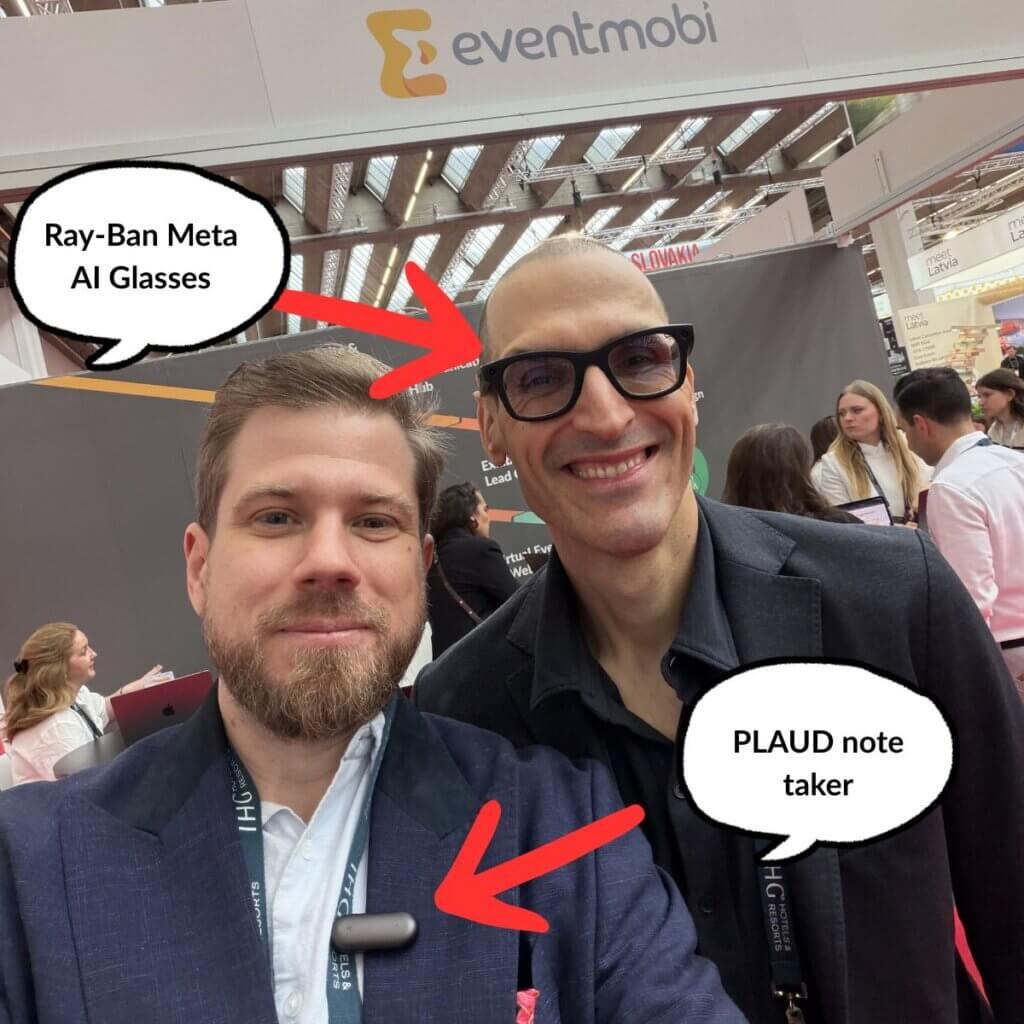
Alt...
A photograph of Thorben Grosser (wearing a PLAUD) and Julius Solaris (wearing Meta Ray-Ban glasses) at IMEX Frankfurt 2026, with permission from Thorben's LinkedIn post https://www.linkedin.com/posts/thorbengrosser_at-imex-in-frankfurt-my-friend-julius-walked-ugcPost-7465024814882177024-nyUL/?utm_source=share&utm_medium=member_desktop&rcm=ACoAAAABPZcBvliRajhMsazSc4XieWMbwNFWd_g
![[?]](https://files.techhub.social/accounts/avatars/109/323/926/604/183/820/original/fb839d0d866a14eb.jpg)
A community of practice nobody wants: same faces talking, cameras off, everyone checked out. Suzanne Lagerweij's fix wasn't a framework — she listened, gave people a stage, and made their work visible to management. Shared by Suzanne Lagerweij and Wouter Lagerweij.
Read, watch, or listen: https://virtualddd.com/facilitating-archdes/building-community-of-practice-nobody-asked-for/
Being new or "just" accountable often means people doubt you belong at the front of the room. Katie Clark's fix: do the real work before the workshop even starts—corridor chats, consent, quietly handing out roles—so the room takes care of itself.
Read, watch, or listen: https://virtualddd.com/facilitating-archdes/workshop-preparation-rolling-the-pitch/
![[?]](https://media.hachyderm.io/accounts/avatars/110/372/528/571/829/161/original/fff0f95f5580438f.jpg)
Organisational Dysfunction of the Day
Divided for efficiency
Context: The workshop has twenty people and a full agenda. The facilitator divides the room into four groups of five, each working a different question in parallel. After ninety minutes, one person from each group presents a summary. The room acknowledges the outputs. A synthesis document appears a week later. Most people cannot clearly recall what they agreed to, or why, only that it was their group's table, not the others'.
OST explains: The reasoning behind the split is familiar: smaller groups work faster, everyone gets air time, parallel processing covers more ground. What it misses is that shared understanding cannot be transferred by a summary. It is something the group builds together, in real time, by working through difference. A summary tells you what another group concluded. It does not tell you the reasoning behind it, or the alternatives that were set aside. The integration cost is the whole conversation the groups never had. The Search Conference avoids this. The group works as a whole on the tasks that matter. Where subgroups are used at all, it is for two specific structural reasons: when the group is too large to work effectively as one, or when there are clear power imbalances and dominant voices need to be separated to allow others to be heard. Even then, integration is the main event. Where factions already exist, the split can surface them quickly and deliberately, and rationalisation of conflict becomes the tool for working through what the groups found. The fissure is brought into the open, not papered over by a synthesiser. Standard workshop facilitation splits for efficiency and hopes the outputs add up. The Search Conference splits only when the group cannot otherwise function, and treats the return to the whole as the most important part of the process.
#OpenSystemsTheory #SocioTechnical #OrgDesign #facilitation
***
The series has become a book, available now on Leanpub.
http://www.organisationaldysfunctions.com
Organisational Dysfunction of the Day
The facilitator's toolkit
Context: The facilitator is experienced and well-prepared. The workshop opens with an icebreaker to warm up the room. Post-its go up on the walls. Groups rotate through stations. After lunch, there is an energiser to lift the energy back. Priorities are set by dot voting. The debrief is structured and timed. Every element has been chosen carefully. The facilitator is skilled, the tools are familiar, and the day runs smoothly. The outputs are adequate. Something harder to name is missing. Participants were present but not quite in it. The facilitator reflects on which tools to adjust for next time.
OST explains: Every tool in the toolkit carries an implicit answer to the most important question in the room: who owns this? The facilitator who opens with an icebreaker, directs the post-it debrief, calls the energiser, and closes the dot vote is the one who owns it, regardless of how collaborative the tools feel. Merrelyn Emery was precise on this: most facilitation tools come from the first educational paradigm, which is DP1-based, and introducing them into a workshop that is trying to be DP2 does not produce a hybrid; it produces confusion about who has control, and Bion's defences activate in response. The participants arrived willing to work. The toolkit told them, before the first exercise was finished, that they were not in a self-managing space. They adjusted accordingly. Dependency and flight are not failures of engagement; they are accurate readings of the design principle actually operating in the room. The toolkit is not the problem. The design principle operating in the room is.
#OpenSystemsTheory #SocioTechnical #OrgDesign #facilitation
***
The series has become a book, available now on Leanpub. Link in the comments.
http://www.organisationaldysfunctions.com
![[?]](https://files.mastodon.social/accounts/avatars/109/287/544/375/696/500/original/eb0ac7eb4327043e.jpg)
Kruglanski's work on cognitive closure describes this pull. He wasn't writing about software boundaries. The pattern is the same.
Holding the discomfort is only half of it though. Hold it too long and the group is just tired. The other half is reading when the not knowing has done its work and closing there. That balance is a skill, and it gets better with practice.
Anyone can pick it up. What doesn't work is assuming someone will.
Two people can leave a meeting thinking they agreed, then find out weeks later they didn't. Nobody wrote it down clearly enough to check. Michael shared a moment where writing a disagreement on a whiteboard changed everything—people stopped arguing at each other and started looking at the same thing.
Read, watch, or listen: https://virtualddd.com/facilitating-archdes/externalising-decisions-not-alignment/
![[?]](https://m.f-h.co/cosocial-ca/accounts/avatars/116/281/336/227/624/129/original/d2da53fba36000d9.jpg)
What are powerful questions and what aren’t they? And where does the power actually lie?
#Facilitation #Complexity #Leadership #Hosting #ArtOfHosting
https://www.chriscorrigan.com/parkinglot/thinking-about-powerful-questions/
Organisational Dysfunction of the Day
The agenda that sabotaged itself
Context: The agenda looked good on paper. An opening keynote to align everyone on context, small group work to generate ideas, a panel of senior leaders to react and give feedback, and then a vote to prioritise. Energy is high at the start. The keynote is engaging. The groups work well for an hour. Then the panel arrives, and something shifts. Questions become pointed. A few people go quiet. The vote produces winners and losers rather than consensus. By the time people leave, the energy has curdled. The facilitator was experienced. The participants came in good faith. Nobody can quite explain what happened.
OST explains: What the agenda described was a textbook Mixed Mode event: a structure that alternates between DP1 and DP2 within the same session. The keynote is DP1: an expert transmits to an audience. The group work is DP2: participants own the task. The panel reinstates DP1: authority figures evaluate what the groups produced. Merrelyn Emery was precise on this. Mixed mode is not a synthesis or a balance between the design principles. Every time the design principle shifts within a session, it disrupts the group's sense of who is responsible, and Bion's basic assumptions are triggered fresh. The keynote primes dependency. The group work briefly generates genuine creative work. The panel reactivates hierarchy and invites fight or flight. The cause is not bad luck and not facilitation; the incompatible design principles in the agenda produce this reliably. The only reliable path is a workshop that stays on one design principle throughout. Prevention is straightforward. Recovery, once the room has turned, rarely is. The problem is not in the room. It is on the agenda.
#OpenSystemsTheory #SocioTechnical #OrgDesign #facilitation
***
The series has become a book, available now on Leanpub.
https://www.
organisationaldysfunctions.com
Organisational Dysfunction of the Day
The output nobody owned
Context: The workshop uses post-its. Everyone writes, sticks them up, and the facilitator clusters them into themes. By the end of the day, there are hundreds of them on the wall. Even the plenary review, where the groups walk through their output together, cannot hold it all. Participants follow for the first twenty minutes, then the sheer volume overtakes their capacity to track. Something you wrote is up there somewhere. Whether it survived the clustering, whether it was merged into something adjacent or simply lost in the mass, you cannot tell. The facilitator synthesises. The output looks clean. The trust in it is thinner than it looks.
OST explains: Solomon Asch identified four conditions that must be present for communication to actually work: openness, basic psychological similarity, a mutually shared field, and trust. The last is a product of the first three. Post-its structurally undermine the first and third. They can be removed, merged, reworded, or lost without detection. The field is no longer shared and open; it is curated, and everyone in the room senses this even when they cannot name it. The Search Conference tradition addresses this with deliberate bluntness: everything goes on large sheets of paper fixed to the walls, written in full view, staying there for the entire event. Nothing is summarised by a facilitator. Groups consolidate their own work before it is brought to the plenary, so the authors are present when it is presented and can verify it. The open record is not a formality; it is the mechanism by which trust accumulates. Merrelyn Emery called butchers' paper the ultimate guarantee of openness, precisely because it is virtually impossible to change without the room noticing. The post-it is convenient. It is also the perfect tool for a workshop where nobody quite trusts the output and nobody can explain why.
It's hard when teams identify problems as technical, but the real issues are deeper. We interviewed nine practicioners at @dddeu and ask them: what's the hardest part of facilitating software architecture and design?
Read, watch, or listen: https://virtualddd.com/facilitating-archdes/problem-isnt-technical-ddd-europe/
It's hard when a solution is proposed before the problem is fully understood. Kim Kao shows how using Impact Mapping and EventStorming creates a shared understanding, helping teams move past assumptions to address the real challenge. Kim Kao shared this experience. #ImpactMapping #EventStorming #Facilitation
Read, watch, or listen: https://virtualddd.com/facilitating-archdes/impact-mapping-before-architecture/