Search results for tag #Agile
![[?]](https://media.hachyderm.io/accounts/avatars/110/372/528/571/829/161/original/fff0f95f5580438f.jpg)
Organisational Dysfunction of the Day
Psychological safety as a patch
Context: Your organisation may have realised that psychological safety is of the essence for good collaboration. Maybe it came out of a retrospective, maybe someone read the Google re:Work study and Amy Edmondson contributions, or maybe it was a leadership initiative after too many people stopped speaking up in meetings. Either way, there are now workshops on it, a section in the onboarding, maybe even a survey to measure it. Leaders are coached to create it. Teams are encouraged to demand it. And yet, somehow, people are still not speaking up, still not taking risks, still not challenging the decisions made above them. The patch does not seem to be holding.
OST explains: Psychological safety is real, and it matters a lot, but what is often missed is that it is an emergent property of the structure people work in, not something you can install. In a DP1 organisation, people are inherently in a dependent, subordinate position, and the rational response to that is to be careful about what you say and to whom. That is not a personal failing; it is Bion's basic assumptions playing out exactly as expected: dependency, fight/flight, and factionalism are the natural human response to autocratic hierarchies. You cannot train people out of that while the structure that causes it remains intact. In a DP2 structure, on the other hand, psychological safety is not a programme or a value on the wall; it is simply what happens when people are peers designing and owning their own work. They speak up because it is their job to, and because there is no hierarchy of dominance to be careful around. Demanding psychological safety in a DP1 organisation is a bit like applying a patch to a system with a structural bug. It might cover the symptom for a while, but the underlying code has not changed.
![[?]](https://files.mastodon.social/accounts/avatars/110/663/603/233/434/084/original/1e1b3ab20dfd710e.png)
Stop calling it assistance. #AI is management.
In #agile, we said teams decide. Now models decide faster, cheaper, and without meetings. You don’t collaborate with #AI — you align to it.
#AgileCheese makes it explicit: the real shift isn’t automation of work, it’s automation of judgment. If your decisions can be predicted, they will be replaced.
So choose: become unpredictable — or become obsolete.
That’s where the #cheese starts. 🧀🔥
![[?]](https://friends.librescrum.org/system/accounts/avatars/108/476/351/362/026/785/original/2dc25be415e8a90d.png)
oh, only two times sleeping ;) @agile
just collecting attendees from the @haufegroup to invite them to our digital twin rooms in #matrix
![[?]](https://mastodon.sdf.org/system/accounts/avatars/109/339/160/193/570/873/original/cc1d9f719030d63f.png)
In case you missed it. Here is my blog post about the basics you need to know when turning around a failing team.
https://www.edyouragilecoach.com/why-your-agileteam-is-struggling-and-how-to-fix-it/
Listening, written rules of the road, and setting expectations work wonders.
![[?]](https://cdn.masto.host/mastodongamedevplace/accounts/avatars/109/859/285/072/781/117/original/52b616f54f20c98f.png)
In an Agile sense, do you think the time a task spends in "blocked" (eg waiting on a third party) counts as time spent on the task?
#softwareengineering #agile #dev
| Yes: | 0 |
| No: | 0 |
Fighting #complexity with #AI makes it even worse.
Complexity was never the problem — hesitation was.
#agile tried to manage complexity with frameworks.
#AI tries to remove it with automation.
Both miss the point.
Every layer added to “handle complexity” hides responsibility.
The system gets smarter — accountability disappears.
#AgileCheese does the opposite.
We remove options until decisions hurt again.
If it doesn’t hurt, it’s not real.
Comfort kills. 🧀🔥
Organisational Dysfunction of the Day
Fear of making decisions
Context: One issue many teams in an agile organisation face is the stalemate that frequently happens when they need to make a decision that will impact other teams or other parts of the organisation. They have been empowered and given autonomy to decide for themselves, but they still want to be good players and are afraid to do something that could negatively impact others. Some may even be worried whether the change is allowed at all, like changing their work process or tools to use for things like ticketing, or changing the technical architecture by using a different data storage platform. Good ideas and suggested improvements are often shelved or even abandoned.
OST explains: This is another predictable side effect of a partial DP2 transition to self-managing teams, where the teams are given autonomy to self-manage, but do not feel able to. Or, maybe now they are not really empowered, as they know all too well, there are DP1 (bureaucratic) structures still in place that can and will stop them. And, even if they were in a pure DP2 setup, they still need tools to coordinate. One that works well is referred to as the "advice process" and was first described by Dennis Bakke, later by Laloux and Harmel-Law. In it, anyone can make any decision provided they follow this simple rule: first seek advice from 1) everyone who will be meaningfully affected, and 2) people with expertise in the matter. So instead of drawing up everything and then getting approval from someone who cannot possibly understand it properly, or going rogue, you formulate the decision as best as you can and then seek advice on it and adjust it to your liking based on that. Not only do you make better decisions, but you also own them. No more blame game, which DP1 creates, and no chaos, which the mixed mode induces. Participative democracy in practice.
![[?]](https://files.mastodon.social/accounts/avatars/114/938/591/061/170/906/original/67b746a500198fac.jpg)
I'm looking for problems by watching you CI server build jobs and telling the devs if a build breaks. (Don't asks about the broken e-mail notification)
I don't call it #QualityEngineering or similar. Just plain / upland #Testing .
#RapidSoftwareTesting goes beyond the execution of predefined scripts and also doesn't reinvent the wheel.
Good, deep testing is doable.
#quality #softwaredevelopment #softwaretesting #agile #kanban #scrum
![[?]](https://alvinashcraft.com/img/md-light-1024.png)
Dew Drop – April 27, 2026 (#4655)
Top Links OpenAI’s GPT-5.5 in Microsoft Foundry: Frontier intelligence on an enterprise ready platform (Naomi Moneypenny) We’re moving to Experimental and Beta! Announcing new builds for 24 April 2026 (Stephen Lines & Windows Insider Program Team) Visual Studio Code 1.118 (Visual Studio Code Team) Microsoft Agent Framework for .NET v1.3.0 Release (westey-m) ReSharper Made VS … Continue reading Dew Drop – April 27, 2026 (#4655)
![[?]](https://mastodon.moscow/system/accounts/avatars/116/397/673/048/057/419/original/9d603921e10edc15.png)
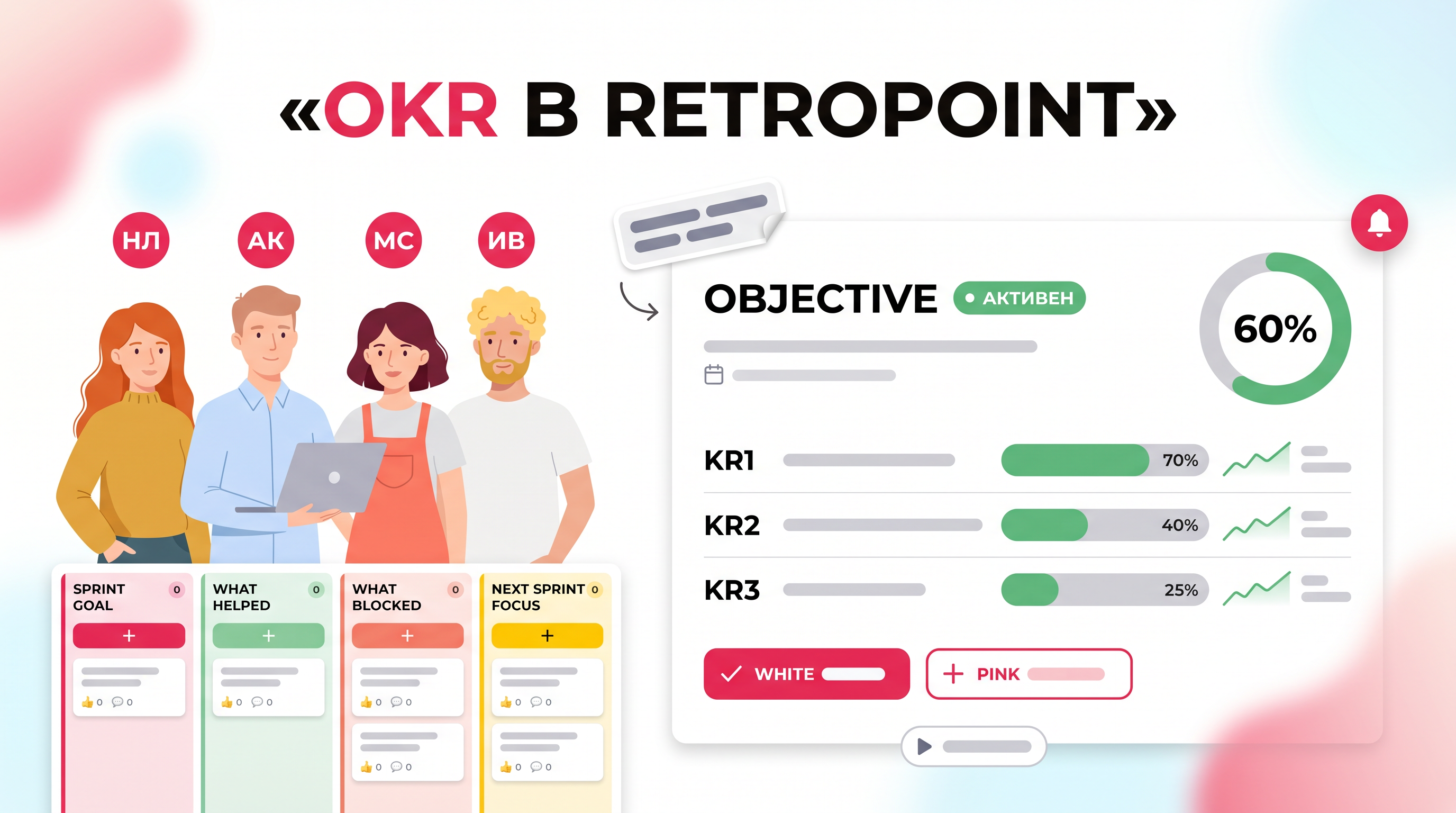
🎯 В RetroPoint появился модуль OKR!
Теперь квартальные цели команды живут прямо рядом с ретро — не в Notion, не в таблицах, а в профиле команды.
Что внутри:
📌 Циклы OKR с датами и статусами — Черновик → Активен → Закрыт
📊 Objectives и Key Results с автоматическим прогресс-баром по формуле
✅ Еженедельный чек-ин — текущее значение, уверенность (В норме / Под риском / Отстаём), заметка
📈 Спарклайн и таймлайн за весь квартал — видно, равномерно ли движется работа или всё сдвинулось в конец
🔗 Прямая связь с ретро Sprint Goal — создаёте ретро-доску из KR, и данные возвращаются в OKR прямо с доски, без переключений
Модуль доступен на тарифах «Команда» и выше с пакетом «OKR для команды».
Попробовать → https://retropoint.ru/modules/okr
@rf @Russia@3zi.ru @russia@lemmy.ml @russian_mastodon
#retrospective #ретроспектива #agile #scrum #kanban #teamlead #it #itleads #teamleasthings #команда #RetroPoint #OKR
![[?]](https://files.mastodon.online/accounts/avatars/110/662/852/345/682/042/original/142c7afdf9675462.png)
![[?]](https://agilealliance-social.s3.bhs.io.cloud.ovh.net/accounts/avatars/109/440/151/709/531/240/original/9dd839a96c89602d.jpg)
![[?]](https://files.mastodon.social/accounts/avatars/000/033/836/original/56afd72000b82f77.jpeg)
![[?]](https://cdn.fosstodon.org/accounts/avatars/110/317/179/950/091/199/original/7cff59719d9028ea.jpeg)
Are you not keen to share your data with #Atlassian for AI training?
In case you are looking for an alternative to #Jira, we at @openproject are happy to help. We are an #opensource #productmanagement #projectmanagement solution for data-conscious people.
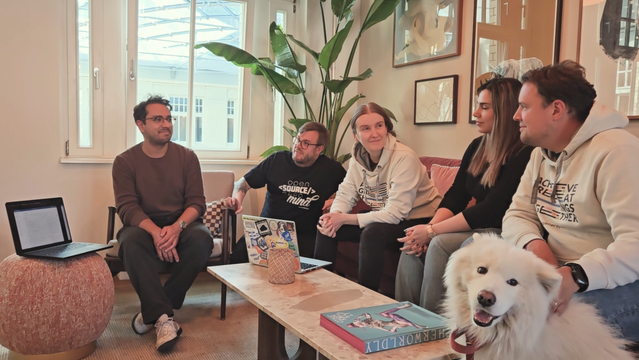
In this video I'm giving you a little behind-the-scenes on how do we actually work and what has been implemented in the past weeks in order to better support #agile product teams.
Alt...
A group of people sitting together. A smiling samoyed dog is sitting next to them.
Organisational Dysfunction of the Day
The frozen middle
Context: Assuming you are a team member in an organisation that has gone through an agile transformation. Your team have been given more autonomy and is expected to self-organise, make decisions, and deliver value faster. Yet somehow, almost everything still takes forever. Decisions get stuck, information does not flow, and initiatives die quietly without explanation. The teams are doing their part, but something above them seems to absorb all energy and momentum like a sponge. Middle managers are busy, always in meetings, always promising to follow up. But nothing moves. A frequent excuse is Things Take Time.
OST explains: This is one of the most predictable side effects of a partial DP2 transition to self-managing teams. When teams are given more autonomy while the surrounding DP1 structure remains intact, middle management gets caught in the middle. They lose their traditional role of passing work down and status reports up, but gain no new meaningful function. The result is a layer of people who are neither coordinating in the old DP1 way nor participating as peers in a DP2 fashion. They become a dampening layer, unconsciously protecting the existing power structure while appearing to support the change. This is not a people problem; it is a structural one. In a full DP2 organisation, the coordination is managed by the self-managing teams themselves, coordination work between peers, and not through proxies. The frozen middle is not resistant to change; it is simply a DP1 organ that has lost its purpose but not yet been replaced by anything coherent. Until the whole system transitions, it will continue to insulate the top from the bottom and slow everything down. The bottleneck has shifted.
![[?]](https://tomsgedankenblog.social/wp-content/uploads/2022/10/cropped-wp-1666202986272-4.jpg)
#LINKSDERWOCHE | 17/2026: Produktivität, Lean, Agile, Management und Leadership

PRODUKTIVITÄT
Leichtigkeit | Das Ergebnis eines guten Zeitmanagementsystems ist nicht Geschwindigkeit und Output, sondern Leichtigkeit
Die aktuelle Folge von Ivan Blatters Podcast ist ganz anders. Anstatt Methoden und Probleme zu erörtern, rückt er den echten Mehrwert eines guten Zeitmanagementsystems in den Fokus: Leichtigkeit. Ja, Sie haben richtig gelesen. Nicht Geschwindigkeit, nicht noch mehr Output. Der Mehrwert ist Leichtigkeit. Das gefällt mir. Auch, weil ich weiß, dass das richtige Weshalb und Wozu ein großer Motivator ist. In diesem Sinne ist es ein interessanter Beitrag, der das Bewusstsein dafür schärft, weshalb wir wirklich an unserem Arbeits- und Zeitmanagementsystem arbeiten wollen und sollen.
https://share.transistor.fm/s/49a16acd
Der Fluch der Authenzität | Wenn Authenzität zu viel wird
Das Schlagwort „Authentizität” fällt ja gerne und öfter mal. Ich mag authentische Menschen. Allerdings kann zu viel des Guten auch nach hinten losgehen. Wie Dan Rockwell es nennt: zum Fluch werden. Wenn Authentizität zur „Egomanie” wird oder bedeutet, dass sich die anderen voll und ganz nach einem richten müssen, dann wird Authentizität auch zum Problem. Mit den Worten von Dan Rockwell hat eine „lose Zunge”, das Ignorieren der anderen oder der Rahmenbedingungen, innerhalb derer wir uns bewegen, wenig mit „gesunder” Authentizität zu tun.
https://leadershipfreak.blog/2026/04/23/the-3-authenticity-curses/
Willenstärke | Ausdauer braucht Biss, Biss kann man trainieren
Zwar hat Heinz Bayer Kinder und Jugendliche vor Augen, wenn er über Willensstärke spricht, dennoch kam mir beim Lesen der Gedanke, dass dieses Thema auch für alle anderen Altersklassen von Bedeutung ist. Ein klares Wozu allein reicht oft nicht aus. Es braucht auch Willensstärke, um dauerhaft am Ball zu bleiben und auch mal eine Durststrecke zu überstehen. Nein, Willensstärke ist nicht unbedingt eiserne Disziplin, sondern Ausdauer – und Ausdauer lässt sich trainieren. Wie beim Sport.
https://www.aufeigenefaust.com/2026/04/05/biss-trainingsheft/
LEAN
Warnschilder = Verbesserungspotential | Wenn wir Warnschilder aufstellen, haben wir unsere Hausaufgaben noch nicht gut genug gemacht
Da hat Mark Graban, würde ich sagen, einen richtig guten Punkt gesetzt. Warnhinweise sind ein Indiz dafür, dass wir unsere Hausaufgaben noch nicht gemacht haben. Wenn wir uns auf Warnhinweise verlassen, haben wir die mögliche Fehlerquelle nicht beseitigt, obwohl wir um sie wissen. Wir sind noch nicht tiefer vorgedrungen, um die Ursache zu beheben, bevor das Problem überhaupt entstehen kann. Besser wäre es, sicherzustellen, dass das Problem gar nicht erst auftreten kann, anstatt mit Warnhinweisen zu arbeiten. Leider ist das nicht immer so leicht möglich. Dennoch sind Warnhinweise ein eindeutiges Indiz für Verbesserungspotenzial. Wenn wir das nächste Mal über ein „Achtung“-Schild stolpern, lohnt es sich, der Spur zu folgen, denn hier schlummert möglicherweise die nächste Gelegenheit, zu zeigen, dass es bessere Lösungen gibt. 😉
https://www.leanblog.org/2026/04/warning-signs-mistake-proofing-kainexicon/
5S als Routine | Das Potential von 5S nutzen, damit Kaizen in Fleisch und Blut übergeht
Ich finde es sehr bedauerlich, dass 5S von vielen mit „Sauberkeit” am Arbeitsplatz gleichgesetzt wird. Hinter diesen fünf Prinzipien steckt weit mehr als nur „Ordnung“, nämlich eine Routine, mit der sich viel Klarheit erzeugen lässt, wenn man bereit ist, regelmäßige Verbesserungen in vielen Bereichen umzusetzen bzw. Verbesserungspotenziale zu erkennen. Mit John Knotts Worten kann 5S als Routine dabei helfen, Kaizen als beständiges Streben nach dem Besseren im Arbeitsalltag zu verankern, sodass es in Fleisch und Blut übergeht.
https://blog.gembaacademy.com/2026/04/24/a-new-way-to-look-at-5s/
AGILE
Unternehmenskultur | Das ewige Dilemma der Organisation oder wie Kultur Veränderungen bremst
Vorweg schicken möchte ich, dass ich Agilität nicht über Scrum definiere. Das ist eines von vielen Frameworks, die sich das Attribut „agil” zuschreiben dürfen. Schaut man über die „Methodik” hinaus, ist der Kern „Anpassungsfähigkeit” einer Organisation an ein sich veränderndes Umfeld. Jede erfolgreiche Organisation, die sich auf Dauer behauptet, besitzt diese Anpassungsfähigkeit – sonst wäre sie längst erstarrt und irgendwann vom Markt verschwunden. Agilität ist daher für mich eine Seite der Medaille, auch jenseits des „Buzzwords”. Ein Schlüsselfaktor sind sicherlich die „ungeschriebenen Gesetze” der Organisation, auch Unternehmenskultur genannt. Die Organisationssoziologie kann inzwischen mehr als nur eine Abteilung mit Literatur zu diesem Thema füllen. Zumindest ist das mein Eindruck. Mit Doris Weißgerber bin ich einer Meinung: Unternehmenskultur kann nicht schnell verändert werden und wirkt – auch wenn sie nicht immer klar und eindeutig sichtbar ist – massiv ein. Sie kann die Adaptionsfähigkeit erheblich beeinträchtigen. Beispiele hierfür sieht man meines Erachtens in der Automobilindustrie sehr gut, aber auch in der politischen Landschaft – allerdings ein anderes Thema.
https://www.teamworkblog.de/2026/04/unternehmenskultur-frisst-agilitat-zum.html
Konfliktarbeit | Über einen konstruktiven Umgang mit Konflikten
Leider ist Simon Flossmanns Beitrag etwas IT-lastig, aber im Kern lässt sich das Ganze auch auf andere Bereiche der Arbeitswelt übertragen. (Unnütze und ungelöste) Konflikte kosten viele Teams gute Mitarbeiter. Per se ist ein Konflikt nichts Schlechtes, es sei denn, er ist „unnütz” und/oder wird nicht aufgelöst, sodass er eskaliert. Das Fehlen jeglicher Konflikte ist für mich eher ein Alarmzeichen fehlenden Vertrauens und einer unterentwickelten Gruppendynamik. Konstruktive Konflikte sind tatsächlich wertvoll. Das nur am Rande erwähnt. Zurück zum Beitrag von Simon Flossmann: Er liefert viele Hinweise, wie destruktive Konflikte entstehen, und zeigt die Rolle des Teamfacilitators als konstruktiven Moderator von Konflikten auf. Dabei geht es darum, Probleme zu lösen, sodass Konflikte nicht ins Destruktive kippen, sondern konstruktiv bleiben.
Komplexität | Sie war schon immer da, sie wird nicht mehr
Wenn ich höre, dass die Welt immer komplexer wird, muss ich herzlich lachen. Sie war schon immer komplex. Sie wird nicht komplexer. Sie war es schon immer. Das habe ich schon vor Jahren immer wieder gesagt und dazu stehe ich auch heute noch. Wenn man von Veränderung sprechen kann, dann höchstens von der Geschwindigkeit, mit der wir uns anpassen müssen. Daten fließen schneller usw. Oder, um es mit den Worten von Daniel Dubbel zu sagen, die Rahmenbedingungen ändern sich. Wir werden uns, so hoffe ich, langsam bewusst, dass wir in einem Zeitalter der Interdependenz leben und die Auswirkungen eines Geschehens am anderen Ende der Welt nicht erst nach langer Zeit bei uns ankommen, sondern innerhalb kürzester Zeit das entgegengesetzte Ende erreichen. Das ist kein Grund für Schockstarre. Ich freue mich schon auf die weiteren Artikel der Serie.
https://www.inspectandadapt.de/komplexer-quatsch/
Nutzverhalten | Weshalb echtes Nutzerverhalten so wichtig ist
Was Felix Stein in seinem Artikel beschreibt, habe ich in ähnlicher Form schon mehr als einmal selbst erleben dürfen. Wenn Führungskräfte in ihrem Elfenbeinturm agieren, fernab der gelebten Realität, statt sich an den Ort des Geschehens zu begeben und mit den Betroffenen in den Dialog zu treten, kommt es zu vermeintlichen „Effizienzsteigerungen” und lokalen Optimierungen. Diese machen am Ende des Tages das Gesamtpaket ineffektiver und ineffizienter. Das hat übrigens wenig mit empirischer Arbeit zu tun. In diesen Fällen wäre es zielführend, das Verhalten echter Nutzer zu beobachten. Das ist jedoch gelegentlich anstrengend und setzt voraus, die eigenen Annahmen auf den Prüfstand zu stellen und sie mit der empirischen Realität zu überprüfen.
https://www.lean-agility.de/2026/04/echtes-nutzerverhalten.html
Scrum Master | Weshalb auch in Zeiten der KI, Scrum Master:innen relevant sind
Auch wenn der Beitrag von Stephen Woolston in einer Werbung für ein Training mündet, hat er mit dem, was er sagt, doch einen Nerv getroffen. Wie aufmerksame Leser von Toms Gedankenblog wissen, halte ich die „Erwartungen”, die man an die KI hat, für viel zu hoch gegriffen. Gleichzeitig sehe ich, wie die KI die Rahmenbedingungen verändert. Sie wird dennoch viele Probleme nicht lösen. Es wird auch weiterhin Rollen wie Scrum Master:innen und erfahrene Fachleute brauchen, die „handwerkliches Können” beherrschen. Gerade auch, weil sich die Geschwindigkeit, mit der wir Feedback generieren können, erhöht.
https://www.scrum.org/resources/blog/why-professional-scrum-relevant-ever-age-ai
LEADERSHIP UND MANAGEMENT
Unternehmen neu denken | Die Shaolin als Vorbild für Unternehmensorganisation
Ob der Vergleich mit den Shaolin, wie Ruedi Gysi ihn nutzt, passt, weiß ich nicht. Ich weiß jedoch, dass es das Shaolin-Kloster gibt und dass dort „Meisterschaft” großgeschrieben wird. Zu dieser Meisterschaft gehört viel Routine. Das ist auch ein offenes Geheimnis für alle, die sich auch nur oberflächlich mit fernöstlicher Kampfkunst beschäftigt haben. Das Bild passt allerdings, da diese Institution, das Shaolin-Kloster, tatsächlich Jahrhunderte überdauert hat. Dazu gehört schon einiges. Das heißt, die Mönche machen schon sehr lange etwas richtig, um sich in einer Welt des beständigen Wandels behaupten zu können. Daher ist die Frage, was es ist und wie wir es in unsere moderne Welt und unsere Organisationen übertragen können, mehr als interessant. Noch viel interessanter finde ich die Frage, wie wir uns von der „Effizienzneurose” befreien und die Chance ergreifen können, echte Wertschöpfung in Organisationen zu erzeugen. Die Rahmenbedingungen befinden sich massiv im Umbruch.
https://agilereflection.org/das-shaolin-unternehmen/
Probleme überdecken | Symptomekostmetik löst keine Probleme
Dan Rockwell hat da einen Nerv bei mir getroffen. Aber so richtig. Wohin ich auch sehe, ich habe den Eindruck, dass nur Symptome therapiert werden, die eigentlichen Problemursachen aber selten angegangen werden. Egal, ob in Unternehmen oder in der Politik. Frei nach dem Motto: „Wasch mich, aber mach mir den Pelz nicht nass!” Echte Führung sieht anders aus. Und die würde ich erwarten. Anstatt Schnellschüsse würde ich eine tiefgreifende Ursachenanalyse erwarten. Anstatt die Symptome mit ein bisschen „Symbolpolitik” zu übermalen, sollte man die Herausforderung wirklich angehen und Verantwortung übernehmen. Anstatt etwas unter den Teppich zu kehren oder einen vermeintlichen Schuldigen hinzurichten, würde ich mir wünschen, dass jemand den Strom aufwärtsgeht und nachschaut, wo die Quellen des Problems liegen.
https://leadershipfreak.blog/2026/04/22/lipstick-on-a-pig/
#5S #Agile #Agilität #Ausdauer #Authenzität #Führung #Fehlerbehebung #Konflikt #Leadership #Lean #Leichtigkeit #Management #NeuDenken #Problemeüberdecken #Produktivität #Scrum #ScrumMaster #Selbstmanagement #Unternehmenkultur #Verbesserungen #Willensstärke
![[?]](https://files.mastodon.social/accounts/avatars/109/355/050/369/648/745/original/01d3bd58da9b00e4.png)
Team Facilitation the Agile Way: Run successful meetings with purpose and actionable outcomes by Luke Pivac is a new release on Leanpub!
Digital teams working in high-pressure environments may struggle to track outcomes of meetings. Instead, they can discover that an Agile approach can lead to more engaging and productive experiences.
Link: https://leanpub.com/teamfacilitationtheagileway
#books #ebooks #newreleases #leanpublishing #selfpublishing #agile_business_leadership #scrum #agile #teamwork
Ansible for DevOps by Jeff Geerling is on sale on Leanpub! Its suggested price is $9.99; get it for $6.99 with this coupon: https://leanpub.com/ansible-for-devops/c/LeanPublishingDaily20260423 #agile #software #startups #ansible #devops #cloud_computing
![[?]](https://files.mastodon.social/accounts/avatars/114/048/194/944/023/530/original/3a6b93b37c67427d.png)
I spent 6 years building my Kanban as I hated how managers run the boards
https://www.npmjs.com/package/ooko
#HackerNews #Kanban #Management #Productivity #Software #Development #Agile
⛵ Sailboat — ретроспектива-метафора, которая на одной доске показывает: куда плывём, что ускоряет, что тормозит и какие скалы впереди.
Четыре зоны парусника:
🌬 Wind — что движет команду вперёд
⚓ Anchors — что тянет назад прямо сейчас
🪨 Rocks — риски и препятствия по курсу
🏝 Island — цель, к которой плывём
Формат придумал Люк Хохманн в Innovation Games (2007). Хорош там, где «start / stop / continue» уже плоский, а команде важно увидеть картину целиком — с целью и рисками вместе.
Когда выбрать:
✅ разбираете не спринт, а этап проекта или квартал
✅ цель команды размытая — нужно явно сверить «остров»
✅ впереди значимые изменения и важно собрать риски
✅ кросс-функциональная встреча: метафора понятна всем
В статье — пошаговый сценарий за 60 минут, типичные ловушки и сравнение с SWOT, Three Little Pigs и Mad/Sad/Glad.
🔗 https://retropoint.ru/news/sailboat-retrospective
⛵ Шаблон: https://retropoint.ru/techniques/sailboat
#retrospective #ретроспектива #agile #scrum #kanban #teamlead #it #itleads #teamleasthings #команда #RetroPoint #Sailboat

Organisational Dysfunction of the Day
Local optimisations
Context: Any work group of people want to improve their way of working if they could, removing unnecessary work, resources or waste, as Lean calls it. Agile gave the teams that ability, at least to a large extent. Some may only be able to adjust technical issues, while others may even be empowered to decide how they want to do work. For example, one team decides they want to move to an event-driven architecture, while another wants to replace Scrum with Kanban. All great local optimisations that they should be able to do, but often are prevented from doing so, as they need to interact with other teams and are not able to get them to adjust. Or management may not let them because of the impact it has. Again, teams are stuck.
OST explains: This issue is not directly related to OST necessarily, but more to the parts-to-whole relation that comes out of systems thinking, which OST clearly is. Local optimisations in a part are perfect if it does not affect anyone else, which is rarely the case as parts are interconnected with other parts, often even through the shared relation they have to the whole. In a purposeful social system, even more so, as not only must the changes physically fit, but they must also align with the shared purpose of the system as a whole. Most organisations deal with this paradox, the interest of the parts vs. the whole, by designing top down, creating guardrails for the parts to operate within, giving them limited freedom. OST, on the other hand, replaces this centralisation of command and control by distributing it to the parts, where they can design their own work as long as they make sure it aligns with the goals of the system as a whole, like business goals and strategic plans, and, just as importantly, coordinate with all the affected parties. This enables local optimisations for the benefit of the whole.
![[?]](https://media.hachyderm.io/accounts/avatars/109/381/963/540/469/664/original/8a8562b0c10666f4.jpg)
Dew Drop Weekly Newsletter 480 - Week Ending April 24, 2026
#dewdrop #newsletter #javascript #azure #aspnetcore #css #xaml #windowsdev #cpp #dotnet #csharp #ai #mcp #gamedev #appdev #devops #agile #agents #podcasts #m365 #powershell #data #sqlserver