Search results for tag #netbsd
 boosted
![[?]](https://justfollow.me.uk/system/accounts/avatars/109/320/306/219/107/803/original/abdeb1bbb89e40f5.jpg)
Really pleased to have helped the test framework for compat_linux for #NetBSD land in #pkgsrc today:
https://pkgsrc.se/emulators/compat_linux_test_project
So get testing and fixing those low-hanging fruit!
![[?]](https://fediscience.org/system/accounts/avatars/115/955/195/361/363/519/original/bcabb74ad3842ec3.png)

![[?]](https://masto.bike/system/accounts/avatars/109/298/328/498/155/315/original/70dbdf0cef9f4ef2.png)
I have this little project that has been waiting for years. I finally found the charger, no more excuses.
anytime soon this machine will be running NetBSD.
(it's a steep learning curve, I managed to install Linux 10 years ago, but I haven't been able to make it boot a NetBSD USB installer, time to start reading the documentation)
#NetBSD #franSNetBSDJourney #retroComputing

Alt...
iBook G4

Alt...
iBook G4 charger.
![[?]](https://d35e9bfo1msux2.cloudfront.net/accounts/avatars/109/535/770/898/980/239/original/fe47a9c6a062442b.png)
My proposed changes to the #NetBSDGuide are up. They should, I hope, cater a bit more to the users coming from a world where they know EFI and GUID partitioning, without losing the users who are bootstrapping #NetBSD on an SPARCStation or a PowerPC Mac. (-:
boosted![[?]](https://cdn.masto.host/topspicysocial/accounts/avatars/109/279/799/788/906/711/original/1f988542ffa577c2.png)
Or hmmm… I could try to dual-boot the one with CachyOS, stick a partition with #NetBSD.
Anyone here doing the dual-boot thing? Anything to watch out for with GRUB stuff?
![[?]](https://mastodon.sdf.org/system/accounts/avatars/000/005/463/original/a54b1acc2e3ae4b1.jpg)
![[?]](https://snac.bsd.cafe/evgandr/s/avatar-4a301072dec6b6a49050e5b294cd7983.png)
And that people, involved in OS development, suddenly really developing the OS, not performing KYC and investigations for every money transaction surprised_pikachu_face.gif
Love those "first world problems" 😀. At least there is a sign that somewhere exists a peaceful enough place, without burning oil-refineries, bombed datacenters and military drones flying over your home, so people in such places became so tired of peaceful and comfy life that they started to invent a "great enemies of humanity" and prosecuting everyone with the "best" traditions of witch hunting.
@netbsd@mastodon.sdf.org Wishing you the best luck and enough resistance to deal with all this shitstorm ❤️ Hope, you'll continue to develop this cool operating system 🙂
![[?]](https://media.bsd.cafe/bsdmmedia01/accounts/avatars/117/466/727/422/583/466/original/c2184318383bbd86.png)
I might need to consider switching my OS running my littlefedi instance, to a BSD!
Currently its running on alpine linux.
Maybe NetBSD 🤔
I feel a lot of research about to commence.
boosted![[?]](https://media.meemu.org/accounts/avatars/112/695/325/384/048/933/original/53df8135055fa40e.gif)
 FAG WOLF SIPH
Are there any blog posts or anything that gives you a guide/recommendations on how to set up a daily-driver desktop environment on #NetBSD?
Sure I could just install it and go pkgin install xfce4 and just stumble around and figure out something that works for me, it’s very much within my abilities, but if somebody has done that legwork I’ll happily take it, especially if it can help me avoid getting into pitfalls and bad habits and practices without knowing and having people ask "what the fuck are you even doing" when I need to ask for help for something
![[?]](https://files.mastodon.social/accounts/avatars/111/838/915/768/386/587/original/8da101fecc96eeb3.png)
Finally got around to installing NetBSD. Put it on an external SSD, and when booting, it just prints the mem[...] message and then hangs. Same disk works fine with FreeBSD and Debian on the same machine. Same disk with NetBSD works fine on a different machine, but I need it on the machine on which it hangs. :/
Installed with defaults, nothing funny.
Any ideas?
#NetBSD
boosted![[?]](https://media.mastodon.scot/accounts/avatars/109/252/274/874/045/781/original/172e8f7530627e87.png)
@chadmccullough @netbsd I have downloaded the #NetBSD installer and am proposing to test it under #QEMU. I know I should switch, but it's going to be a complex process.
![[?]](https://media.bsd.cafe/bsdmmedia01/accounts/avatars/113/698/673/569/488/272/original/1fc827cf6cff37d6.png)
![[?]](https://media.bsd.cafe/bsdmmedia01/accounts/avatars/110/740/169/477/916/693/original/dfa8f1b9beefa405.png)
Many of you are starting to explore NetBSD, and it's a great idea.
Why don't you also consider to use it for your online presence?
Make Your Own Internet Presence with NetBSD and a 1 euro VPS - Part 1: Your Blog
boosted![[?]](https://media.mstdn.social/accounts/avatars/109/287/431/436/273/223/original/550d8d6162cf1a22.png)
Single-partition encrypted NetBSD 11 root
What if a regular, normal NetBSD installation is too plebeian for you?
This is a quick overview which attempts to synthesize DW Armstrong's tutorial on NetBSD encryption with the cgdroot page from the NetBSD wiki in a single MBR partition, divided into multiple disklabel slices to preserve MBR entries.
↫ indigoparadox Web Zone
What if you need thi
https://www.osnews.com/story/146193/single-partition-encrypted-netbsd-11-root/
![[?]](https://icosahedron.website/system/accounts/avatars/000/002/041/original/6fbf379e9cc89471.jpeg)
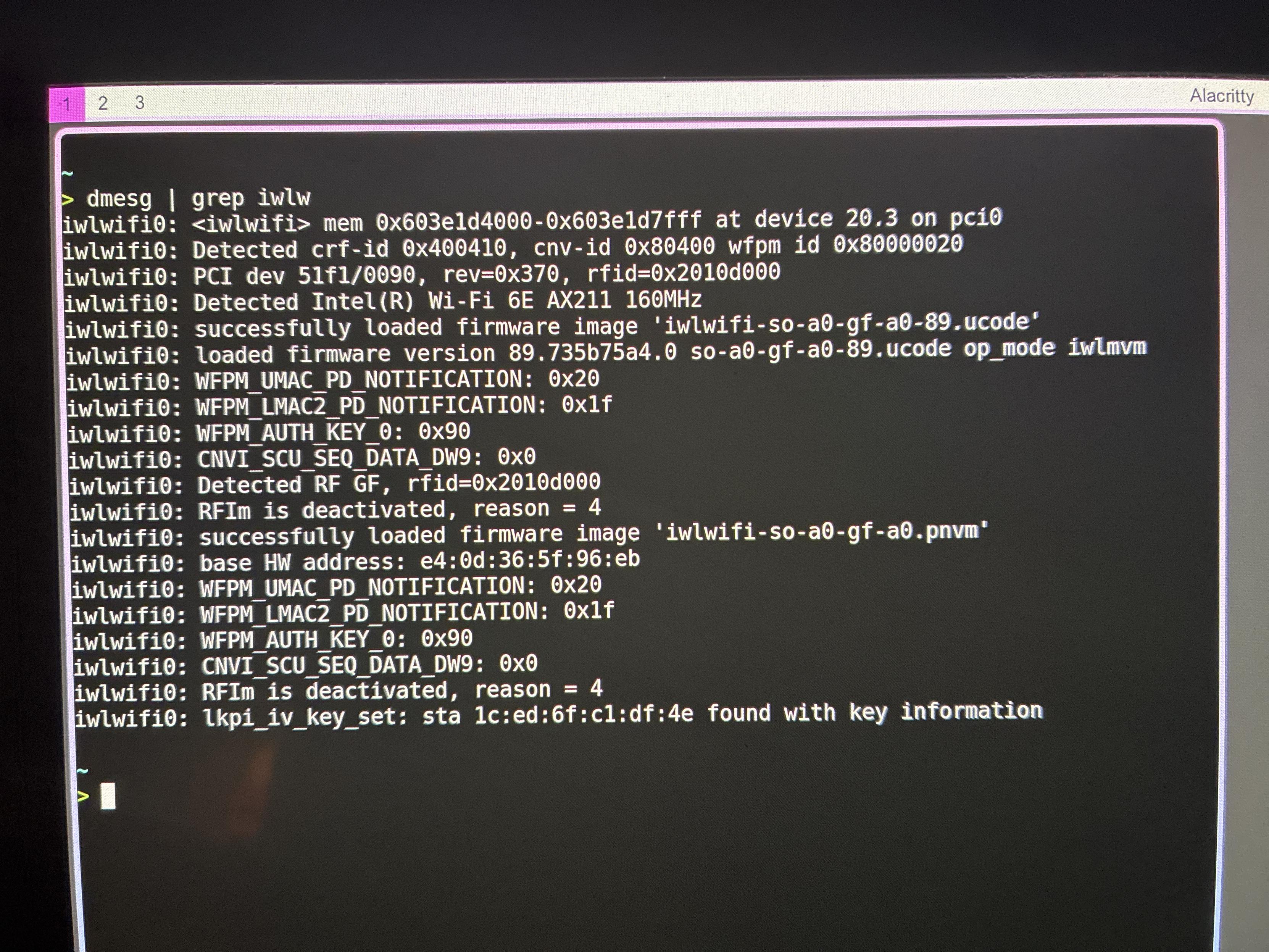
Question for the #NetBSD devs out there, the driver on FreeBSD for my wifi adapter on this thinkpad is if_iwlwifi, is there a known blocker that would prevent someone from bringing it to NetBSD?
![[?]](https://media.tech.lgbt/accounts/avatars/110/802/831/960/964/358/original/7b1b831f819500c7.png)

 🍉
🍉  [
[So, #NetBSD seems to be gaining traction given the LLM-embrace in the #Linux core team, but have anyone made the jump to #HaikuOS ? If so, what was the experience like?
HaikuOS was one of the few "greenlit" OS on the "no slop" list. This, in combination with being a simple OS for "regular desktop users", kinda make them deserve some extra support.
Reading the status on the latest release candidate, it seem support now is at a level where very few things are missing.
From what I gather, the only reason I would have to boot Linux, would be #BitWig (DAW software).
Sure, Haiku != *Nix, but that is kinda the point, they try to make a simple OS based on one of the best takes of making a simple OS. BeOS was such a neat thing, and to work this long on keeping it alive is amazing.
![[?]](https://cdn.fosstodon.org/accounts/avatars/108/194/405/521/059/098/original/5819cae4e7eaad69.png)
Hmmm… Did my little #Restic over #Tailscale experiment on #NetBSD trigger a 22 year old bug in if_tun.c?! Well, that’s exciting, and I’m genuinely happy and pleased by Bill and Greg to pick it up and continue the digging on the net-tech mailing list. I only wish I could be more helpful, but I haven’t built a NetBSD system from source since the 1990s… Maybe this is a good sign that I should start looking into that again?
![[?]](https://media.bsd.cafe/bsdmmedia01/accounts/avatars/115/138/278/314/458/705/original/14801851e6f000f4.png)
![[?]](https://media.mstdn.social/accounts/avatars/113/936/644/661/615/009/original/a7b5096ef53c43af.png)
- Try and persuade the infra lead at my society to give me a regular Wireguard config. This would be the easiest solution, but goes against the society's security policy unless Netbird is down long-term.
- Persuade the infra department to abandon Netbird. It's a bad solution and would ruffle some feathers, but it *is* technically an option.
3/3
- Try and persuade the infra lead at my society to give me a regular Wireguard config. This would be the easiest solution, but goes against the society's security policy unless Netbird is down long-term.
- Persuade the infra department to abandon Netbird. It's a bad solution and would ruffle some feathers, but it *is* technically an option.
3/3
- Try and persuade the infra lead at my society to give me a regular Wireguard config. This would be the easiest solution, but goes against the society's security policy unless Netbird is down long-term.
- Persuade the infra department to abandon Netbird. It's a bad solution and would ruffle some feathers, but it *is* technically an option.
3/3
![[?]](https://media.bsd.cafe/bsdmmedia01/accounts/avatars/117/006/199/875/207/359/original/dfd5a542d6917324.jpeg)
![[?]](https://cdn.yiff.life/accounts/avatars/109/440/163/990/391/713/original/7cddf7992e595b0b.png)
Okay #netbsdinstallparty #netbsd!
I have more news on the whole #kde stuff!
Ive been digging around in pkgsrc and discovered a hint!
It looks like that the Plasma workspace package is stuck being unbuildable because the plasma6-kwin package is still a wip, and is marked broken.
So close! T.T
Also found out that my Xbox and Steam controller mess with your mouse acceleration in the vertical axis in interesting ways.
![[?]](https://media.mstdn.social/accounts/avatars/115/147/839/325/025/322/original/6f50e92be2e37cce.png)
X window system is up! CTWM is up! Heh. Exploring....
ifconfig does not see the Broadcom wifi card. Not unexpected. It does seem to see the ethernet port. Gotta get networking going to add packages. I'll be hitting the how-to's.
![[?]](https://files.mastodon.social/accounts/avatars/108/194/895/955/853/554/original/27e24f89def9c2fc.jpg)
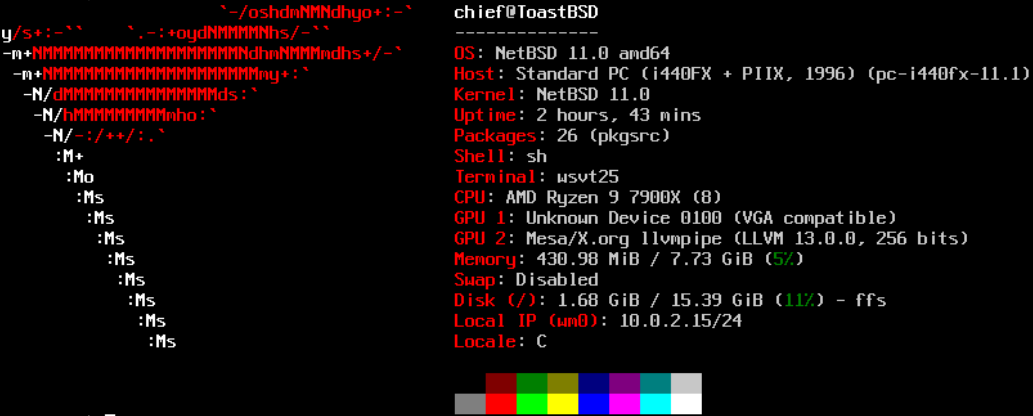
Been meaning to do this for a while, but finally ended up installing #NetBSD 11.0 inside a QEMU VM to play with. Installation was over before I knew it. So far so good, now to play around with configuration. With this, I now have all the three major BSD variants running in some capacity on my rudimentary #homelab. Fun times!
Alt...
Screenshot of 'fastfetch' showing fresh install of NetBSD 11.0 running inside a QEMU VM (installed under Arch Linux).
boosted![[?]](https://media.hachyderm.io/accounts/avatars/109/334/849/122/085/613/original/8fa76bd801bc4cf1.jpg)
Is there a live image of #NetBSD? How can I test if it will work with my hardware before repartitioning the disk?
I found Jibbed NetBSD, but it hasn't been updated since 2015, and https://github.com/tsutsui/netbsd-teokureliveimage, which may work but is likely localized to Japanese
It's a good thing that I took a break and then looked it over again. I made several improvements.
But to prevent perfect from being the enemy of the good, and so that this gets out to all of the potential #NetBSD users reading the #NetBSDGuide sooner rather than later, I'm cutting myself off. (-:
It's in the same place as before. I based it off your latest, so the diff should be fairly clean. However, the Guide seems to be missing some man page macros.
![[?]](https://media.tilde.zone/accounts/avatars/109/310/257/706/941/276/original/e5b07fb9d1845d72.jpg)
![[?]](https://mastodon.sdf.org/system/accounts/avatars/109/564/857/456/913/094/original/651ab60302ce5d82.png)
I doubt it is fully Linus, in the Old Days I could see him avoiding #ai
But the Linux Foundation (LF) is owned by the Large Corporations pushing #ai and the LF Pays Linus and some #Linux Developers. Since that is the case, I would expect this decision came directly from LF via the corporations.
But I agree, #linux + #ai is bothering me a lot. FWIW, posted using #NetBSD 11.0 via #firefox on a Thinkpad T430 :)
![[?]](https://media.mastodon.sunny.garden/accounts/avatars/110/657/712/351/170/121/original/7f0c7a7bf1eddc2e.png)

I finishing reshuffling os's and hw.
The oldest, X240 has the latest #alpinelinux.
The X270 has #netbsd 11, and the T480s has #OpenBSD 7.9
There's Go, Python and Postgresql on all, so now I can play with programming gui on all 3.
My Thinkcentre is serving as host for the repos.
I try to run the recommended basics on all:
Ksh, and X with fvwm on the #openbsd, Sh, and X with #ctw on #netbsd. On #alpine its busybox, X and #openbox. Xterm on all. All coding is done in vi/nvi.
![[?]](https://convenient.email/photo/profile/silverwizard.gif?ts=1737857444)
OK. NetBSD boots to a CL prompt on the HP2140.
I seem to have lost the option to boot to the other OS on the disk, AV Linux, but that partition should still be present, so that's just a boot configuration issue to resolve later.
Now, as time permits, I'll have to do a little reading on setting up a GUI and getting networking set up.
![[?]](https://files.mastodon.online/accounts/avatars/000/179/197/original/e233cd3a7e7b136f.png)
When I hear NetBSD I think of one of those anthropomorphized anime OS girls but in fishnet t-shirt and pantyhose waving small red flags.
...Net-BSD-san
That's probably just me.
Installing NetBSD to the HP2140 via .iso image on the USB. Hopefully I've chosen the setup options correctly. We'll see.
![[?]](https://cdn.masto.host/mastodongamedevplace/accounts/avatars/116/059/571/717/705/272/original/911c28d931792a2d.png)
#netbsd day 1
First hurdle: getting my laptop to recognize the bootable USB stick. Pressing F12 only presented me with the option of the existing disk.
Naturally, I took the stick out of the laptop and wanted to plug it back into my main PC, to see what's going on. But it was already there!
How to mitigate: after evaluating which of two identical USB sticks you want to use, make sure to not leave the other one on your desk and get distracted 🤦
#netbsd weekend day 2
I didn't get very far, but at least I got started and NetBSD is "running" on my laptop. Is it a lofty goal to want WiFi and a UI tomorrow?
![[?]](https://media.hachyderm.io/accounts/avatars/110/492/347/627/948/632/original/f0c7816f2364a2e3.jpg)



![[?]](https://cdn.masto.host/mastohackerstown/accounts/avatars/114/328/549/808/691/842/original/f58e7ebf82a2c8a6.jpeg)
![[?]](https://media.infosec.exchange/infosec.exchange/accounts/avatars/109/327/540/940/053/921/original/7e894651f5312787.png)
![[?]](https://files.mastodon.social/accounts/avatars/110/697/973/076/734/397/original/7f6c18d1ad5b27ab.jpg)
I finally got around to booting the #NetBSD image on my old Raspberry Pi today and it worked fine. 😀 👍 Thank you and congratulations to the whole NetBSD crew. ❤️++
boosted![[?]](https://mastodon.sdf.org/system/accounts/avatars/114/205/366/579/623/449/original/2eeba344bc5e17ba.png)
@BoydStephenSmithJr There are certain providers that run #NetBSD (or have in the past) and are NetBSD first.
https://tornadovps.com/
https://panix.com/
But they tend to be based in North America, so to reduce my ping, like many people, I use Vultr with their custom ISO upload option.
![[?]](https://media.mstdn.social/accounts/avatars/109/696/860/885/494/817/original/835eb175bbf72dc8.png)
Experimenting with BSD this weekend was fun.
Did this back in May too, but unlike back then Linux in my mind now’s transitioning to just an OS I might target. Like Windows. Even as I still use it every day. Unlike Windows.
A psychological barrier, sure, but also throwing away a lot of experience, for want of a better word.
Net & OpenBSD still both my likely front runners.
Open has not being based in the US in its favour. Slop isn’t the only thing I’d like to avoid.
Actually last time I was spending time on these things someone pointed me to a list of drivers that need to be updated.
I stepped away from that line of thought because I didn’t have any hardware in line with the task.
Maybe I should try to remedy that in order to get started.
![[?]](https://m.f-h.co/cosocial-ca/accounts/avatars/116/682/718/868/936/793/original/b1e94fcc192299f4.jpeg)
@mjdxp I am/was lucky enough to have been given a Ubuntu Hardy Heron CD in 2008 and now competent enough to have switched to Debian (Trixie). I have tried to look at BSD and managed to get Nomad and Ghost to boot. But always back to Debian because... probably just used to it. But! Watching your posts about #netbsd with great interest. You will see a follow request at some time. Unfortunately I'm not really good at navigating social media. Well, Mastodon. No social media other.
![[?]](https://s3.us-east-005.backblazeb2.com/LZMedia/4607454907f0c027e51d70ca858314666f32c4ff9bfd8f726c7d4a7ce2d35061.gif)
![[?]](https://typo.social/system/accounts/avatars/109/313/698/978/921/520/original/c46f1882e5d23705.png)
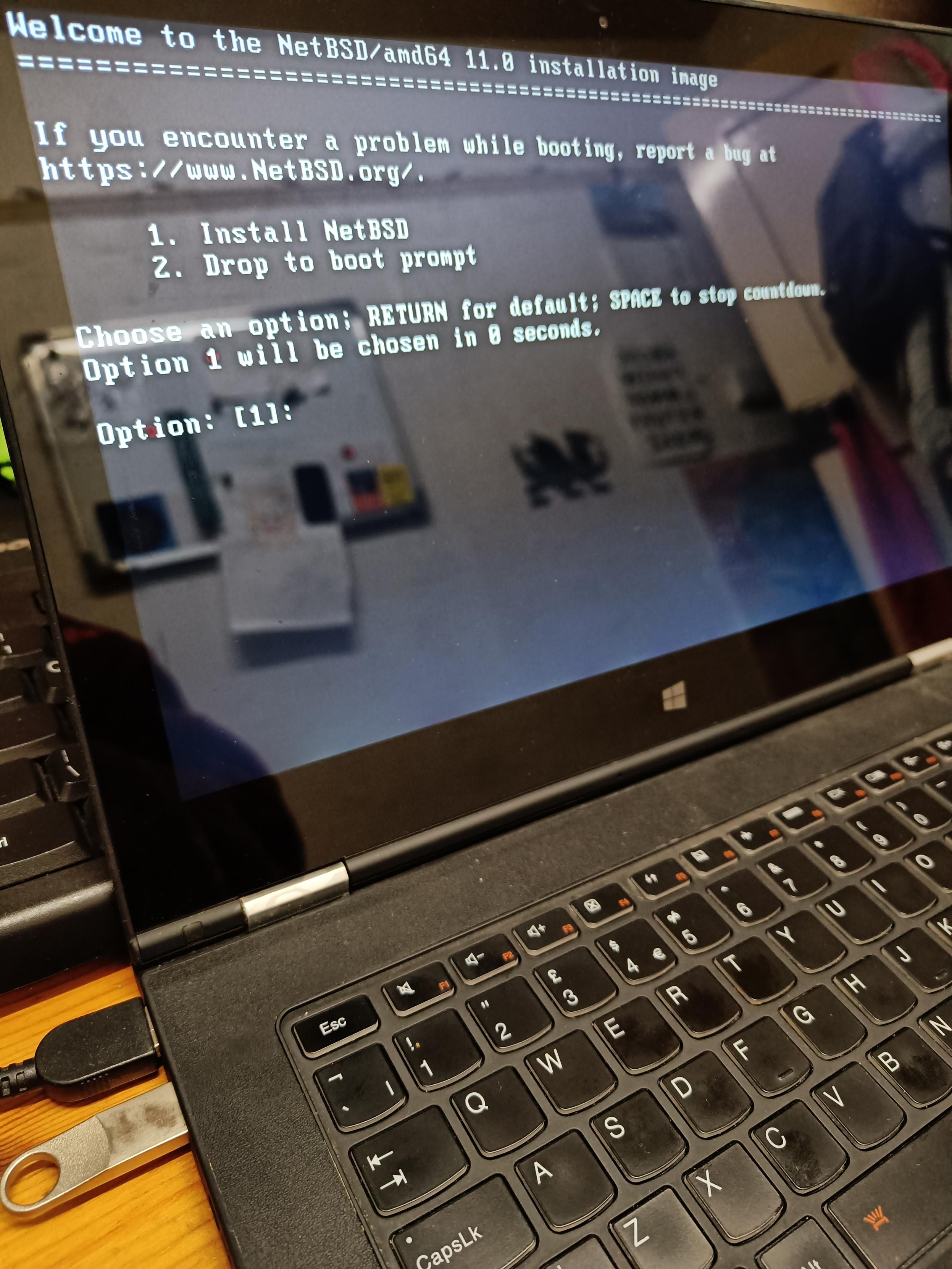
So, the stick works. I got this far. But during the install, the console actual has a flood of messages every second or so as it reports the unplugging and plugging oh a few USB devices, the ELAN touchscreen amongst them (it's internal, and I guess needs some magic, so it keeps soft unplugging itself?). Makes the install menus very difficult to read and the preamble scrolls off. I did get an install, I think. But now it seems stuck at the memory test when installing from the harddrive. Hmm.
#NetBSD
Alt...
Thin laptop with a shiny screen showing the NetBSD loader. Option 1, Install NetBSD, is about to be selected. Reflected int ehbsxreen you can see a fairly interesting part of the office wall with pictures and whiteboard on it. Slightly blurry.
So when it comes to #freebsd on my laptop, it is mostly awesome right now.
The most important thing currently is the ability to sleep or hibernate, and sadly that work is currently still in progress.
There is a missing driver for the bluetooth chipset, but the wlan is working well.
I think that not having hibernate or sleep on a laptop makes it a pretty tough case to daily drive or main.. but I also sort of want to stick around a bit.
I decided to try wayland and niri, and have really enjoyed it. I think I'll also try niri with KDE eventually.
Anyway, my time with a #BSD on a laptop overall indicates a lot of opportunity. FreeBSD is ahead of the pack a bit here, but I still feel compelled to get more involved with #NetBSD for a variety of reasons.
So for NetBSD my needs are:
- acpi (S0ix)
- wifi
- an i915kms driver
I believe it’s an MTU issue. Decreasing the MTU to 1200 (from the #Tailscale default of 1280) seems to not trigger the issue. Why this is special to Tailscale on #NetBSD is beyond me though.
![[?]](https://media.norden.social/accounts/avatars/117/194/703/927/011/599/original/6bc00348cd1c60cb.png)
 gebastel [