Search results for tag #NetBSD
![[?]](https://polymaths.social/fileserver/01HCMX6M1CZNEVJ4F5H58TT5XJ/attachment/original/01JHC5KM5K0V0J0436SPD3F86H.jpeg)


 🍵
🍵  [
[![[?]](https://cdn.masto.host/rubysocial/accounts/avatars/000/093/360/original/920f5a8782200f9b.jpg)
The laptop I'm running it on has Intel WiFi, so chances of it working are decent.
The laptop I'd LIKE to run it on has Atheros WiFi, and BSDs have never caught up with the "newer" chips. I do have some USB WiFi interfaces that could help me get that one going with a real #NetBSD installation.
 boosted
This #NetBSD 11 live image from Izumi Tsutsui does work. I got it to boot to a JWM window manager and started Firefox. It was slow, but it runs.
Next step is to try wpa_gui to get networking.
![[?]](https://mastodon.longlandclan.id.au/system/accounts/avatars/109/573/513/395/599/946/original/d9f62920e1e1edbb.jpg)
Yesterday, I got `ejabberd` installed… today I try to make it work.
I was going to try and set it up so it served the `vk4msl.com` domain, however, I already have a blog at that address, and while I can define `SRV` DNS records, it still ultimately wants a certificate with a `vk4msl.com` subject alternative name in it.
This mirrors a constraint I'll have with Brisbane WICEN; they already have a site at `brisbanewicen.org.au` running on shared hosting.
So I settled on setting it up on a sub-domain. Set it up so I could hand out invites (one by one) for onboarding members… tried setting myself up an account, that works… but then I try to use it.
Thunderbird refuses to connect. No error given, just fails.
Try Dino: "could not connect to chat.vk4msl.com" — no errors in `stdout` / `stderr`.
Try Gajim: "Error"
Crank the debugging on `ejabberd` up, I get this:
https://gist.github.com/sjlongland/a99ec85563d2b57b1e118a3211bf749d
My Erlang is rather limited, but it seems it hits `mod_register:stream_feature_register/2` and dies. `mod_register` would be the code module, and `stream_feature_register/2` being the function being called; the `/2` means it is a function that takes two arguments.
I'm just doing a `cvs up -dP` of my `pkgsrc` tree and trying another update in case dependencies have shifted, but things shouldn't be *this* broken.
![[?]](https://stockage.framapiaf.org/framapiaf/accounts/avatars/000/106/763/original/73a1613fdf975e57.png)
[Stéphane HUC :: Revues] Promotion de la revue à-propos de : “NetBSD 10.2"
> Publication de la version 10.2 de NetBSD
boosted![[?]](https://indiepocalypse.files.fedi.monster/accounts/avatars/117/102/576/716/677/162/original/cea2ad95dd7a18df.png)
Trying to install #NetBSD on an old laptop with an annoyingly useless secondary NVIDIA card (the 950m was never good). Is there a way to keep NetBSD from turning the card on and draining power/generating heat at boot while it uses the Intel graphics?
Unfortunately, there is no BIOS option on this laptop to hard disable it.
![[?]](https://cyberpunklol.files.fedi.monster/accounts/avatars/117/024/347/319/605/995/original/cc6c4d011463faf5.png)
Well I've already caved to using #FreeBSD instead of #NetBSD because it better supports my hardware and I was really hoping I could take refuge with NetBSD's clear stance against LLM sludge. I feel like I've spent so many days just installing operating systems so I might just give up on trying to have a relatively clean #Linux.
![[?]](https://mammut.moe/system/accounts/avatars/109/308/533/487/810/604/original/35288be724803892.jpg)
@netbsd @xilatsad
Today I saw an interesting and important case raised: NetBSD states it has imported ZFS from FreeBSD, which uses OpenZFS project [1]. Currently, OpenZFS is tainted with LLM-input to some degree. That raised the question of sync between sources in these project and thus the LLM-input to the NetBSD in the end.
Of the big three, only #NetBSD has a clear anti-LLM policy.
(Please understand, I usee and enjoy all three. I still enjoy and use Linux. But it's important to make a stand where we can)
![[?]](https://cdn.masto.host/indiewebsocial/accounts/avatars/112/536/017/792/352/435/original/a87e9128d6303e02.png)
😺 NetBSD 10.2 Released With New Hardware Support and Security Fixes https://linuxiac.com/netbsd-10-2-released-with-new-hardware-support-and-security-fixes/
![[?]](https://assets.chaos.social/accounts/avatars/108/198/383/090/213/558/original/92bec86704400a34.jpg)
![[?]](https://rpi0w.stefanomarinelli.it/media/e7ed6ce8-3995-439e-8168-674a22629598/image.jpg)
This is a periodic reminder that this instance is running littleFedi on a Raspberry PI Zero W powered by NetBSD
![[?]](https://guggemol.pfalz.social/accounts/avatars/109/281/012/865/580/262/original/d240613d7cc6d795.jpeg)
![[?]](https://media.bsd.network/accounts/avatars/000/006/949/original/9592eac6e5018e39.png)
![[?]](https://media.mas.to/accounts/avatars/114/260/046/832/065/008/original/8f3ac33a53cf43b4.png)
Eh, fuck homelab, fuck selfhosting, fuck Linux, fuck *BSD, fuck computers
FUCK THIS HOBBY.
I'm off doing something else more fun and that I can actually afford
Fortunately li-ion batteries are cheap. I just wish there were more lithium battery factories out there other than China...
Idk. For all the bullshit China's doing, I'll admit they're doing better stuffs. Alternative RAM, SSD's, making batteries and battery related stuff, and eugh.. open weight models that can be ran locally. Still unethically sourced datasets though.
Come on other countries. Fucking do something. Stop with the powertripping like discord/reddit mods and do some useful shit
#batteries #electronics #lfp #linux #homelab #selfhosted #freebsd #openbsd #netbsd #mastodon
Eh, fuck homelab, fuck selfhosting, fuck Linux, fuck *BSD, fuck computers
FUCK THIS HOBBY.
I'm off doing something else more fun and that I can actually afford
Fortunately li-ion batteries are cheap. I just wish there were more lithium battery factories out there other than China...
Idk. For all the bullshit China's doing, I'll admit they're doing better stuffs. Alternative RAM, SSD's, making batteries and battery related stuff, and eugh.. open weight models that can be ran locally. Still unethically sourced datasets though.
Come on other countries. Fucking do something. Stop with the powertripping like discord/reddit mods and do some useful shit
#batteries #electronics #lfp #linux #homelab #selfhosted #freebsd #openbsd #netbsd
![[?]](https://media.mstdn.social/accounts/avatars/109/521/442/245/107/734/original/9303ae5bd9aebaa5.jpeg)
Advanced Programming in the #UNIX Environment
Week 3: stat(2) intro
In this video lecture, we meet our new best friend, the 'struct stat'. We'll cover the stat(2) system calls and begin discussing each of the fields in the struct, often by example of the ls(1) and stat(1) commands. In this way, we begin learning more about how the Unix File System is implemented.
(Note that the output of stat(1) on #NetBSD is different from that on #Linux.)
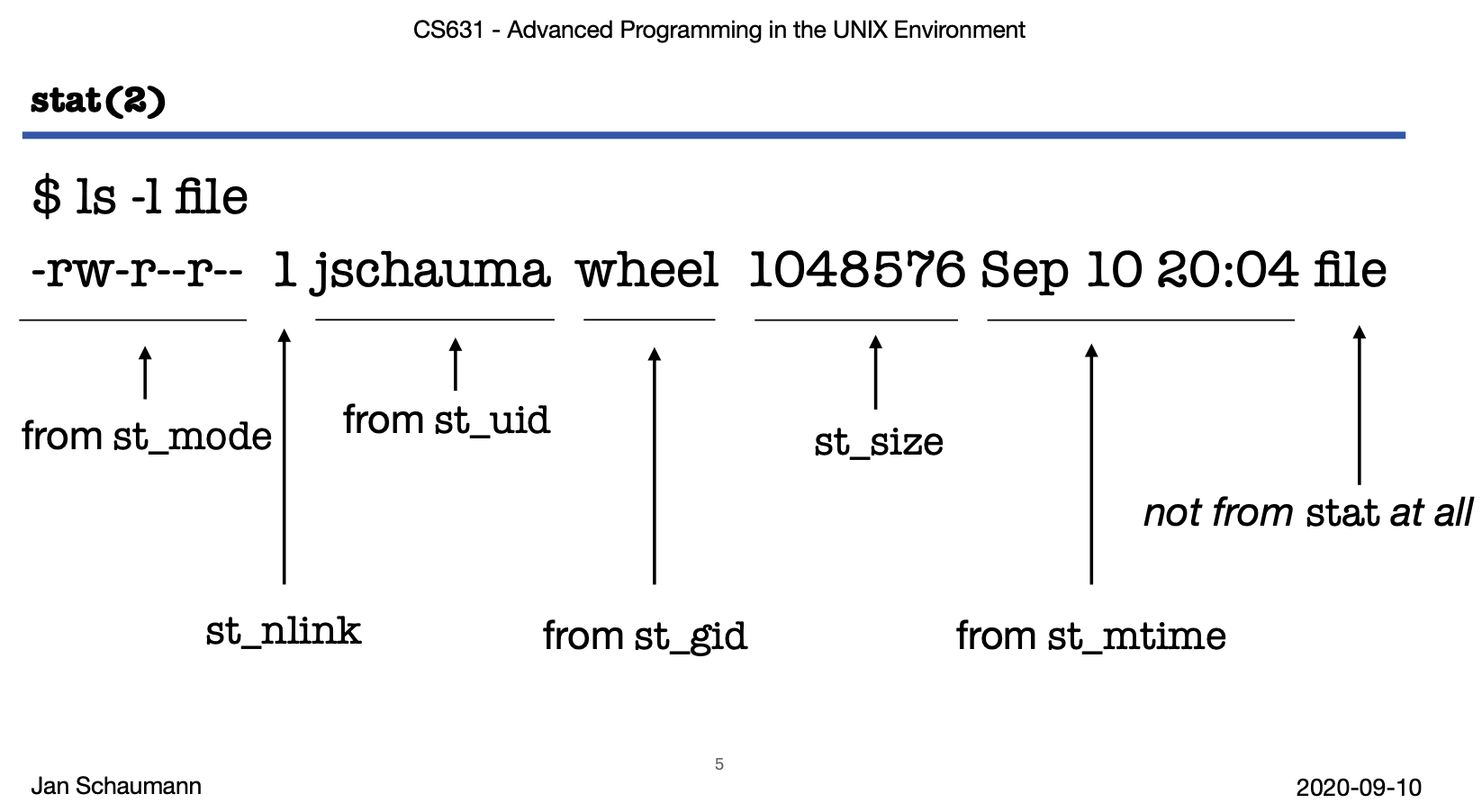
Alt...
$ ls -l file
-rw-r--r-- 1 jschauma wheel 1048576 Sep 10 20:04 file
"-rw-r-r-" from st_mode
1 st_nlink
"jschauma" from st_uid
"wheel" from st_gid
1048576 st_size
Sep 10 20:04 from st_mtime
file not from stat at all
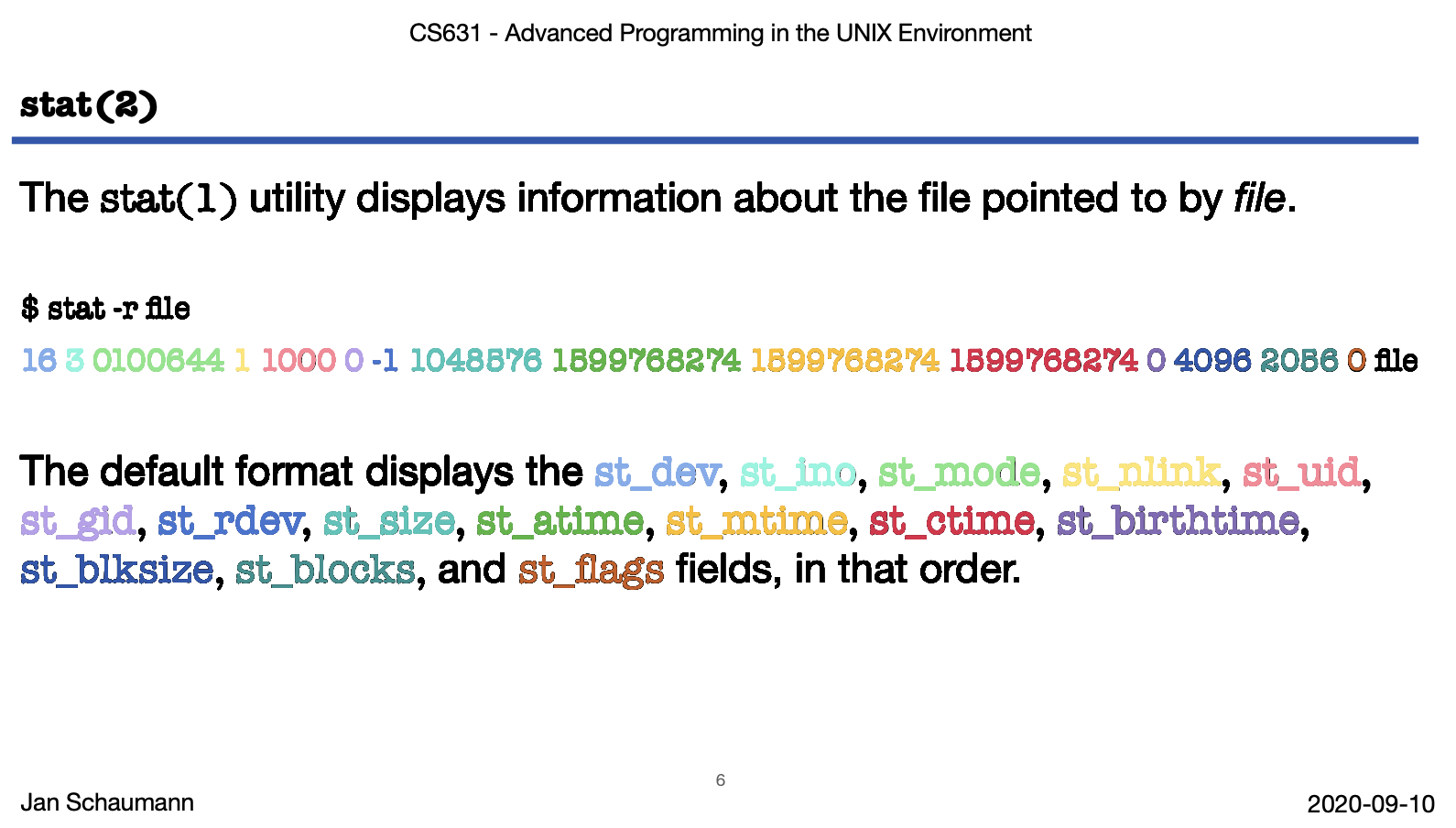
Alt...
The stat(1) utility displays information about the file pointed to by file.
$ stat -r file
16 3 0100644 1 1000 0 -1 1048576 1599768274 1599768274 1599768274 0 4096 2056 0 file
The default format displays the st_dev, st_ino, st_mode, st_nlink, st_uid,
st_gid, st_rdev, st_size, st_atime, st_mtime, st_ctime, st_birthtime,
st_blksize, st_blocks, and st_flags fields, in that order.
![[?]](https://cdn.famichiki.jp/accounts/avatars/111/687/046/653/407/582/original/c3de038cd03abb28.png)
I was *this* close to trying to install #GhostBSD on an old laptop, but just now I found this. Yeah, I do not want to have anything to do with these people. Apparently #FreeBSD has a very wishy-washy policy on #LLM contributions. #NetBSD has a clear ban, but I also get the impression that NetBSD is hardly an OS for casual users. Is there ANY user-friendly #BSD distro that isn't run by evil shits?
https://ostechnix.com/ghostbsd-casper-ai-assistant/
![[?]](data:image/png;base64, iVBORw0KGgoAAAANSUhEUgAAAEAAAABAAQAAAACCEkxzAAAAUUlEQVQoz43R0QkAMQwCUDdw/y3dwEvsvzlL4X1IoQkAisKmwfAFT3RgJHbQezpSRoXEqeqCL9BJBf7h3QbOCCxV5EVWMEMwG7K1/WODtlvxAYTtEsDU9F34AAAAAElFTkSuQmCC)

The system was previously softhacked through other means but I managed to get Wiibrand working in the end, the Homebrew Channel installed and NetBSD started up.
Unfortunately the "UGREEN USB 2.0 Ethernet Adapter" doesn't work in the Wii Menu, despite having the right chipset, and also not in #NetBSD - the axen driver repeatedly prints messages about a wrong buffer. I've ordered a Realtek-based dongle instead.
The Wii homeserver is now live!
(IPv6 only, so if your ISP is stuck in the 1900s it'll have to wait until I get around to setting up some proxy or such.)
Edit: also proxied through IPv4 now
I'm trying to decide how weary I am of trying to use #NetBSD on my desktop PC even though my #NVidia card is unsupported so I'm struggling along with a limited-resolution framebuffer. So far it seems like #FreeBSD or a derivative is my only hope to get reasonable graphics support. Should I:
| tough it out on NetBSD: | 0 |
| switch to FreeBSD: | 0 |
| a miraculous third option: | 0 |
| give up on computers: | 0 |
![[?]](https://media.mstdn.social/accounts/avatars/109/349/941/912/741/020/original/8dc30e25f99a6669.jpg)
Another halfternnon playing with #NetBSD .
I am still trying to work out the right place to set $PS1 and start ssh-agent, and I have edited a .Xresources file for the first time in about 20 years.
boosted![[?]](https://justfollow.me.uk/system/accounts/avatars/109/320/306/219/107/803/original/abdeb1bbb89e40f5.jpg)
Better yet, his transcription contains the excellent "I built this while I was down at the pub and I had time to order and drink a whole pint while it was just trying to build the package into a tarball at the end.". Which sums up my approach to software engineering. #NetBSD
@kirby Here's a recent #NetBSD project by @stefano showing off on a 1-core Pi0W:
https://rpi0w.stefanomarinelli.it/@stefano/01a052e8-75a6-7a1a-9a87-ed54609fa904
![[?]](https://files.mastodon.social/accounts/avatars/113/635/103/853/964/473/original/0a4435eaf8d5c473.png)
Overview of AOOSTAR WTR Pro on *BSD https://lobste.rs/s/sp4dnk #freebsd #hardware #linux #netbsd #openbsd
https://www.tumfatig.net/2026/overview-of-aoostar-wtr-pro-on-bsd/
![[?]](https://todon.eu/system/accounts/avatars/108/195/195/683/530/949/original/8174cd7215c979ba.png)
Moving forward with NetBSD! GNU Health server and client are now installed on the test laptop ❤️
#GNUHealth #NetBSD #OpenScience #RunBSD #noAI
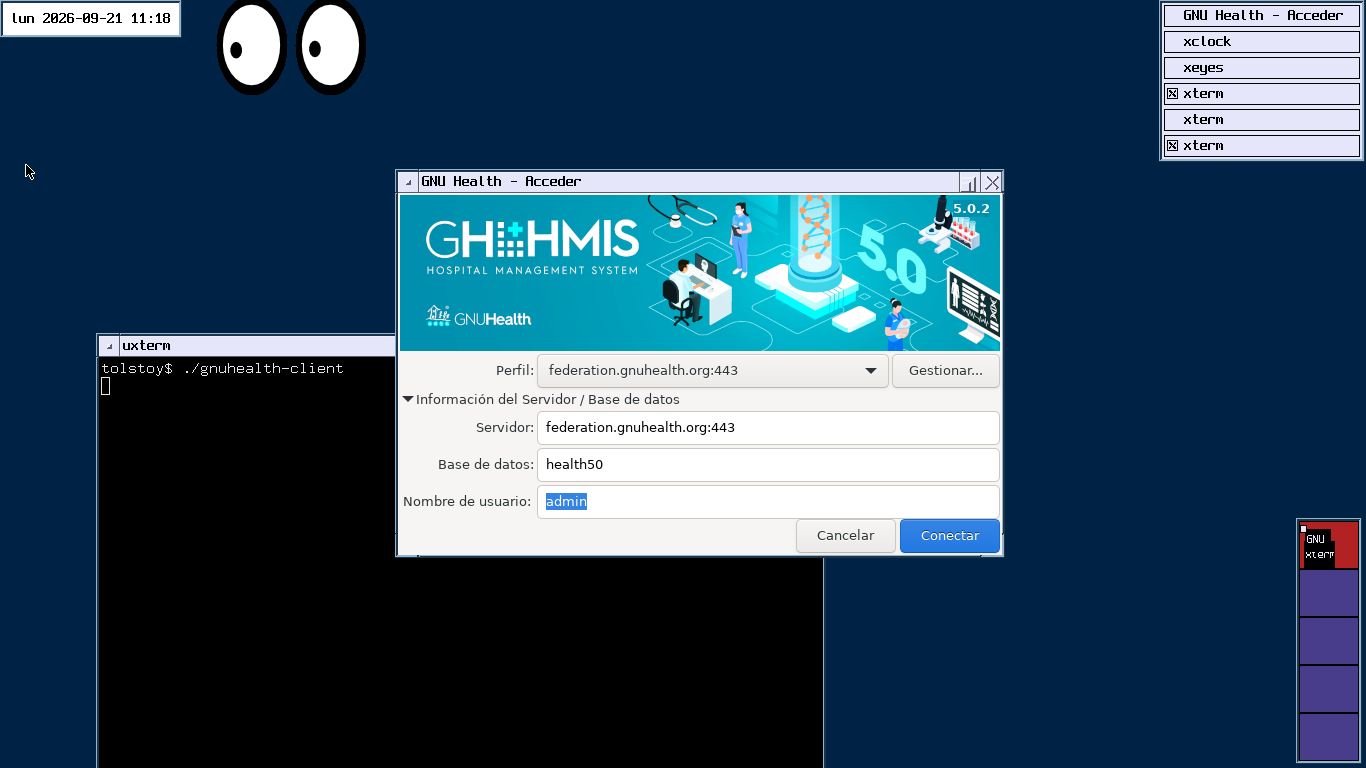
Alt...
GNUHealth Hospital Information System GTK client shows the login window to the community federation server. In the back the CTWM with xeyes, xclock and a uxterm running on NetBSD
![[?]](https://media.bsd.cafe/bsdmmedia01/accounts/avatars/110/753/691/400/011/788/original/7decba5a2514dda4.png)
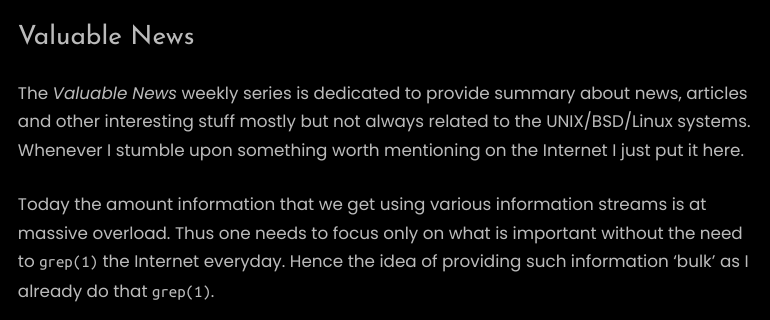
Latest 𝗩𝗮𝗹𝘂𝗮𝗯𝗹𝗲 𝗡𝗲𝘄𝘀 - 𝟮𝟬𝟮𝟲/𝟬𝟵/𝟮𝟭 (Valuable News - 2026/09/21) available.
https://vermaden.wordpress.com/2026/09/21/valuable-news-2026-09-21/
Past releases: https://vermaden.wordpress.com/news/
#verblog #vernews #news #bsd #freebsd #openbsd #netbsd #linux #unix #zfs #opnsense #ghostbsd #solaris #vermadenday
![[?]](https://files.mastodon.social/accounts/avatars/000/396/350/original/707d3beea6076986.png)
Latest 𝗩𝗮𝗹𝘂𝗮𝗯𝗹𝗲 𝗡𝗲𝘄𝘀 - 𝟮𝟬𝟮𝟲/𝟬𝟵/𝟮𝟭 (Valuable News - 2026/09/21) available.
https://vermaden.wordpress.com/2026/09/21/valuable-news-2026-09-21/
Past releases: https://vermaden.wordpress.com/news/
#verblog #vernews #news #bsd #freebsd #openbsd #netbsd #linux #unix #zfs #opnsense #ghostbsd #solaris #vermadenday
Google Summer of Code 2026 Reports: Port the #Enlightenment desktop environment to #NetBSD, part 2
@E #noai #antiai #nollm #runBSD #Linux
https://blog.netbsd.org/tnf/entry/gsoc2026_enlightenment_2
![[?]](https://cdn.fosstodon.org/accounts/avatars/109/860/465/494/023/450/original/eb2faa9c8053bd7a.jpg)
Day 20
Downloaded and installed pkgsrc and did the example compile and install of 'figlet'.
boostedAdvanced Programming in the #UNIX Environment
Week 2: File Sharing
In this final video lecture segment for our week 2 materials, we take a look at what it means when multiple processes access the same files and what the implications of that are on the syscalls we know. We conclude with a look at /dev/fd on different operating systems, including #NetBSD, #macOS, and #Linux.
![[?]](https://mastodon.sdf.org/system/accounts/avatars/109/264/082/407/551/153/original/5ac9c4373193215e.png)
Ok, progress! Simplified some Verilog in the MMU and now it gets through initializing the SegMap and PageMap before 💣 when enabling the MMU. #retrocomputing #m68k #netbsd
 boosted
This week I should get the PCI wireless card 🤞.
In the meantime, working on the essential applications for my NetBSD 11 box and letting rsync do its magic 😺
#noAI #NetBSD #OperatingSystems
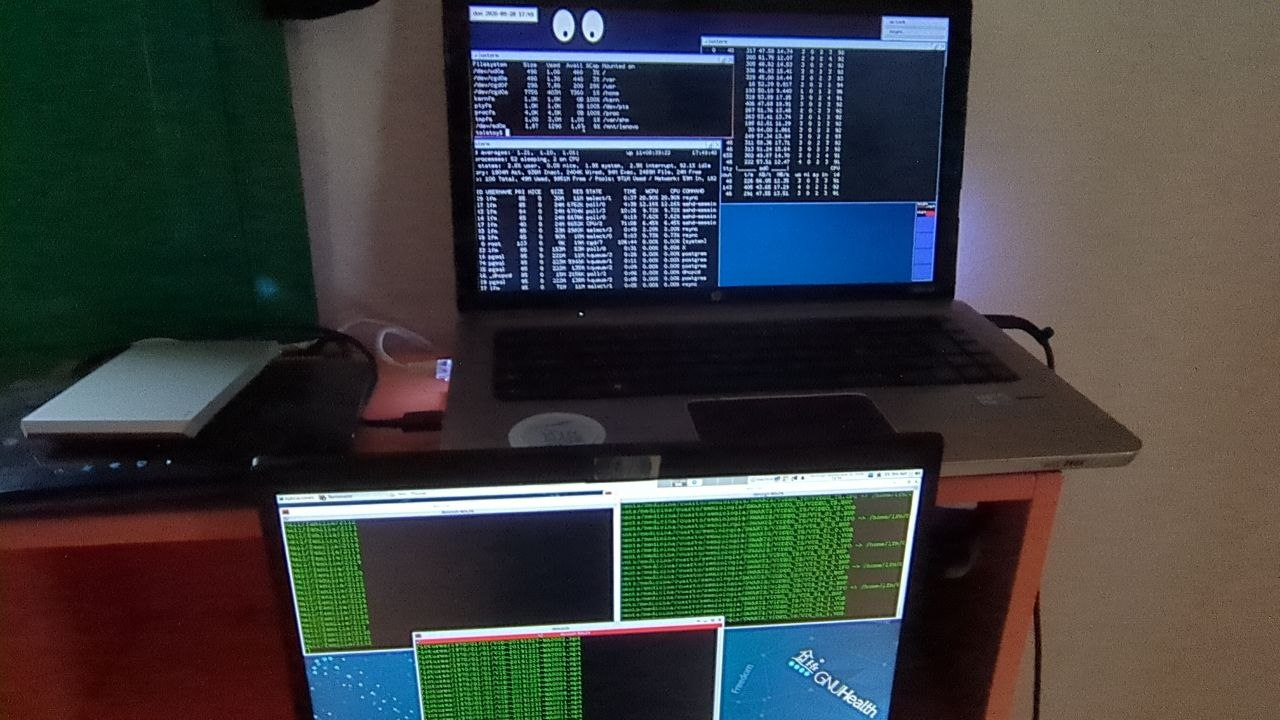
Alt...
two computers, one on top of the other. The one on the top runs CTWM on NetBSD and it shows the mounted filesystems, iostat and top command. The one on the bottom runs XFCE on Void and it shows three windows running rsync in parallel. On the left, a small router an a external USB drive
This week I should get the PCI wireless card 🤞.
In the meantime, working on the essential applications and letting rsync do its magic 😺
#noAI #NetBSD
Alt...
two computers, one on top of the other. The one on the top runs CTWIN on NetBSD and it shows the mounted filesystems, iostat and top command. The one on the bottom runs XFCE on Void and it shows three windows running rsync in parallel. On the left, a small router an a external USB drive
boosted![[?]](https://fedi.bobadin.icu/fileserver/01JW8FA8KA9818YWHHBPPZ7TCK/attachment/original/01J0DHDSP9WC6YXEWC97N7TXKR.webp)


The great thing about text-based login is that you have to type in your username, and you can be really generous with yourself (or "evil", given the times we're living in).
Just a little while ago, for example, I entered alephoto95...
Not so bad