Search results for tag #Agile
![[?]](https://files.mastodon.social/accounts/avatars/112/342/617/510/979/081/original/8bb6c11cb1111c15.png)
„Agil heißt, ihr plant nicht." Der Vorwurf kommt meistens vom Kunden. Und er stimmt oft, wenn man sich anschaut, was viele Teams Planung nennen.
Die Antwort ist trotzdem nicht mehr Plan, sondern ein anderer Schnitt: Story Map aufhängen, eine waagerechte Linie durchziehen, alles darüber ist Version 1. Minimal, aber eine durchgehende Journey. Dafür kannst du ein Datum nennen.
Wasserfall plant einmal. Agil plant permanent.
https://no-bullshit-agile.de/buch/agile-planung/?mtm_campaign=mastodon
Prioritäten sind kein Steuerungsinstrument. Sie sind eine Momentaufnahme davon, wer zuletzt laut war: Chef, Kunde, Support.
Deshalb ist die Liste am Montag schon falsch. Nicht weil ihr schlecht priorisiert, sondern weil sich die Lage bewegt und die Liste nicht.
Eisenhower hat das sauber getrennt: „Plans are nothing, planning is everything." Der Plan ist Abfall. Das Planen nicht.

Alt...
Plakat mit schwarzen Versalien auf farbigem Grund: „Eure Prioliste ist Montag schon falsch", das Wort „falsch" invertiert. Darunter: „Nicht ihr seid schuld, die Lage bewegt sich."
Ein PDF verlinkt man nicht. Man schickt es rum, und drei Wochen später hat jeder eine andere Version.
Deshalb steht mein Buch jetzt komplett als Seiten im Netz. 34 Kapitel, jedes mit eigener URL, durchsuchbar, kostenlos, kein Formular, keine Mail-Adresse.
Wenn im nächsten Refinement wieder die Frage kommt, wer eigentlich entscheidet: Kapitel 11 verlinken statt eine Datei anzuhängen.
PDF und EPUB gibt es weiter.
![[?]](https://files.mastodon.social/accounts/avatars/109/355/050/369/648/745/original/01d3bd58da9b00e4.png)
Ansible for DevOps by Jeff Geerling is on sale on Leanpub! Its suggested price is $9.99; get it for $6.99 with this coupon: https://leanpub.com/ansible-for-devops/c/LeanPublishingDaily20260805 #agile #software #startups #ansible #devops #cloud_computing
![[?]](https://files.mastodon.social/accounts/avatars/110/663/603/233/434/084/original/1e1b3ab20dfd710e.png)
For decades, productivity was about producing more.
#AI has solved that problem.
We can now generate more code, documents, ideas and decisions than anyone could ever need.
#AgileCheese therefore introduces Negative Productivity: value is created by preventing unnecessary output from being produced.
The most productive #agile team of the future may produce nothing.
Because sometimes the highest-quality #cheese is the cheese you never made. 🧀

Alt...
A hyperproductive team doing nothing.
![[?]](https://alvinashcraft.com/img/md-light-1024.png)
Dew Drop - August 7, 2026 (#4728)
Top Links
Control iOS and Android Emulators Inside GitHub Copilot app Canvas (James Montemagno)
Test reporting in Microsoft.Testing.Platform: from red build to root cause (Amaury Levé)
Improving GPT-5.6 Sol in ChatGPT—and expanding access for free users (OpenAI Team)
Announcing t…
![[?]](https://media.hachyderm.io/accounts/avatars/116/580/040/333/101/968/original/460dbb1a82fed4cd.jpg)
📏 The problem with bonuses isn't the money, it's the target.
Goodhart's Law: when a measure becomes a target, it stops being a good measure. Pay a developer for velocity and velocity stops telling you about throughput. Pay a tester for defects found and "quality" detaches from the number.
And most targets are badly chosen to begin with: velocity as throughput, defects as quality. Output isn't outcome. A bonus gets you more of the target; if the target was wrong, that's not what you wanted.
Nimm eure letzten drei Retros. Zähl die Maßnahmen, die tatsächlich umgesetzt wurden.
Meistens ist die Antwort eine. Oft keine.
Das ist kein Motivationsproblem. Ihr erkennt die Probleme sauber, ihr könnt sie nur nicht schnell genug in veränderte Arbeit übersetzen. Feedback läuft schnell, die Arbeit langsam. Dieser Zustand hat einen Namen.
https://no-bullshit-agile.de/wfl/?mtm_campaign=mastodon#zwei-geschwindigkeiten-zustände-des-systems
#Programming #SystemsThinking #Agile

Alt...
Plakat auf hellem Papierton, schwarze Versalien: „Erkannt ist nicht geändert", das Wort „geändert" invertiert. Darunter: „Zwei Geschwindigkeiten, eine Engstelle."
![[?]](https://mastodon.moscow/system/accounts/avatars/116/397/673/048/057/419/original/d339a220968ac595.png)
⭐ Starfish помогает команде не просто разделить прошедший спринт на «хорошо» и «плохо», а точнее настроить рабочие привычки.
Участники распределяют наблюдения по пяти зонам:
🟢 Keep doing: что продолжать
🟩 Less of: чего делать меньше
🔵 More of: чего делать больше
🔴 Stop doing: от чего отказаться
🟡 Start doing: что попробовать
Так в разговор попадают не только проблемы, но и полезные практики, которые стоит сохранить или усилить. В финале команда выбирает до трёх изменений, назначает владельцев и договаривается о дате проверки. 🎯
В статье разобрали сценарий Starfish на 60 минут, типичные ловушки и отличия от KALM и WRAP:
https://retropoint.ru/news/starfish-retrospective
#RetroPoint #ретроспектива #Starfish #Agile #управлениекомандой

![[?]](https://media.hachyderm.io/accounts/avatars/109/381/963/540/469/664/original/8a8562b0c10666f4.jpg)
Dew Drop Weekly Newsletter 495 - Week Ending August 7, 2026
#dewdrop #newsletter #javascript #azure #css #aspnetcore #blazor #xaml #windowsdev #cpp #csharp #dotnet #ai #dotnetmaui #appdev #mcp #agile #devops #python #podcasts #IoT #m365 #sqlserver #data #terminal #devtools
Everyone is talking about #AI, #Agents, #Reasoning and #Automation.
They’re all solving the wrong latency.
Modern CPUs mastered #SpeculativeExecution decades ago: execute first, roll back if needed.
#AgileCheese simply applies the same principle to organizations.
Every decision starts as a speculative thread.
Stop waiting for decisions. Execute them speculatively.
Rollback is cheaper than meetings.
That’s what true #agile has always wanted to become.
And that’s where the #cheese is. 🧀🚀

Alt...
An office scene showing a guy executing a speculative decision task.
![[?]](data:image/png;base64, iVBORw0KGgoAAAANSUhEUgAAAEAAAABAAQAAAACCEkxzAAAAUUlEQVQoz43R0QkAMQwCUDdw/y3dwEvsvzlL4X1IoQkAisKmwfAFT3RgJHbQezpSRoXEqeqCL9BJBf7h3QbOCCxV5EVWMEMwG7K1/WODtlvxAYTtEsDU9F34AAAAAElFTkSuQmCC)

Dew Drop - August 6, 2026 (#4727)
Top Links
Azure DevOps Remote MCP Server is generally available (Dan Hellem)
Uno Platform 6.6 Release: Community Standup (Sam Basu, Martin Zikmund & Jonathan Pryor)
Build Faster with Syncfusion AI Coding Assistant Tools: Agent Skills and the MCP Server (Balaji Elumalai)
.NET Rock…
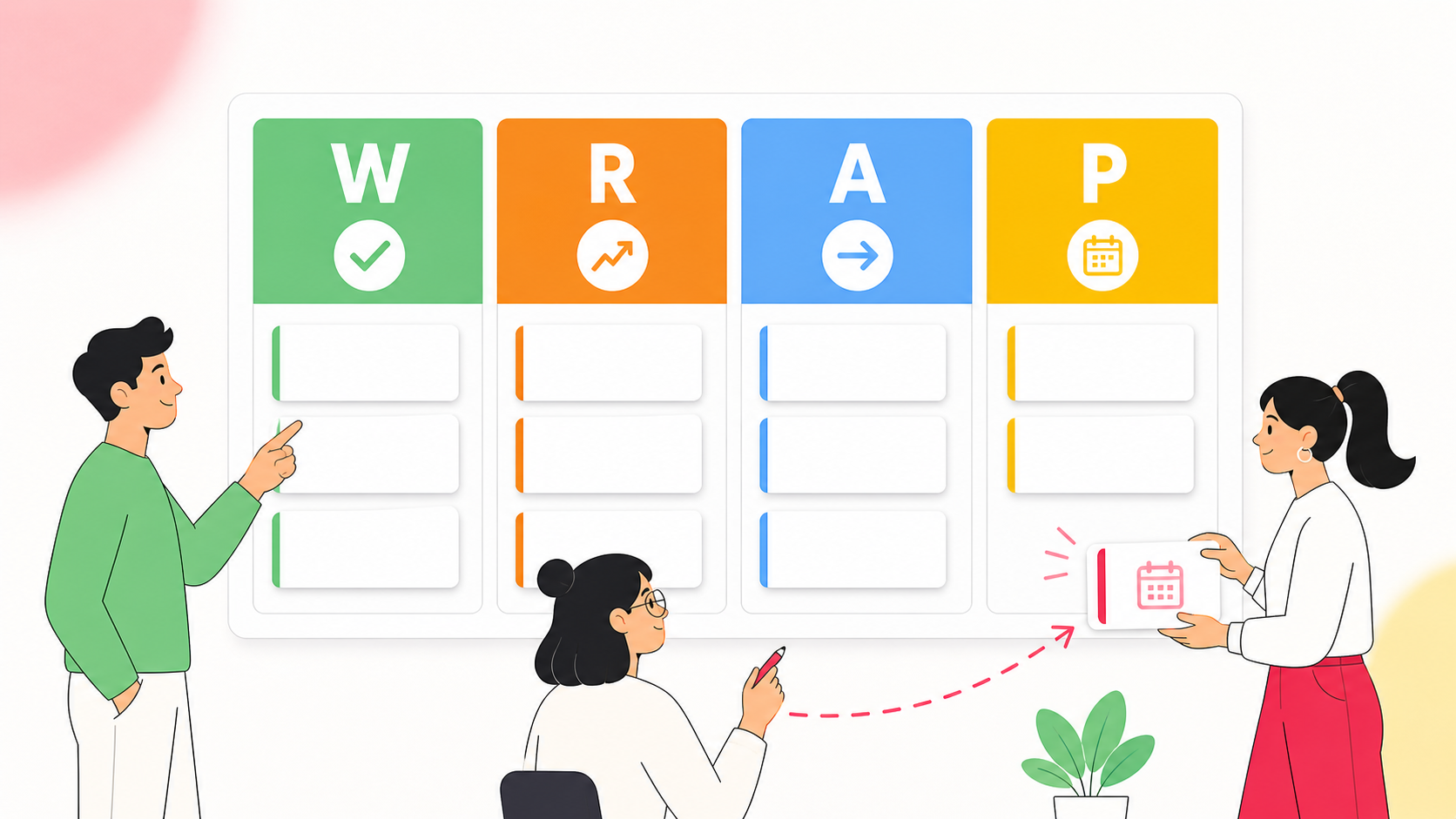
Ретроспектива закончилась хорошим разговором, а договорённости снова потерялись? Попробуйте WRAP 🔄
Четыре зоны Worked, Room to improve, Actions и Plans помогают отделить наблюдения от решений, выбрать конкретные действия и встроить их в следующий рабочий цикл.
В статье разобрали, как провести WRAP за 55 минут, назначить владельцев и выбрать один-два эксперимента, к результатам которых команда вернётся на следующей встрече 🎯
Читайте и пробуйте на своей ретроспективе:
https://retropoint.ru/news/wrap-retrospective
#WRAP #Ретроспектива #Agile #Scrum #TeamLead #RetroPoint
![[?]](https://files.mastodon.social/accounts/avatars/109/248/158/793/719/138/original/8e2492a53f609e58.jpg)
RE: https://mastodon.au/@Heliograph/117047428466807871
Selbst der Atlassian-Tower in Sydney sieht aus wie ein klassisches Backlog.
Und innen drin wahrscheinlich auch:
unten sitzen "die Unwichtigen" (Pförtner:innen, Empfangstisch, alles was neu rein kommt landet erstmal hier)
Und ganz oben sitzen "die wichtigsten" aus Sicht Derjenigen, die entscheiden. Also sie selbst.

Ein sehr sehr guter Text über "Code Review", der in Scrum Teams oft eine eigene Spalte auf dem Scrum Board darstellt.
Oft ein Diskussionsthema in Retrospektiven. Oft fühlt es sich nervig an. Jetzt kommt AI ins Team. Wie kann es helfen? Und warum machen wir das eigentlich alles nochmal?
https://newsletter.getdx.com/p/what-are-code-reviews-even-for
#AgileAI #Scrum #Agile #ScrumMaster #AgileCoach #Retrospektive #CodeReview
![[?]](https://files.mastodon.online/accounts/avatars/110/662/852/345/682/042/original/142c7afdf9675462.png)
Dew Drop - August 4, 2026 (#4725)
Top Links
Strengthening NuGet Supply Chain Security: Reducing API Key Lifetime (.NET Team)
Learn how to use the four IQs: Web IQ, Work IQ, Fabric IQ, Foundry IQ (Pamela Fox)
Why AI Struggles with Multi-Repository Projects and How Code Studio Helps (Yuvaraj Mohan)
Announcing Azure…
![[?]](https://cdn.masto.host/mastodonie/accounts/avatars/109/287/644/790/067/714/original/5e277c239abea519.jpg)
This doesn't mean everyone needs to become an expert in every technology.
It means being willing to ask questions, pair with a teammate, learn something new, or help remove the next obstacle.
That's how knowledge grows.
![[?]](https://mastodon.sdf.org/system/accounts/avatars/109/339/160/193/570/873/original/cc1d9f719030d63f.png)
This week looking at how Artificial Intelligence exposes scarcity.
🏴☠️🐻
https://www.edyouragilecoach.com/caught-in-ai-gears/
Dew Drop - August 3, 2026 (#4724)
Top Links
Foundry Toolkit for VS Code — July 2026 Update (Junjie Li)
Syncfusion Turns 25: A Quarter Century of Making Development Easier (Brittany Kearns)
How I Work With 5 Coding Agents Simultaneously (Michael Shpilt)
My MVP Story: Curiosity, Community, and Baked Beans - Jeremy …
![[?]](https://tomsgedankenblog.social/wp-content/uploads/2022/10/cropped-wp-1666202986272-4.jpg)
#LINKSDERWOCHE | 31/2026: Produktivität, Lean und Agile

PRODKUTIVITÄT
Überzeugungen | Sie bestimmen unser handeln, daher sollten wir sie bewusst nutzen
Im Volksmund heißt es: „Der Glaube versetzt Berge.” Ich persönlich finde, dass da etwas Positives dran ist. Positiv im Sinne von Glaubenssätzen, die unsere Haltung und somit unser Handeln bestimmen. Ähnlich wie Dan Rockwell denke ich, dass unser „Glaubensbild” bestimmt, wie wir denken, fühlen und wahrnehmen. Daher ist es wichtig, was wir „glauben” und dies auch bewusst zu gestalten. Unsere Überzeugungen bestimmen unser Handeln.
https://leadershipfreak.blog/2026/07/30/the-three-powers-of-belief/
Struktur | Damit sie nicht zum drückenden Korsett wird
Der Begriff „Struktur” klingt oft etwas einschränkend. Wie Ivan Blatter es ausdrückt, fühlt es sich gelegentlich wie ein einschränkendes Korsett an. Eine gute und gesunde Struktur hingegen hilft und unterstützt. Sie engt nicht ein. Daher gilt es, eine Struktur zu entwickeln, die uns hilft und unser Leben erleichtert. Sie muss zu uns passen, damit aus der Struktur kein einschränkendes Korsett wird, sondern ein passendes System. Die Struktur so zu gestalten, dass sie uns unterstützt, ist demnach das „Geheimnis”. Wie das gelingen kann, beschreibt er in seiner Podcastfolge.
https://share.transistor.fm/s/8e29fc05
Selbstregulation | Unter Druck reagieren mit Routinen trainieren
Frank Edelkraut schreibt über Führung unter Druck. Unter Druck geraten wir alle irgendwann einmal. Und Führung ist nicht nur etwas, das Führungskräfte tun. Im Großen und Ganzen geht es darum, sich selbst zu reflektieren und sich selbst zu regulieren. Es geht darum, den eigenen Umgang mit Stress und Situationen mit großem Druck bewusst zu machen, um im Ernstfall souverän reagieren zu können. Aus meiner persönlichen Erfahrung heraus würde ich sagen, dass das eine große Herausforderung ist, die leider – zumindest bei mir – auch tagesformabhängig sein kann. Zum Glück lässt sich Selbstregulation trainieren. Ich habe noch einige Baustellen zu lösen, dass lässt mich hoffen.
https://t2informatik.de/blog/fuehrung-unter-druck-selbstregulation-entscheidet/
LEAN
Spilled Coffee Theory | Was eine verschüttete Tasse Kaffee über eine Organisation aussagt
In den letzten Tagen ist ein interessanter Impuls von Ron Pereira bei mir aufgeschlagen. Er rät dazu, zu beobachten, was passiert, wenn in der Organisation etwas schiefgeht. Gerade bei Kleinigkeiten lässt sich erkennen, welche Lern- und Fehlerkultur vorherrscht. So lassen sich mögliche Verbesserungspotenziale ableiten. Werden Fehler eher unter den Teppich gekehrt oder geht man offen mit ihnen um und forscht nach Ursachen? Okay, so ganz neu ist diese Idee für mich nicht. Ich achte bereits auf solche Dinge, und das nicht zu knapp. Dennoch ist es eine schöne Erinnerung und ein netter Impuls. Außerdem weiß ich jetzt, was die Spilled Coffee Theory ist.
https://blog.gembaacademy.com/2026/07/29/what-spills-out-when-the-pressure-is-on/
AGILE
Product Owner | Mythen rund um die Rolle des POs
Auch nach so vielen Jahren tummeln sich rund um agile Rollen spannende Mythen, die zu Missverständnissen führen. Die bekanntesten Mythen zur Rolle des Product Owners in Scrum hat Simon Flossmann zusammengefasst. Bei einigen davon lässt sich sehr gut nachvollziehen, wie es zu diesen Mythen kommt. Im Grunde sind es Missverständnisse, die es aufzulösen gilt. Irgendeine Daseinsberechtigung braucht man schließlich als Agile Coach 😉
Scrum Master | Scrum Master sind keine Projektleiter
Auch andere agile Rollen wie der Scrum Master haben häufig mit Missverständnissen zu kämpfen. Wie Chee-Hong Hsia schreibt, stößt man häufig auf Stellenausschreibungen, die Projektleiter und Scrum Master gleichsetzen. Das passt leider nicht ganz. Die Aufgaben eines Projektleiters sind auf die verschiedenen Verantwortlichkeiten eines Scrum-Teams verteilt, wobei jede Rolle einen anderen Fokus hat. Der Scrum Master ist für die Produktivität zuständig, der Product Owner für den Geschäftswert und das Scrum-Team trägt die Gesamtverantwortung für das Ergebnis. Alle drei zusammen tragen die Verantwortung für das Gesamtergebnis. Nicht eine Rolle und nicht eine Person allein. Das war und ist bei Scrum eine bewusste Entscheidung.
https://www.scrum.org/resources/blog/project-manager-isnt-dead-it-was-disassembled-purpose
Agiles Schätzen | Fluch und Segen
Schätzen ist im agilen Kontext – nicht nur aus meiner Sicht – ein zweischneidiges Schwert, weil es zwar sinnvoll, aber auch gefährlich ist, wie Thomas Schissler schreibt. Dem kann ich nur zustimmen. Ich sehe im agilen Schätzen ein Feedback-Werkzeug, um den Größenzuschnitt einer Anforderung zu ermitteln. Ansonsten ist und bleibt eine Schätzung eine Wette mit hoher Unsicherheit. Es ist hilfreich für die Diskussion im Hinblick auf ein gemeinsames Verständnis und auch für die Priorisierung. Es ist jedoch schwierig bis gefährlich, wenn es um Lieferzusagen und Budgets geht. Wie Schissler so schön schreibt, kommt es darauf an, wie man das Werkzeug nutzt. So ist es auch beim agilen Schätzen.
Agile Initativen | Weshalb sie scheitern und wie es besser geht
Hui, mal wieder etwas zum Thema agile Initiativen. Und das von keinem Geringeren als Mike Cohen. Ein agiles Urgestein. Das von ihm beschriebene Problem kommt mir doch sehr bekannt vor. Der Artikel ist sehr umfangreich. Er beschreibt typische Probleme und ihre Ursachen, die im Zusammenhang mit agilen Initiativen gerne auftreten, und zeigt Auswege auf. Zentral im Fokus steht, dass agile Initiativen kein Selbstzweck sind. Sie sollen ein Problem lösen. Die agile Herangehensweise soll dabei helfen, ist aber selbst nicht die Lösung. Sie ist das Hilfsmittel. Ich glaube, allein in dieser Erkenntnis liegt bereits der Schlüssel für den Erfolg oder Misserfolg einer agilen Initiative.
https://www.mountaingoatsoftware.com/blog/leading-agile-initiatives
Priorisierung | Die Herausforderung der Backlog-Priorisieriung objektiv meistern
Es mangelt nicht an Priorisierungsmethoden. Die meisten davon sind wirklich gut. Keine Frage. Nur ist die Realität oft komplizierter und schwieriger als die methodischen Modelle. Das ist eine Herausforderung, die uns allen bekannt ist. Beim Reinhören in die Podcastfolge der Produktwerker habe ich daher viele Herausforderungen aus der Praxis wiedererkannt. Mit einer harten methodischen Vorgehensweise allein kommt man leider nicht weit, denn es gibt verschiedene Perspektiven, die berücksichtigt werden wollen.
https://produktwerker.de/wie-kann-ich-als-product-owner-objektiv-priorisieren/
#Agile #Überzeugungen #Lean #Priorisierung #ProductOwner #Produktivität #Schätzen #Selbstregulierung #Struktur
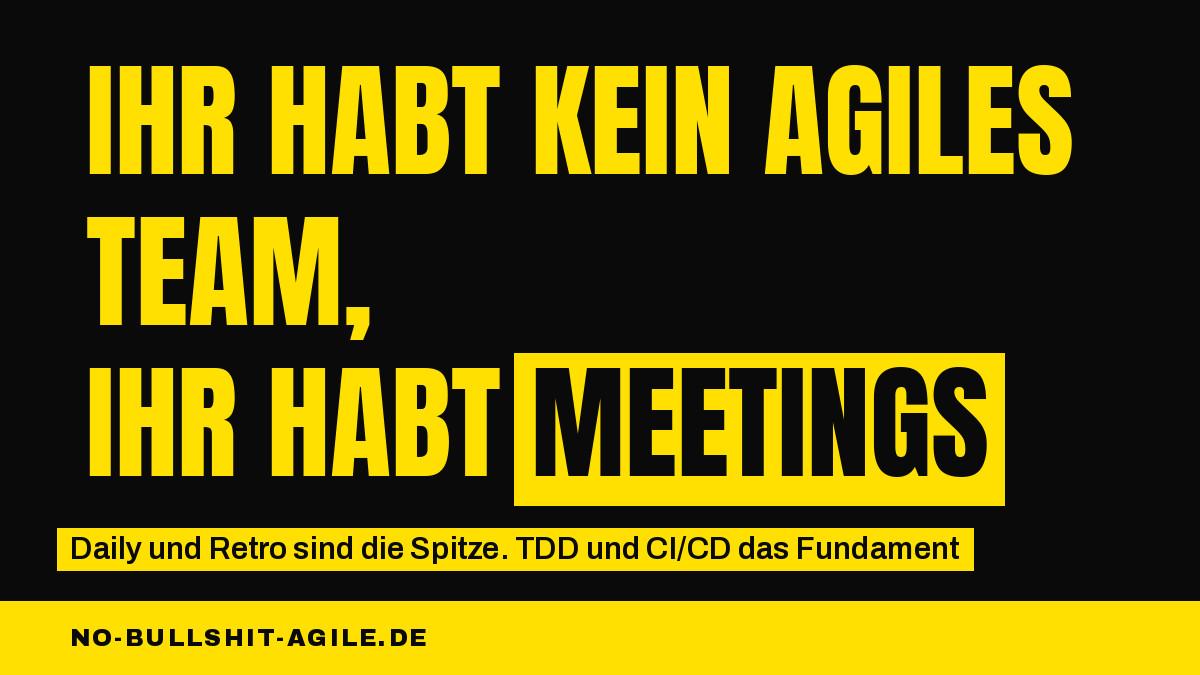
Ein Dev fragt nach Zeit fürs Refactoring. Antwort: „Bringt dem Kunden nichts."
Daily, Retro, Rollen. Das ist die Spitze des Eisbergs. Darunter liegen TDD, CI/CD, Refactoring, Pairing. Wer nur oben investiert, bekommt kein agiles Team. Nur eins, das Meetings kann.
Was unter Wasser liegt: https://no-bullshit-agile.de/der-agile-eisberg.html?mtm_campaign=mastodon
Alt...
Plakat auf dunklem Grund, helle Versalien: „Ihr habt kein agiles Team, ihr habt Meetings", das Wort „Meetings" invertiert. Darunter: „Daily und Retro sind die Spitze. TDD und CI/CD das Fundament".
Ansible for DevOps by Jeff Geerling is on sale on Leanpub! Its suggested price is $9.99; get it for $6.99 with this coupon: https://leanpub.com/ansible-for-devops/c/LeanPublishingDaily20260730 #agile #software #startups #ansible #devops #cloud_computing
![[?]](https://files.mastodon.social/accounts/avatars/115/828/875/319/585/768/original/e9435f1e3dedb156.jpeg)
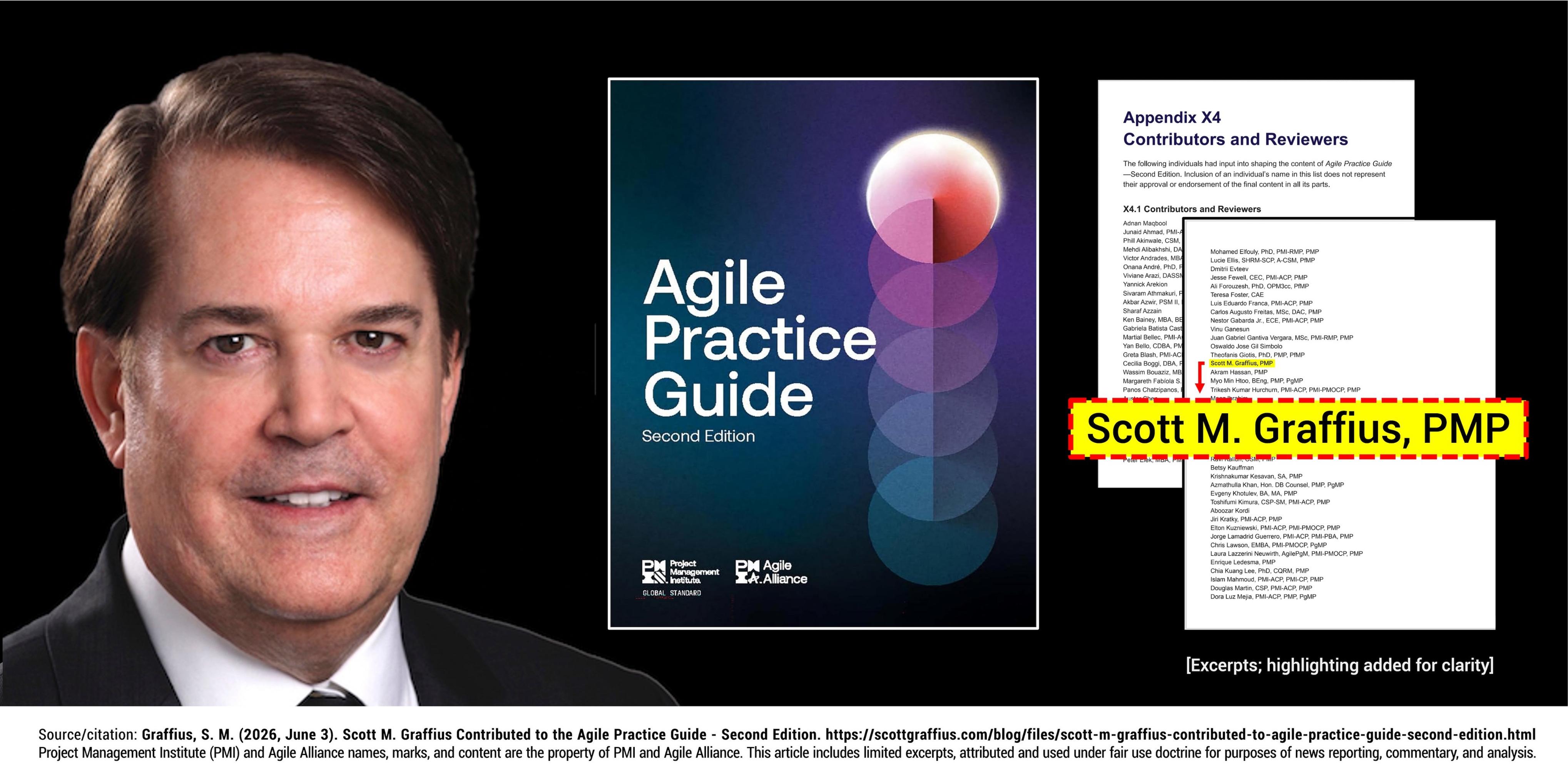
Developed by the Project Management Institute and Agile Alliance, the Agile Practice Guide — Second Edition is out! I’m proud to have contributed to the publication.
The full story is here: https://scottgraffius.com/blog/files/scott-m-graffius-contributed-to-agile-practice-guide-second-edition.html
#Agile #AgilePracticeGuide #EnterpriseAgility #ProjectManagement
Letztens beim Durchschauen des Backlogs: 40 Tickets, alle „Priorität 1". Also ist alles gleich unwichtig.
Priorität fühlt sich nach Steuerung an, ist aber nur ein Wunsch mit Etikett. Sie ignoriert, dass ihr eine Kapazität habt. Ein Ticket hochstufen macht nichts schneller, es macht nur den Plan hübsch.
Es gibt ein besseres Wort. Und es ist nicht „Priorität".
Warum das kippt: https://no-bullshit-agile.de/nba08-prioritaeten-sind-quatsch.html?mtm_campaign=mastodon

Alt...
Textgrafik auf Farbverlauf: Überschrift ‚40× Prio 1 ist keine Priorisierung', darunter ‚Wenn alles wichtig ist, ist nichts wichtig'.
Dew Drop - July 31, 2026 (#4723)
Top Links
Building agent teams with Agent Framework, GitHub Copilot CLI and Squad (Shawn Henry & Tamir Dresher)
Optimizing the frontier performance curve (Mustafa Suleyman)
Azure Developer CLI (azd) July 2026 (Kristen Womack)
The Complete Package: Why Debugging Is Only Half the C…
Even the strongest company cultures won't endure unless they're adaptive
#Agile #Adapt #Agility #BusinessAgility #Success
![[?]](https://media.beige.party/accounts/avatars/113/034/207/135/364/238/original/40e16639091d4a5e.jpeg)
Just a feeling, but I think there might be a slight disconnect between the sales team and our delivery teams. Managing expectations is a vital skill
I'm always on Team Yellow! 👨💻
#EnterpriseIT #Outsourcing #Agile #Scrum #ScrumTeam #dev #developer #coding #IT

Alt...
Two-pane photo. On top, a generic stock photo of a smiling, energetic, young and sharply dressed business team in a white void.
Text: "Our highly skilled and motivated team, as communicated by Sales."
Below, in a similar void, a collection of minions looking proper confused. Two are seemingly discussing what to do about a light bulb hanging from the ceiling.
Text: "Our actual delivery team, rolling in on Day 1 of the multi-year contract."
The ticket moves.
The problem doesn't.
Users don't care which part of the stack failed. They only know the feature doesn't work.
That's the difference between finishing a task and solving a problem.
📋 We constantly remind Scrum and Kanban teams to visualise the work and limit Work In Progress. Then we break our own advice. I certainly did.
I let a GenAI assistant hand me a pile of experiments, none of them the most important thing to do. They never went on a board, so they became quiet commitments. Committing to all of them, and never making them visible, was the problem.
Starting more things is not the same as finishing the things that matter.
https://agilepainrelief.com/newsletter-subscribe/?utm_source=mastodon&utm_campaign=archive-reshare
Kein Board hat eine Spalte "warten auf Entscheidung" obwohl das der längste Wartezustand im System ist.
Wir messen Cycle Time und Lead Time. Die Wochen zwischen "Signal gesehen" und "verbindlich entschieden" messen wir nie.
Ein Team, das alle 2 Wochen liefert, aber im Quartalsgremium auf Priorisierung wartet, ist nicht agil. Nur schnell im falschen Takt.
https://no-bullshit-agile.de/nbak12-decision-latency-unsichtbarer-engpass.html?mtm_campaign=mastodon
#Agile #Scrum #Kanban #SoftwareDevelopment

Alt...
NBAK12: Decision Latency. Der unsichtbare Engpass
Dew Drop Weekly Newsletter 494 - Week Ending July 31, 2026
#dewdrop #newsletter #javascript #aspnetcore #blazor #css #azure #xaml #cpp #windev #dotnet #csharp #ai #mcp #devops #python #agile #dotnetmaui #appdev #podcasts #m365 #data #sqlserver #terminal
Dew Drop - July 30, 2026 (#4722)
Top Links
8 .NET MAUI Performance Anti-Patterns That Make Apps Feel Slow (Sri Radhesh Nag Subash Sankar)
Tell your model when to think harder (Rachel Kang)
Azure SDK Release (July 2026) (Justin Bettencourt)
Tool search: Finding the right tool at the right time (Viswajeeet Balaji …