Search results for tag #agile
![[?]](https://media.hachyderm.io/accounts/avatars/109/381/963/540/469/664/original/8a8562b0c10666f4.jpg)
Dew Drop Weekly Newsletter 493 - Week Ending July 24, 2026
#dewdrop #newsletter #azure #javascript #css #aspnetcore #blazor #cpp #xaml #windowsdev #csharp #dotnet #ai #mcp #devops #agile #agents #python #appdev #dotnetmaui #podcasts #m365 #data #sqlserver #cli #terminal
![[?]](https://mastodon.moscow/system/accounts/avatars/116/397/673/048/057/419/original/d339a220968ac595.png)
Что в вашей команде держится на соломе, что уже опирается на палочки, а что построено из кирпича? 🐷🏠
Разобрали Three Little Pigs — ретроспективу об устойчивости процессов и командных практик. В статье объясняем смысл трёх домиков, приводим примеры карточек и даём готовый сценарий встречи на 55 минут.
Попробуйте на ближайшем ретро 👇
https://retropoint.ru/news/three-little-pigs-retrospective
#RetroPoint #ретроспектива #Agile #команды #фасилитация

![[?]](data:image/png;base64, iVBORw0KGgoAAAANSUhEUgAAAEAAAABAAQAAAACCEkxzAAAAUUlEQVQoz43R0QkAMQwCUDdw/y3dwEvsvzlL4X1IoQkAisKmwfAFT3RgJHbQezpSRoXEqeqCL9BJBf7h3QbOCCxV5EVWMEMwG7K1/WODtlvxAYTtEsDU9F34AAAAAElFTkSuQmCC)

![[?]](https://alvinashcraft.com/img/md-light-1024.png)
Dew Drop - July 23, 2026 (#4718)
Top Links
Copilot vs. raw API access: What are you actually paying for? (Andrea Griffiths)
Visual Studio Code 1.131 (Insiders) (Visual Studio Code Team)
Building Agents that Act on Your Behalf with Toolboxes in Foundry (Linda Li & Maria Naggaga)
.NET Rocks! - Commercial Open Sour…
![[?]](https://files.mastodon.social/accounts/avatars/115/828/875/319/585/768/original/e9435f1e3dedb156.jpeg)
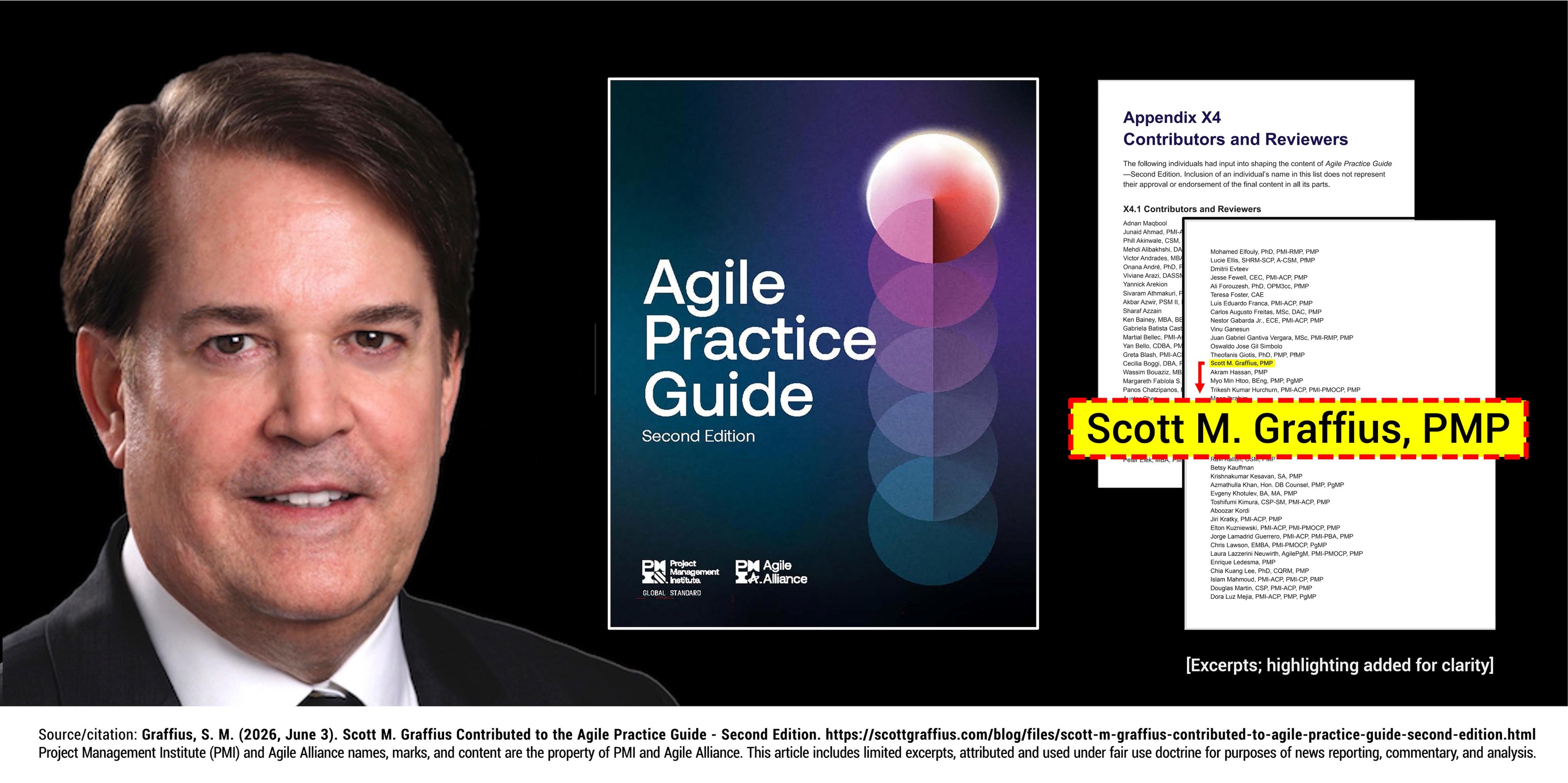
Developed by the @PMInstitute and @AgileAlliance, the Agile Practice Guide — Second Edition is now available! I’m proud to have contributed to the publication.
The full story (+ links to the Guide and more): https://scottgraffius.com/blog/files/scott-m-graffius-contributed-to-agile-practice-guide-second-edition.html
#Agile #EnterpriseAgility #ProjectManagement
![[?]](https://media.hachyderm.io/accounts/avatars/116/580/040/333/101/968/original/460dbb1a82fed4cd.jpg)
🫧 I've survived every Gartner Hype Cycle, and GenAI is the noisiest. It reminds me of the dot-com bubble: built on the promise the internet would change everything. It did, just later than Pets.com and WebVan expected.
Here's what's clarifying: if it's a bubble, we still keep tools like today's. If not, the changes are much larger. Either way, we adapt. Agile is more relevant than ever.
https://agilepainrelief.com/newsletter-subscribe/?utm_source=mastodon&utm_campaign=archive-reshare
![[?]](https://cdn.masto.host/mastodonie/accounts/avatars/109/287/644/790/067/714/original/5e277c239abea519.jpg)
![[?]](https://media.hachyderm.io/accounts/avatars/109/376/561/571/647/114/original/e013b8d04db5434e.jpeg)
JiraMetrics v3.0 is out.
It's a free, open-source command-line tool that turns your Jira history into agile metrics charts (cycle time, aging WIP, throughput, and more) in one self-contained HTML report. Useful for any team that wants to understand and improve its delivery flow.
A major release because it now requires Ruby 3.4 (or JRuby 10) and removes long-deprecated features.
Full change log at https://jirametrics.org/changes/
#agile #jira #flowmetrics #kanban #scrum

Alt...
The label JiraMetrics in the centre, on top of four quadrants, each with its own graph. Top left shows estimates against actual time elapsed, top right is a cycle time scatterplot, bottom right is work in progress by day, bottom left, is a throughput chart.
Meta and Anduril’s EagleEye and the Future of XR: How Gaming, AI, and Agile Are Transforming Defense
https://doi.org/10.13140/RG.2.2.26938.45766
#AdvancedAI #Agile #ProjectManagement #AI #Anduril #Defense #EagleEye #ExtendedReality #GameDev #Innovation #Meta #VR #VirtualReality #Wearables #XR

![[?]](https://files.mastodon.social/accounts/avatars/112/342/617/510/979/081/original/8bb6c11cb1111c15.png)
RE: https://mastodon.social/@workchronicles/116968690478302316
That's what I mean when I say that politics in systems are stronger that economical decisions. There is not such thing as Homo oeconomicus. Only in small companies...
Look at this fact if you try to figure out why #agile is not working
![[?]](https://files.mastodon.social/accounts/avatars/109/248/158/793/719/138/original/8e2492a53f609e58.jpg)
RE: https://troet.cafe/@Asterix_Archiv/116967765118507770
Wenn Scrum Master zu Hause leise weinen.....
![[?]](https://media.hachyderm.io/accounts/avatars/109/310/850/318/765/086/original/aa69ac132a8626a0.png)
"Yes, you can have better and faster and cheaper, it just takes discipline."
Dew Drop - July 22, 2026 (#4717)
Top Links
Introducing the ETW MCP: AI-assisted ETL trace analysis, headless and in your terminal (Tristan Gibeau)
Making an agile version of a Windows Runtime delegate in C++/WinRT, part 2 (Raymond Chen)
Developing with AI Exposes Your Bottlenecks (J. Tower)
Display Name is for H…
![[?]](https://files.mastodon.online/accounts/avatars/110/662/852/345/682/042/original/142c7afdf9675462.png)
Confession time.
Years ago I rolled Scrum out with my team strictly by the Guide. Sprints, points, standups, all of it. Truth is, I hadn't understood the first thing about agile. Pure cargo cult, and I couldn't even see it at the time.
Your turn: what's the most anti-agile thing you've done, and what did it teach you?
Answer in any language. Tag #AgileConfessions so we find each other.
If you like, nudge 1 to 3 people you'd want to hear from. No pressure.
#programming #coding #agile

Alt...
Dark editorial poster. Large cream serif word "Confess." with a red full stop, on a near-black background. Above it the hashtag #AgileConfessions in red. Below, the line "the most anti-agile thing you've ever done." Footer: "answer in any language · tag #AgileConfessions".
![[?]](https://files.mastodon.social/accounts/avatars/110/663/603/233/434/084/original/1e1b3ab20dfd710e.png)
There are no bad decisions.
Only decisions made too early.
#AI makes this mistake millions of times per second. Humans merely make it slower.
#AgileCheese solves the problem by introducing Deferred Correctness. A decision is considered correct until reality disproves it. From that moment on, it becomes somebody else’s requirement.
That’s what true #agile has always optimized.
The rest is just #cheese. 🧀

Alt...
Satirical corporate sci-fi: an AI runs the boardroom while solved requirements instantly become new ones. Giant Möbius strip of documents. Clearly marked as AI-generated.
Commitment isn't the estimate
The team commits to working towards the Sprint Goal.
They don't commit that every estimate will be perfect.
Estimates help forecast.
Commitment is about delivering value and being transparent when plans change.
Those are two very different things.
Dew Drop - July 21, 2026 (#4716)
Top Links
v7.7.0-preview.3 Release of PowerShell (jshigetomi)
Headless Agents (Rocky Lhotka)
Announcing new Windows Insider builds for 20 July 2026 (Stephen Lines)
T-SQL Hygiene: Introducing the Covering Index (Jerry Nixon)
.NET MAUI v11.0.0-preview.6 Release Notes (kubaflo)
Real…
![[?]](https://files.mastodon.social/accounts/avatars/109/355/050/369/648/745/original/01d3bd58da9b00e4.png)
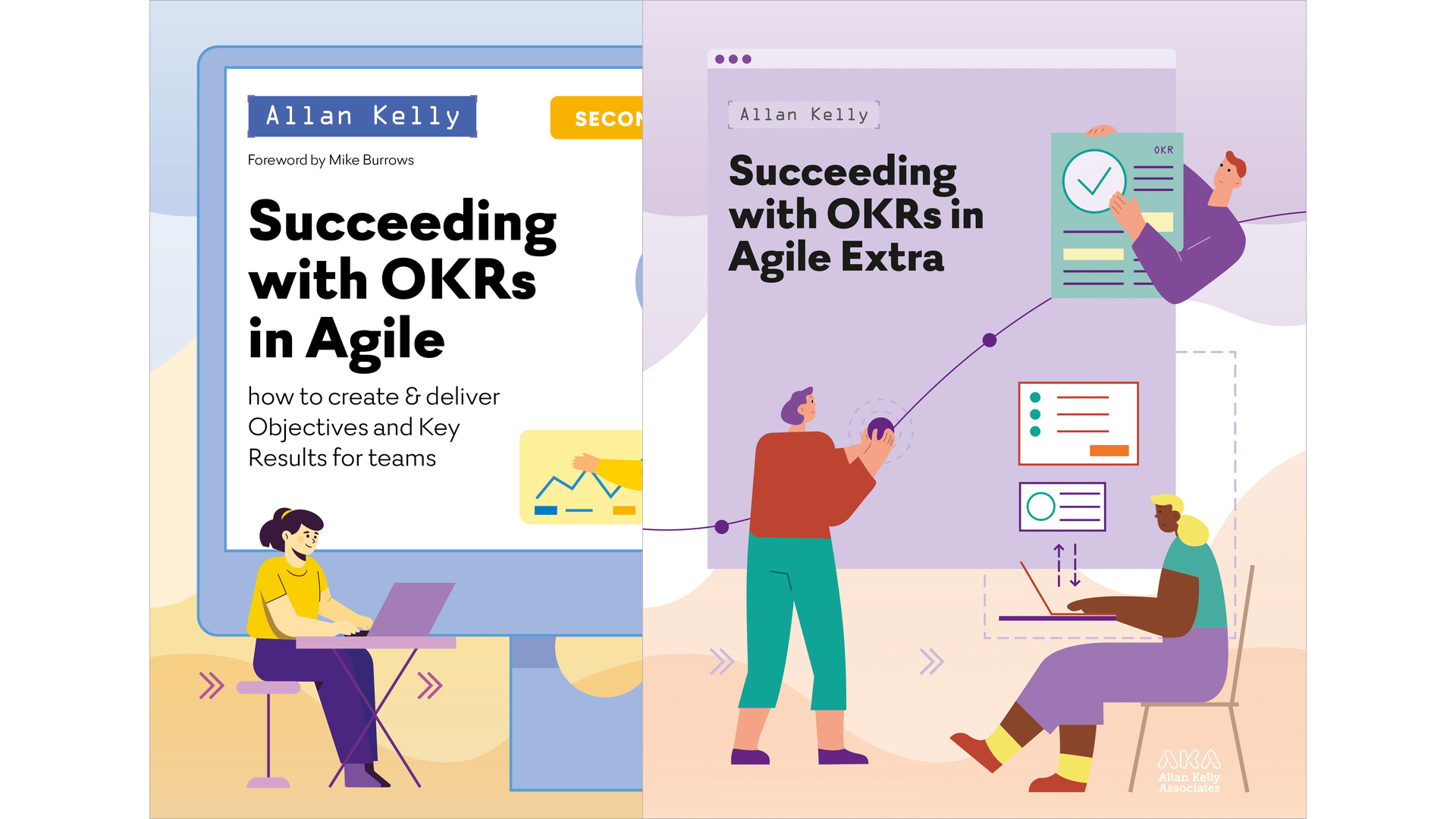
Succeeding with OKRs by Allan Kelly 📚 on Leanpub!
Link: https://leanpub.com/b/succeedingwithokrs
#Books #eBooks #LeanPublishing #SelfPublishing #Agile
![[?]](https://files.techhub.social/accounts/avatars/110/085/687/174/728/787/original/dcd6b1fd643ada09.png)
#scrum #scrumteam #safe #ScaledAgileFrameworkIsntAgile #ScaledAgileFramework #agilemethodologies #agile #waterscrumfail #agilemethodology #waterfall #scrumhumor #agilehumor #Meme #memes #Humor #humour
Alt...
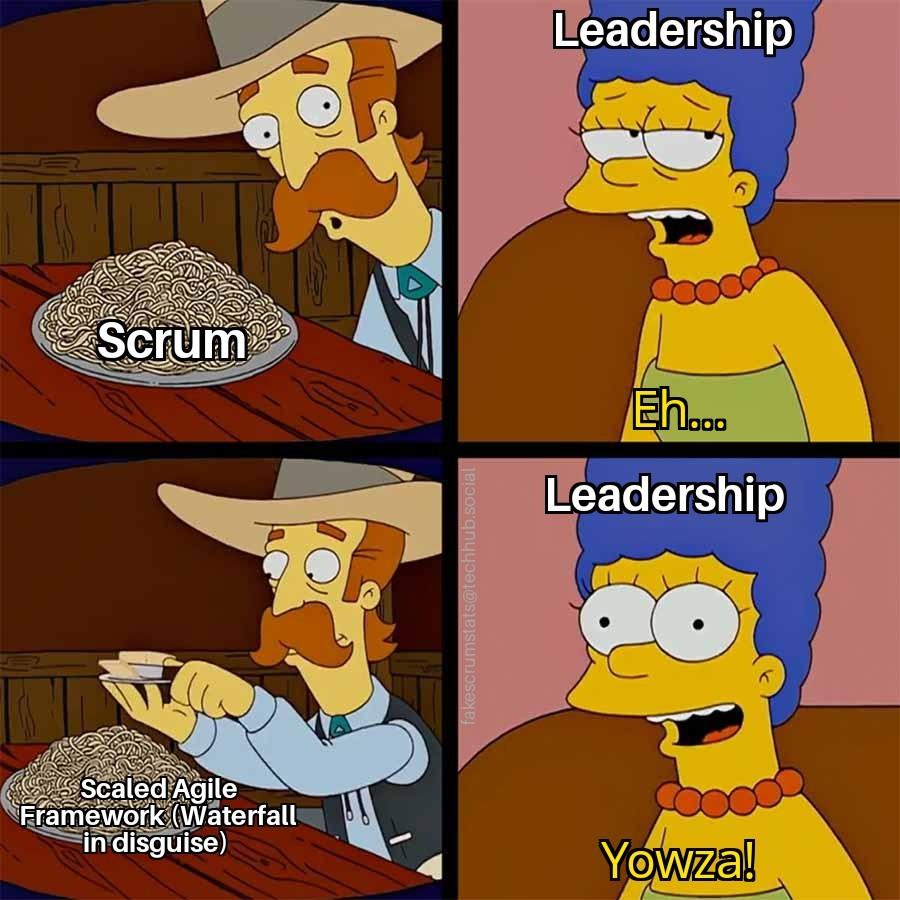
Wes Doobner shows Marge Simpson (labeled Leadership) a plate of pasta labeled Scrum. She responds "Eh..."
He then adds some butter to it and it then becomes "Scaled Agile Framework (Waterfall in disguise)"
Marge then responds "Yowza!"
![[?]](https://files.mastodon.social/accounts/avatars/109/250/638/099/296/776/original/fbe9860e481b600b.png)
The age-old agile mantra of "splitting stories small" is shifting. This piece by Dave Rooney explores how AI tools like Claude are changing the economics of story slicing, making larger chunks of work viable without sacrificing speed. Check the full shift here: https://daverooneyca.substack.com/p/rethinking-small #Agile #GenAI

Dew Drop - July 20, 2026 (#4715)
Top Links
Building Agents in Production with Toolbox, Skills, and Tool Search (Lee Stott)
Rx.NET v7.0 Now Available (Ian Griffiths)
AOTrino - Electron-like desktop apps on .NET AOT + WebView2, single-exe, Windows x64, front-end-framework-agnostic (Simon Mourier)
Introducing LM St…
Re-estimation is healthy
If you've completed half the work and discovered the second half is more complex than expected, don't cling to the original estimate.
Re-estimate.
Ignoring new information doesn't make it disappear. Agile encourages learning and adapting, not pretending nothing has changed.
![[?]](https://mastodon.sdf.org/system/accounts/avatars/109/339/160/193/570/873/original/cc1d9f719030d63f.png)
Today I am feeling reflective on baseball and what it takes to lead and coach a team.
https://www.edyouragilecoach.com/what-an-angry-meltdown-teaches-us-about-scrum-leadership/
🏴☠️ 🐻
![[?]](https://tomsgedankenblog.social/wp-content/uploads/2022/10/cropped-wp-1666202986272-4.jpg)
#LINKSDERWOCHE | 29/2026: Produktivität, Lean, Agile, Politik und Gesellschaft, Satire

PRODUKTIVITÄT
KI im Alltag | Nur weil es technisch möglich ist, ist es noch lange nicht gut
Nicht alles, was technisch möglich ist, ist auch sinnvoll oder wünschenswert. Das scheinen viele KI-Enthusiasten gerne zu vergessen. Daher spricht mir Michael Schenkel in seinem Blogartikel regelrecht aus dem Herzen. Es ist übrigens kein neues Muster, das wir hier erleben. Ich habe in den Tiefen meines Gedächtnisses nach Beispielen gesucht, bei denen übertriebene Technikgläubigkeit zu Desastern geführt hat. Mir sind auf Anhieb neben der Titanic und zwei gescheiterten Polarexpeditionen noch viele weitere Beispiele bewusst geworden. Und dabei habe ich noch nicht einmal tief gewühlt. Das Ganze führt mir vor Augen, dass bei aller Begeisterung für neue Ideen der bewusste, kritisch reflektierte Umgang extrem wichtig ist. Offensichtlich ist der Mensch nicht in der Lage, aus der Geschichte zu lernen (was man übrigens auch im Umgang mit der Nicht-Alternative in einem anderen Kontext erleben und lernen darf). Falls sich jetzt jemand fragt, weshalb ich das Thema unter Produktivität verlinke: Ich sehe die Fähigkeit zur Selbstreflexion und den kritischen Umgang mit KI in erster Linie bei uns als Individuen. Wir entscheiden, ob wir unsere und die Zeit unserer Mitmenschen mit sinnlosen Aktionen „verschwenden”.
https://t2informatik.de/blog/technisch-moeglich-inhaltlich-zweifelhaft/
Erfolg und Demut | Sich trotz Erfolg in Demut zu üben erdet
In seinem Blogbeitrag erinnert Dan Rockwell daran, dass Erfolg sehr flüchtig sein kann und wir uns daher – bei allem Erfolg – in Demut üben sollten. Damit trifft er bei mir einen Nerv (was die Leser meiner „Gedankenblitze” vermutlich schon wissen). Ich halte es für sehr essentiell, sich immer wieder bewusst zu machen, dass Erfolg auch etwas mit „Zufall”, der Mitwirkung anderer Menschen sowie beständiger Reflexion und Lernen zu tun hat. Erfolg ist flüchtig und kann schnell kippen. Besonders, wenn wir uns in unserem Erfolg baden und in Arroganz abdriftet.
https://leadershipfreak.blog/2026/07/16/the-unexpected-blunder/
Schreiben | Schreiben hilft beim Denken, Strukturieren und schafft Verbindungen.
Ich habe es endlich geschafft, eine Folge von Anna Koschinskis Podcast „Verbindungen schaffen” anzuhören. Im Fokus steht das Schreiben von Texten. Ich weiß, wie schwer es ist und wie viel Überwindung es kostet. Mein schriftstellerisches Talent würde ich nicht gerade als herausragend bezeichnen, und dann muss man auch noch ein Thema finden. Nach langer Übung bin ich da etwas entspannter geworden. Mir hilft das Aufschreiben beim Reflektieren. Ich notiere meine Gedanken sehr häufig, meist in Obsidian. Dadurch erhalte ich mehr Klarheit. Wenn dann mal etwas herauskommt, von dem ich denke, dass es eine sinnvolle Reife erreicht hat, entsteht daraus öfter mal ein Gedankenblitz oder noch besser ein Beitrag für den Blog des Forums Agile Verwaltung. Gut, ich schreibe nicht mit einer „professionellen” Zielsetzung. Toms Gedankenblog dient in erster Linie der eigenen Reflexion und der „verrückten” Idee, mit Gleichgesinnten in Austausch zu treten. Das ist etwas anderes. Hört einfach mal rein. Es ist auf jeden Fall hilfreich, auch wenn man selbst nicht regelmäßig Texte produzieren muss. Schreiben ist Denken und Strukturieren. Das hilft in vielen anderen Kontexten ebenso.
https://verbindung-schaffen.podigee.io/74-verbindung-schreiben
Vom Wissen zur Umsetzung | Wie wir es schaffen, Erkenntnisse in die Umsetzung zu bringen
Ivan Blatter schafft es immer wieder, dass ich mich beim Hören seines Podcasts ertappt fühle. 😉 So auch bei der aktuellen Folge, in der es darum geht, wie wir unser neu erworbenes Wissen umsetzen. Die Erkenntnis zu haben, ist zwar der erste Schritt. Von der Erkenntnis in die Umsetzung zu kommen, ist allerdings oft viel herausfordernder, denn jede Erkenntnis bedeutet auch, an unseren Gewohnheiten zu arbeiten. Neue Erkenntnisse und neues Wissen in die Praxis umzusetzen, ist eben nicht ganz so einfach.
https://share.transistor.fm/s/c986b589
LEAN
Umgang mit Fehlern | Echte Verantwortungsübenahme ist der Schlüssel
Mark Graban bringt es auf den Punkt. Gute Führung sucht nicht nach Schuldigen, sondern übernimmt Verantwortung. Sie erkundet, wo im System Ursachen für Fehler und Probleme schlummern, und versucht, diese zu beheben. In meiner beruflichen Vergangenheit habe ich immer wieder die Erfahrung gemacht, dass nach einem Fehler ein Schuldiger gesucht und verantwortlich gemacht wurde. Damit war die Sache dann erledigt. Und was für eine Überraschung – der Fehler trat wieder auf. Denn die Ursache wurde nicht behoben. Genau das schätze ich sehr am Toyota Production System. Man sucht nicht nach Schuldigen, sondern nach Ursachen und versucht, diese zu beseitigen. Leider reicht es nicht aus, eine positive Fehlerkultur zu entwickeln, wenn die dazugehörige Lern- und Verantwortungskultur nicht vorhanden ist und die tieferliegenden Ursachen nicht beseitigt werden.
https://www.leanblog.org/2026/07/how-to-react-to-a-mistake/
AGILE
Workshops | 3 Formate für einen guten Abschluss
Ich bin immer wieder dankbar für Ideen und Ansätze, mit denen sich Workshops, Besprechungen und Austauschrunden sinnvoll gestalten lassen. Es geht darum, Formate so zu gestalten, dass sie einen erkennbaren Mehrwert schaffen. Der Blogartikel von Simon Flossmann enthält drei interessante Formate für die Abschlussrunde von Workshops, von denen ich eines tatsächlich noch nicht kannte. Sehr interessant.
Scrum-Kumbaya | Zu viel des Guten oder Scrum Master über das Ziel hinausschießen
Ich bin begeisterter Lean- und Agile-Enthusiast. Mit selbstorganisierten Teams zu arbeiten, ist das Größte für mich. Das macht mir mehr Freude als alles andere. Ich gehe davon aus, dass ich es mit mündigen Erwachsenen zu tun habe. Erwachsene und mündige Menschen in einem Team. Die „gescheiterten Sozialarbeiter-Scrum-Master” sind mir daher schon öfter unangenehm aufgefallen. Scrum ist kein Selbstzweck. Und es braucht auch kein „Scrum Kumbaya”, wie Mary Iqubal es treffend überschrieben hat (den Begriff muss ich mir merken). Noch einmal: Wir haben es mit erwachsenen, mündigen Fachleuten zu tun, die lösungsfokussiert zusammenarbeiten und hochwertige Ergebnisse erzielen wollen und sollen. Meine Aufgabe als Scrum Master ist es, den Rahmen dafür zu schaffen, dass ein Team produktiv zusammenarbeiten kann. Mein Job ist es nicht, ein Team zu „betüdeln”. Ganz im Gegenteil. Ich muss einen Rahmen schaffen, damit das Team produktiv arbeiten kann, und es auch herausfordern, wenn die Ergebnisse nicht stimmen. Eine positive Arbeitsatmosphäre kann dabei helfen, aber man kann auch deutlich über das Ziel hinausschießen. „Scrum Kumbaya” ist ein Beispiel dafür.
https://www.scrum.org/resources/blog/scrum-kumbaya
Explore vs Exploit | Eine Simulation für das Lernen als Team
Thomas Schissler stellt in seinem Beitrag eine sehr praxisnahe Simulation mit Verbindungen zur Praxis in vielen Teams vor. Im Fokus stehen die Arbeitsmodi „Explore” und „Exploit”. Das Interessante an seinem Beitrag ist, dass er nicht nur das spielerische Format ins Spiel bringt, sondern auch gleich die Brücke zur gelebten Teampraxis schlägt und somit aufzeigt, wie diese Simulation Teams dabei helfen kann, das richtige Maß zwischen „Explore” und „Exploit” zu finden. Das ist mit Sicherheit etwas, das sich für den einen oder anderen Workshop nutzen lässt. Mal sehen, ob ich Gelegenheit bekomme, es selbst auszuprobieren.
Schätzung | Schätzungen sind Wetten mit hoher Unsicherheit
Ich persönlich halte vom Schätzen der „Liefergeschwindigkeit” in komplexen Kontexten wenig. Schätzen ist hingegen sehr gut geeignet, um die Größe von Produktinkrementen einzuordnen. Für die Prognose eines Liefertermins taugt es hingegen wenig, da wir hier von einer Wette ausgehen, die auf vielen Unbekannten basiert. Liegt die Schätzung daneben, kommt es meist zu der von Dave West beschriebenen Reaktion. Verlässliche Prognosen erhalte ich in der Regel erst durch aussagekräftige historische Daten, die bei Entwicklungsprojekten – je nach Art der zu erledigenden Arbeit – oft nicht vorliegen. Während ich repetitive Aufgaben, für die ich vergleichbare Daten habe, sehr gut prognostizieren kann, ist es bei explorativen Tätigkeiten gerade wegen der fehlenden Qualität der Daten ein sehr unsicheres Spiel. Sehr erfahrene Teams haben zwar mit der Zeit aufgrund von historischen Daten und Erfahrungen ein gutes „Gefühl” dafür entwickelt, wie verlässlich sie liefern können, aber auch hier steckt sehr viel Erkenntnis aus der Vergangenheit drin. Und diese ist bei einem hochkomplexen Projekt nicht vorhanden. Prognosen sollten daher als „Wetten” mit hoher Unsicherheit verstanden werden, die im Laufe der Zeit aber immer genauer und präziser werden können. Nicht als exakter Plan. Regelmäßige Kommunikation über neue Erkenntnisse und deren Auswirkungen auf die Prognose ist daher extrem wichtig.
https://www.scrum.org/resources/blog/your-team-isnt-bad-estimating-planning-just-harder-we-admit
Umgang mit Fehlern | Wenn niemand die Wahrheit sagt, weil das System bestraft
Steve Denir beschreibt ein Problem, das Kurt Tucholsky einst in einem anderen Kontext sehr treffend umschrieben hat: „Im Übrigen gilt hier ja derjenige, der auf den Schmutz hinweist, als viel gefährlicher als derjenige, der den Schmutz macht.“ Die Wirkung sollte jedem klar sein. Wer auf einen Fehler hinweist und dafür an den Pranger gestellt wird, wird es nie wieder tun. Und alle, die so etwas auch nur im Geringsten mitbekommen haben, werden es dieser Person gleichtun. Lernen für die Zukunft? Keine Chance. Ich kann mich gut an die Idee eines Lean-Enthusiasten erinnern, jeden entdeckten Fehler zu feiern. Anstatt einen Schuldigen zu suchen, sollte man sich auf die strukturellen Ursachen konzentrieren und eben diese beseitigen. Das ist übrigens etwas, das ich an „echten” Lean-Adaptionen sehr schätze, bei denen ich den Eindruck habe, dass Kaizen gelebte Realität ist. Nur mal so nebenbei.
https://www.scrum.org/resources/blog/your-people-stopped-telling-you-truth-you-trained-them
POLITIK UND GESELLSCHAFT
Doppelmoral | Wenn Politik im Elfenbeinturm den Kompass verliert
Zu den Blogs, die ich fast täglich lese, gehört der von Heinrich Kümmerle. Er sagt, was er denkt. Und das gefällt mir. Wir kennen uns auch persönlich. Nicht immer bin ich seiner Meinung, aber das weiß er auch. Er gehört zu den wenigen Menschen, bei denen ich weiß, dass ein Meinungsaustausch nicht dazu führt, dass man hinterher – auch bei einem Dissens – kein Bier miteinander trinken gehen kann. Was uns beide eint, ist, dass wir überzeugte Demokraten und europäische Föderalisten sind. Mit dem verlinkten Blogartikel trifft er aktuell einen Nerv: die Doppelmoral mancher Politiker, die offenbar seit vielen Jahren nicht mehr aus ihrem Elfenbeinturm herausgekommen sind. An dieser Stelle ein kurzer Einschub: Bei aller berechtigter Kritik gibt es keinen Grund, einer Partei die Stimme zu geben, die auf die Abschaffung der freiheitlich-demokratischen Grundordnung abzielt. Noch dazu übertrifft sie in puncto krimineller Energie selbst die genannten Vertreter der Doppelmoral.
https://kuemmerle.name/doppelmoral/
Visionen | Uns fehlt es an handlungsleitenden Zukunftsbildern
Roland Dürre bringt es auf den Punkt: „Wir leben in einer Welt, die arm an Visionen geworden ist.“ Und das ist ein Problem. Wir brauchen klare Leitbilder. Positiv formulierte Leitbilder für die Zukunft, die es schaffen, die „Spaltung“ zu überwinden und Hoffnung zu stiften. Das ist ein schöner Denkanstoß, der mich diese Woche auch schon zu einem Gedankenblitz verleitet hat und den ich an dieser Stelle gerne weitergeben möchte.
https://www.if-blog.de/rd/visionen/
SATIRE
AInüchterung | Über die „Überhöhung“ der KI
Ich gebe zu, die Flut an Blogartikeln, die um jeden Preis etwas mit KI einbauen müssen, geht mir gewaltig auf den Nerv. Die „KI-Euphorie” scheint bei einigen schon fast neurotische Züge anzunehmen. Wenn ich mir so manchen von der KI glattgebügelten Artikel durchlese, vergeht mir auch langsam die Lust, so manchen Blog zu lesen. Es ist schön, wenn jemand das Ganze mal humoristisch auf die Hörner nimmt, wie „Buddy Müller” in seiner Agentursatire. So wie „Buddy Müller” in seiner Agentursatire. Ich habe herzhaft gelacht, auch wenn mir angesichts der Tatsache, was manche Manager meinen, durch KI günstiger machen zu können, eigentlich das Lachen vergehen müsste. Nur weil etwas technisch möglich ist, muss es nicht gut sein – damit schließt sich der Kreis zu den heutigen Links der Woche. 😉
https://agentursatire.blog/2026/07/18/folge52-diegroseairnuchterung/
#Agile #Demut #Doppelmoral #Erfolg #Fehlerkultur #Gesellschaft #KI #Lean #Lernen #Politik #Satire #Schätzung #Scrum #Vision
Ansible for DevOps by Jeff Geerling is on sale on Leanpub! Its suggested price is $9.99; get it for $6.99 with this coupon: https://leanpub.com/ansible-for-devops/c/LeanPublishingDaily20260716 #agile #software #startups #ansible #devops #cloud_computing
Man verlangt vom Team Eigenverantwortung und lässt jede echte Entscheidung vom Management absegnen. Das ist keine Autonomie. Das ist Schuld-Delegation.
Ein Team ohne Entscheidungsbefugnis trägt nur die Verantwortung fürs Scheitern, nicht die Macht, es zu verhindern.
#management #agile #scrum #kanban

Alt...
VERANTWORTUNG
ohne Befungnis
Dew Drop - July 17, 2026 (#4714)
Top Links
Visual Studio Administrator? Join our Private Marketplace Preview! (Ruben Rios)
The Stack Overflow Podcast - Developers who move fast still need to do it together…
Estimates aren't promises
An estimate is our best understanding of the effort involved based on what we know today.
It isn't a contract.
It isn't a deadline.
It isn't a guarantee.
As we learn more, the estimate may change. That's good engineering, not poor planning.
![[?]](https://friends.librescrum.org/system/accounts/avatars/108/476/351/362/026/785/original/2dc25be415e8a90d.png)
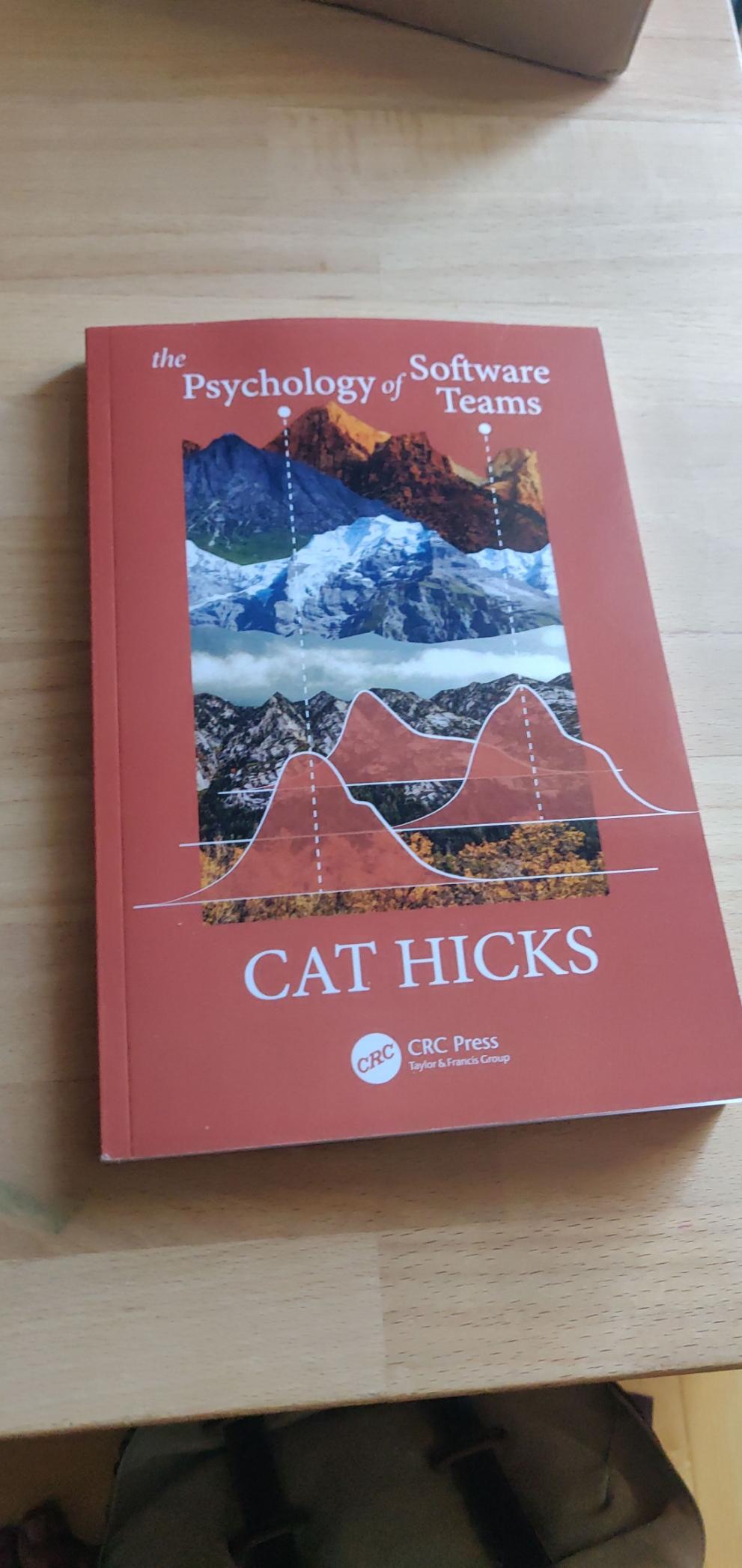
oh, a new book arrived in germany
thanks @grimalkina for writing it.
Alt...
the psychology of software teams by cat hicks on a wooden table