Search results for tag #ExtremeProgramming
![[?]](https://files.mastodon.social/accounts/avatars/112/343/359/340/425/766/original/bd770fab2764fb57.png)
By applying modularity, cohesion, separation of concerns, abstraction, and careful coupling management, your teams can respond rapidly to shifting market demands without sacrificing quality
Read more 👉 https://lttr.ai/AuCKk
#ExtremeProgramming #MasteringComplexity #StaffEngineer

![[?]](https://files.mastodon.social/accounts/avatars/001/147/348/original/33e25b946a881c9b.png)
On Thursday 8 October, I'll be presenting my talk "𝐓𝐡𝐞 𝐈𝐦𝐩𝐨𝐫𝐭𝐚𝐧𝐜𝐞 𝐎𝐟 𝐄𝐱𝐭𝐫𝐞𝐦𝐞 𝐏𝐫𝐨𝐠𝐫𝐚𝐦𝐦𝐢𝐧𝐠 𝐏𝐫𝐚𝐜𝐭𝐢𝐜𝐞𝐬 𝐈𝐧 𝐓𝐡𝐞 𝐀𝐠𝐞 𝐎𝐟 𝐋𝐋𝐌𝐬" at the 1st edition of the Building Bruges conference.
In this talk, I'll take a deep dive into the core practices of XP, and why these ideas remain as relevant as ever in today's world of LLMs.
🔗 For more info & registration: https://buildingbruges.be/conference/
Looking forward to seeing you there!
#XP #ExtremeProgramming #Agile #LLM

Mastering Complexity with Sustainable Architecture.
▸ https://lttr.ai/AuAgv
#ExtremeProgramming #MasteringComplexity #StaffEngineer

An organization that thrives on continuous improvement, turning architectural excellence into a competitive advantage
A Staff Engineer can address this by collaborating with teams to design pipelines that encompass all necessary checks.
As debt increases, less functionality can be delivered per unit of time, stalling progress and frustrating stakeholders.
Read more 👉 https://lttr.ai/At69t
#ExtremeProgramming #BusinessImpact #SettingRealisticGoals
Tracking and communicating the impact of technical debt on business outcomes ensures alignment with organizational priorities.
Read more 👉 https://lttr.ai/At6oB
#ExtremeProgramming #BusinessImpact #SettingRealisticGoals
The organization can confidently release software with minimal overhead and maximum reliability.
Read more 👉 https://lttr.ai/At6aQ
#ExtremeProgramming #BusinessImpact #SettingRealisticGoals
This involves guiding the team in adopting best practices and fostering a culture where technical debt is acknowledged and managed proactively.
Read more 👉 https://lttr.ai/At57e
#ExtremeProgramming #BusinessImpact #SettingRealisticGoals
This principle protects your business and future-proofs your codebase.
Read more 👉 https://lttr.ai/At5lS
#ExtremeProgramming #DependencyInversionPrinciple #LegalRisks
One key insight from the book is how technical debt accumulates when suboptimal technical decisions are made.
Read more 👉 https://lttr.ai/At3Vc
#ExtremeProgramming #BusinessImpact #SettingRealisticGoals
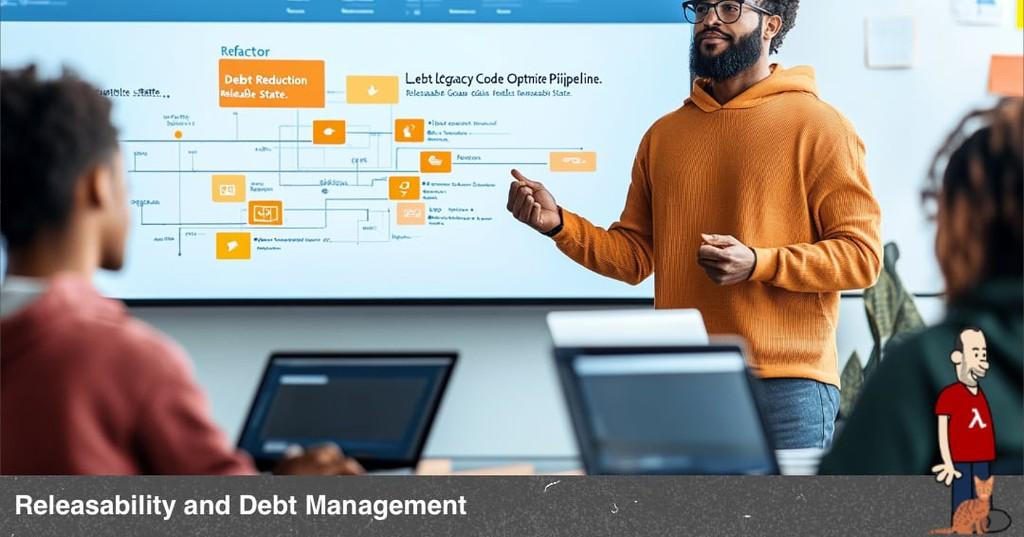
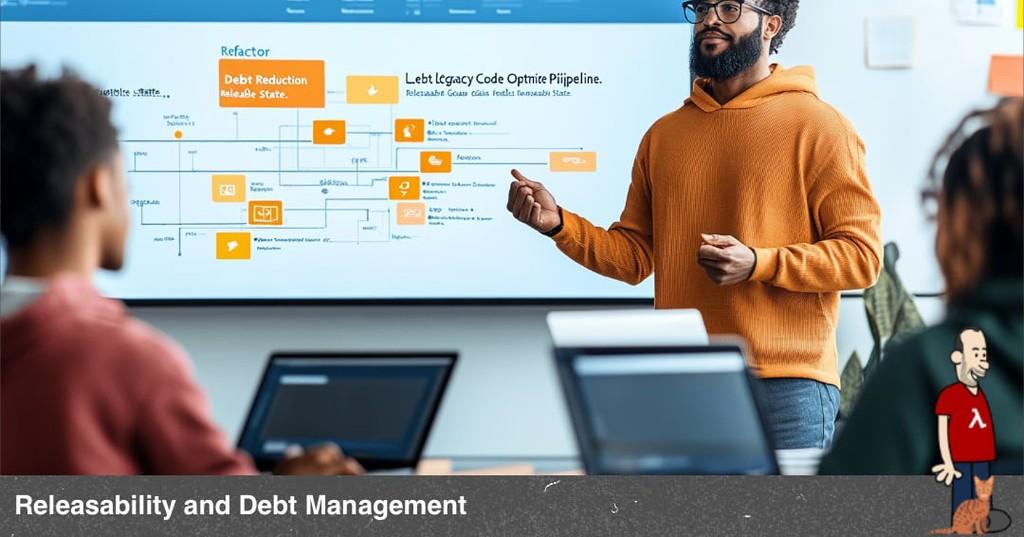
Software architecture isn’t just about designing robust systems; it’s about ensuring that software is always in a releasable state.
Read more 👉 https://lttr.ai/At3O0
#ExtremeProgramming #BusinessImpact #SettingRealisticGoals

By championing robust deployment pipelines and effectively managing technical debt, you empower teams to deliver high-quality software quickly while safeguarding long-term health.
Read more 👉 https://lttr.ai/At1Nb
#ExtremeProgramming #BusinessImpact #SettingRealisticGoals
As a Staff Engineer, you can play a pivotal role by identifying and addressing sources of technical debt.
Read more 👉 https://lttr.ai/At1Fu
#ExtremeProgramming #BusinessImpact #SettingRealisticGoals
As a Staff Engineer, you can lead by example by introducing DIP in critical areas of the codebase and mentoring your team to adopt this mindset.
Read more 👉 https://lttr.ai/AtjPC
#ExtremeProgramming #DependencyInversionPrinciple #LegalRisks
Staff Engineers can lead efforts to mitigate this by implementing regular code reviews, prioritizing refactoring during sprints, and setting realistic goals.
Read more 👉 https://lttr.ai/AteWk
#ExtremeProgramming #BusinessImpact #SettingRealisticGoals
By modeling humility and demonstrating that the mission’s success is more important than individual accolades, Tech Managers set the standard for their teams to follow.
Read more 👉 https://lttr.ai/AtXyp
#ExtremeProgramming #Leadership #BusinessOwnership
Applying DIP in the PDF library case means designing an abstraction layer—a generic interface for PDF generation—on which your codebase depends.
Read more 👉 https://lttr.ai/AtHO5
#ExtremeProgramming #DependencyInversionPrinciple #LegalRisks
As highlighted in Extreme Ownership by Jocko Willink and Leif Babin, ego must be balanced with humility to unlock true leadership potential.
Read more 👉 https://lttr.ai/As5iB
#ExtremeProgramming #Leadership #BusinessOwnership

Think of it like driving a car: small adjustments of the steering wheel minimise the risk of going off course. This superpower will become even more critical in the age of LLMs, as they tend to steer us towards larger batches of work. Learning splitting patterns might not look as impressive on a résumé, but it’s what keeps a team moving steadily forward.
(2/2)

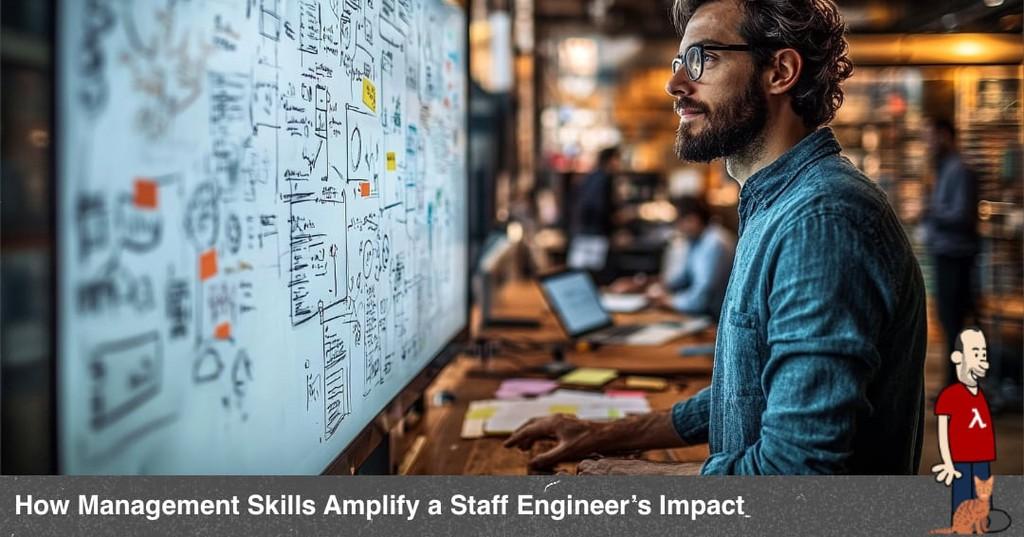
For a Staff Engineer, embracing this expanded role is not about abandoning their technical roots but leveraging them to create value at scale.
Read more 👉 https://lttr.ai/AsriN
#ExtremeProgramming #FacilitatingKnowledgeSharing #ModernSoftwareDelivery
Adaptability and security are crucial in software development, especially in a rapidly changing ecosystem of libraries and frameworks.
Read more 👉 https://lttr.ai/Aso2C
#ExtremeProgramming #DependencyInversionPrinciple #LegalRisks
Encourage developers to think about the lifecycle of third-party libraries and design systems with flexibility.
Read more 👉 https://lttr.ai/Asc2m
#ExtremeProgramming #DependencyInversionPrinciple #LegalRisks
Imagine the time and effort saved when switching libraries, which involves implementing a new adapter for the abstraction rather than refactoring the entire application.
Read more 👉 https://lttr.ai/Ascr1
#ExtremeProgramming #DependencyInversionPrinciple #LegalRisks
Regularly reinforcing the “why” behind the work and fostering open dialogue can help individuals see beyond their interests.
Read more 👉 https://lttr.ai/Asaf1
#ExtremeProgramming #Leadership #BusinessOwnership

Decoupling your core logic from external dependencies reduces technical debt, legal risks, and the time to market for future changes.
Read more 👉 https://lttr.ai/AsMhS
#ExtremeProgramming #DependencyInversionPrinciple #LegalRisks
As a Staff Engineer, embracing and promoting DIP can elevate your team’s architecture, ensuring adaptability and resilience.
Read more 👉 https://lttr.ai/AsMhF
#ExtremeProgramming #DependencyInversionPrinciple #LegalRisks

A perfect example is when a commonly used library changes its licensing terms—say, a PDF generation library switching to AGPL-3, which introduces legal complexities.
Read more 👉 https://lttr.ai/AsMhB
#ExtremeProgramming #DependencyInversionPrinciple #LegalRisks
The result is a resilient architecture capable of weathering changes in technology and licensing landscapes, giving your organization a competitive edge.
Read more 👉 https://lttr.ai/AsMgz
#ExtremeProgramming #DependencyInversionPrinciple #LegalRisks

The Dependency Inversion Principle states that high-level modules (business logic) should not depend on low-level modules (libraries); both should depend on abstractions.
Read more 👉 https://lttr.ai/AsMgv
#ExtremeProgramming #DependencyInversionPrinciple #LegalRisks
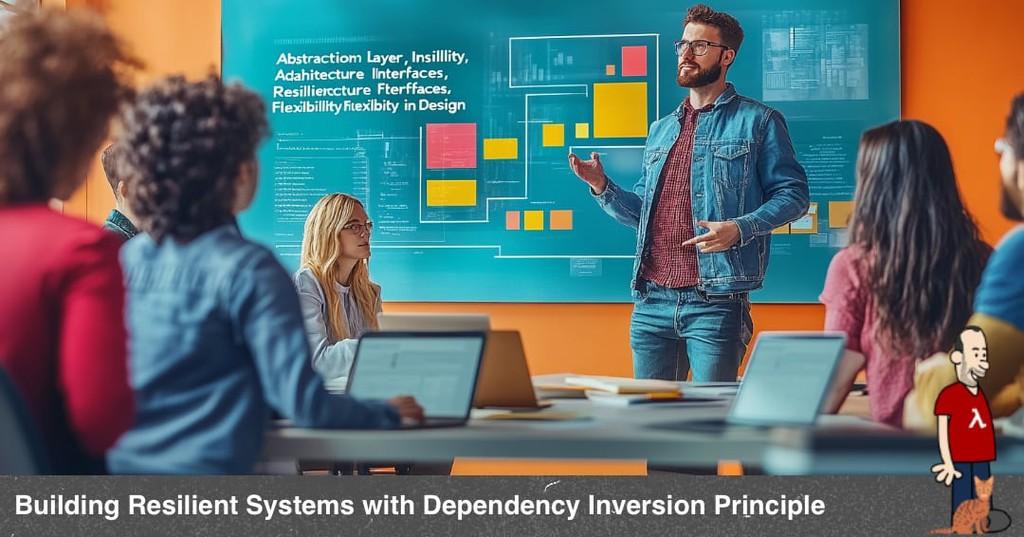
The Dependency Inversion Principle (DIP), a core tenet of SOLID principles, provides a pathway to safeguard your business from disruptions.
Read more 👉 https://lttr.ai/AsMgj
#ExtremeProgramming #DependencyInversionPrinciple #LegalRisks

The role of a Staff Engineer has expanded far beyond technical excellence.
Read more 👉 https://lttr.ai/AsMgh
#ExtremeProgramming #FacilitatingKnowledgeSharing #ModernSoftwareDelivery
Applying the Dependency Inversion Principle (DIP) empowers your team to build more secure, adaptable, and aligned systems with long-term business goals.
Read more 👉 https://lttr.ai/AsMgN
#ExtremeProgramming #DependencyInversionPrinciple #LegalRisks
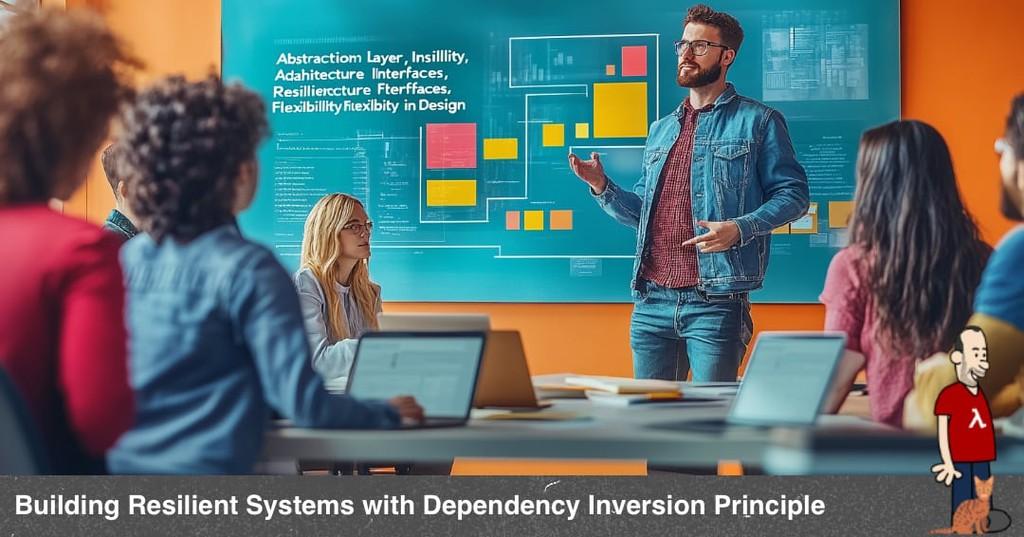
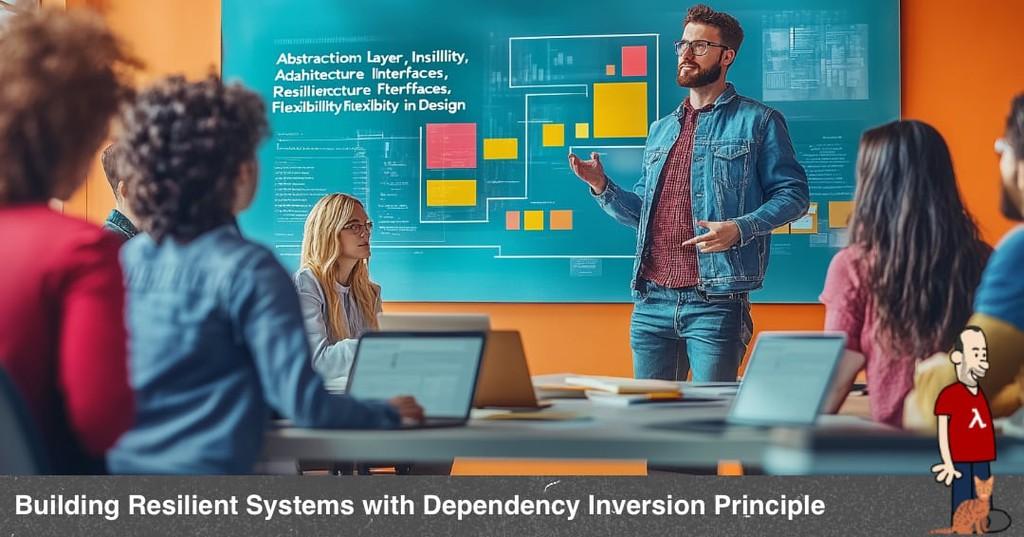
Building Resilient Systems with Dependency Inversion Principle
▸ https://lttr.ai/AsCyF
#ExtremeProgramming #DependencyInversionPrinciple #LegalRisks

Conversely, when unchecked, it can cloud judgment, disrupt collaboration, and derail projects.
Read more 👉 https://lttr.ai/AsCx0
As a Staff Engineer, championing principles like DIP will enhance your team’s technical excellence and strengthen the foundation of your software systems.
Read more 👉 https://lttr.ai/AsCxy
#ExtremeProgramming #DependencyInversionPrinciple #LegalRisks
This foundation of trust and transparency creates an environment where ideas can flow freely, and the best solutions prevail rather than the loudest voices.
Read more 👉 https://lttr.ai/AsCxm
#ExtremeProgramming #Leadership #BusinessOwnership
On one hand, it can drive ambition and excellence, pushing individuals and teams to surpass expectations.
Read more 👉 https://lttr.ai/AsCxi
#ExtremeProgramming #Leadership #BusinessOwnership

Avoiding complacency isn’t just about maintaining momentum; it’s about staying competitive and prepared for unforeseen challenges.
Read more 👉 https://lttr.ai/AsAqg

![[?]](https://schmonz.com/snac/schmonz/s/506a4e5be3c4eba4d0539c833aea957a.jpg)
That’s your clue: refactor first.
(Special case of the general KFB wisdom “First make the change easy, then make the easy change.”)
Hit up your network before applying. If you’re reading this, I’m in your network.
But if a supposed #ExtremeProgramming expert doesn’t grok this, such remarkably deep failure of understanding indicates ignorance AND profound obstinacy.
For the same reasons, some published authors are better at describing than at enacting.
Maybe an author really knows, in context, under stress, how to do the thing. Maybe not.
1. Become Director of Engineering
2. Tell org and stakeholders that XP will fix longstanding problems
3. Regularly interfere with devs’ learning
4. Design projects to delay ROI
5. Find scapegoats
Maybe they’ll blame #XP.