Search results for tag #dev
![[?]](https://files.techhub.social/accounts/avatars/110/085/687/174/728/787/original/dcd6b1fd643ada09.png)
#scrum #scrumteam #dev #developer #qa #scrummaster #productowner #leadership #management #executives #priorities #toppriorities #toppriority #unrealisticexpectations #spookyseason #october #scrumhumor #agilehumor #agile #Meme #memes #Humor #humour

Alt...
Picture of a skeleton with its hand extended out and complaining "excuse me what the f*ck"
Caption: When leadership let's you know they are adding a new top priority to your current work, but it's also October.
#scrum #scrumteam #dev #developer #qa #scrummaster #productowner #teamsmeetings #TeamMeetings #microsoftteams #Meme #memes #Humor #humour
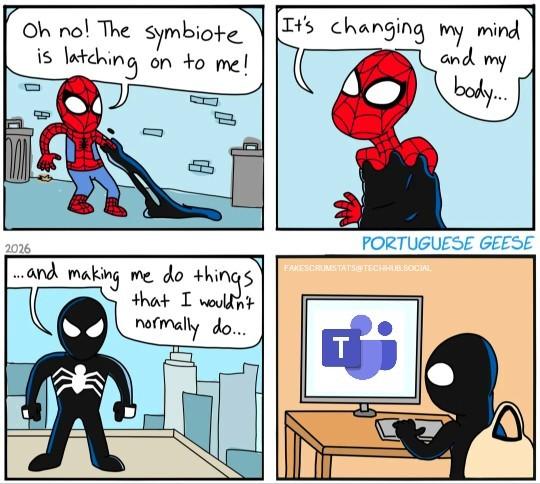
Alt...
Four panel Portuguese Greece Comic.
First panel: Spiderman reacting to the symbiote touching him. He says "Oh no! The symbiote is latching on to me!"
Second panel: The symbiote is making its way up his body. He says "It's changing my mind and my body..."
Third panel: He is standing there entirely in black and says "...and making me do things that I wouldn't naturally do..."
Fourth panel: He is seen sitting at a computer that is showing a Microsoft Teams logo.
#scrum #scrumteam #dev #developer #qa #scrummaster #productowner #leadership #management #executives #meetings #zoom_meetings #teamsmeetings #longmeetings #longmeetingssuck #endlessmeetings #deathbymeeting #officehumor #officelife #Meme #memes #Humor #humour
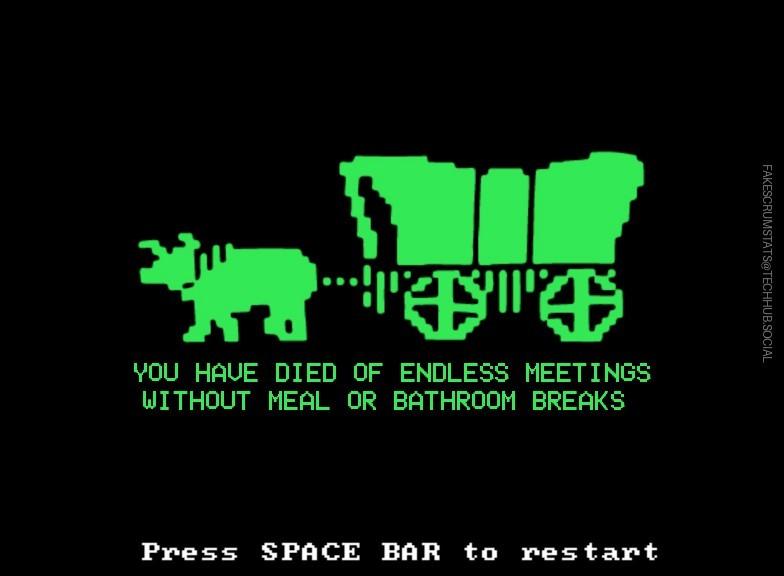
Alt...
Oregon Trail video game screenshot that has been altered to read: you have died of endless meetings without meal or bathroom breaks
#scrum #scrumteam #dev #developer #qa #scrummaster #productowner #retrospective #retro #scrumhumor #Meme #memes #Humor #humour

Alt...
Image showS Tee Zeng from the animated series Kung Fu Sock looking tweaked out with bloodshot eyes while saying "I'm fine..."
Caption: Meanwhile at retro...
#scrum #scrumteam #dev #developer #qa #scrummaster #productowner #sprint #sprintgoals #sprintplanning #failedsprint #overcapacity #StoryPoints #story_points #estimating #estimation #scrumhumor #Meme #memes #Humor #humour

Alt...
Woman trying to carry human size ear of corn onto an escalator, and it's not fitting.
Caption: I think she's the embodiment of the average story in my sprint
#scrum #scrumteam #dev #developer #qa #scrummaster #productowner #ScaledAgileFramework #safe #agilemethodology #agilemethodologies #ScaledAgileFrameworkIsntAgile #Meme #memes #Humor #humour
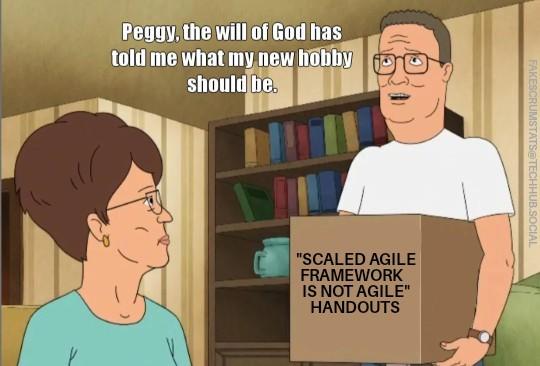
Alt...
Hank from "King of the Hill" is holding a box that reads "Scaled Agile Framework is not Agile handouts" and says to his wife "Peggy, the will of God has told me what my new hobby should be"
#scrum #scrumteam #dev #developer #coding #programming #programminghumor #codinghumor #programmer_humor #programmer #as400 #IBMSystem360 #system34 #system36 #os400 #ibm3180 #Meme #memes #Humor #humour
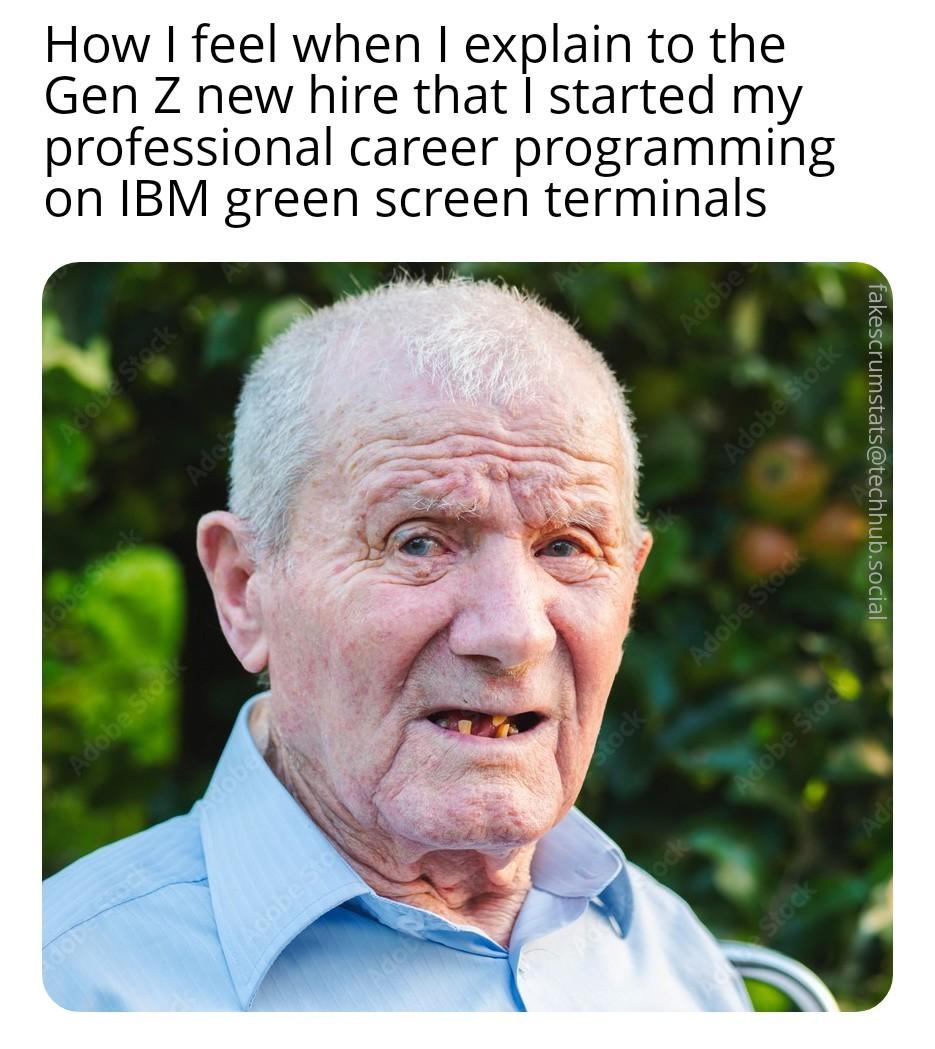
Alt...
Picture of an old man.
Caption: Bow I feel when I explain to the Gen Z new hire that I started my professional career programming on IBM green screen terminals
#scrum #scrumteam #dev #developer #qa #scrummaster #productowner #leadership #management #executives #agilemethodologies #domorewithless #priorities #unrealisticexpectations #Meme #memes #Humor #humour

Alt...
Grid displaying the hardest things in the world
Diamond, obsidian, vibranium, and getting leadership to understand that scrum isn't about doing more with less
#scrum #scrumteam #dev #developer #qa #scrummaster #productowner #microsoftteams #MicrosoftOutlook #jira #outlook #Meme #memes #Humor #humour

Alt...
A happy looking teen girl sitting at her computer in what appears to be an early 2000s photo.
Caption: Remember when you could enjoy your computer without bullshit like Teams, Jira, and Outlook?
![[?]](https://media.beige.party/accounts/avatars/113/034/207/135/364/238/original/40e16639091d4a5e.jpeg)
Just a feeling, but I think there might be a slight disconnect between the sales team and our delivery teams. Managing expectations is a vital skill
I'm always on Team Yellow! 👨💻
#EnterpriseIT #Outsourcing #Agile #Scrum #ScrumTeam #dev #developer #coding #IT

Alt...
Two-pane photo. On top, a generic stock photo of a smiling, energetic, young and sharply dressed business team in a white void.
Text: "Our highly skilled and motivated team, as communicated by Sales."
Below, in a similar void, a collection of minions looking proper confused. Two are seemingly discussing what to do about a light bulb hanging from the ceiling.
Text: "Our actual delivery team, rolling in on Day 1 of the multi-year contract."
![[?]](https://s3-eu-central-1.amazonaws.com/mastodon-aral/accounts/avatars/000/000/001/original/3ce3714f5ac56078.png)
![[?]](https://files.mastodon.social/accounts/avatars/000/033/231/original/06101f6861148350.jpg)
pourquoi Zig, Ghostty et Tenacity ont quitté GitHub ? Pannes répétées, Copilot imposé, contrats avec ICE... Les raisons méritent qu'on s'y attarde. ⬇️
https://www.howtogeek.com/why-developers-are-ditching-github-for-codeberg-and-self-hosting-alternatives/
📬 Ma veille dev de la semaine → https://l.camilleroux.com/veille-qNT

Alt...
Illustration numérique représentant plusieurs écrans d'éditeurs de code aux thèmes sombres, entourés d'icônes symbolisant le développement web (balises HTML, cadenas de sécurité, cloud, paramètres), sur fond violet.
ZeroFS : un filesystem log-structuré qui expose des buckets S3 comme volumes POSIX (NFS, 9P) ou block devices (NBD). ⬇️
https://www.zerofs.net/
📬 Ma veille dev de la semaine → https://l.camilleroux.com/veille-mZ4

Alt...
Tableau de bord de monitoring en temps réel de ZeroFS affichant les métriques d'un système de fichiers : 108 098 opérations totales, 446 Mo de stockage utilisé, avec des graphiques de débit (throughput) et d'IOPS, ainsi que des statistiques détaillées sur les opérations fichiers, la collecte de déchets et les propriétés du système.
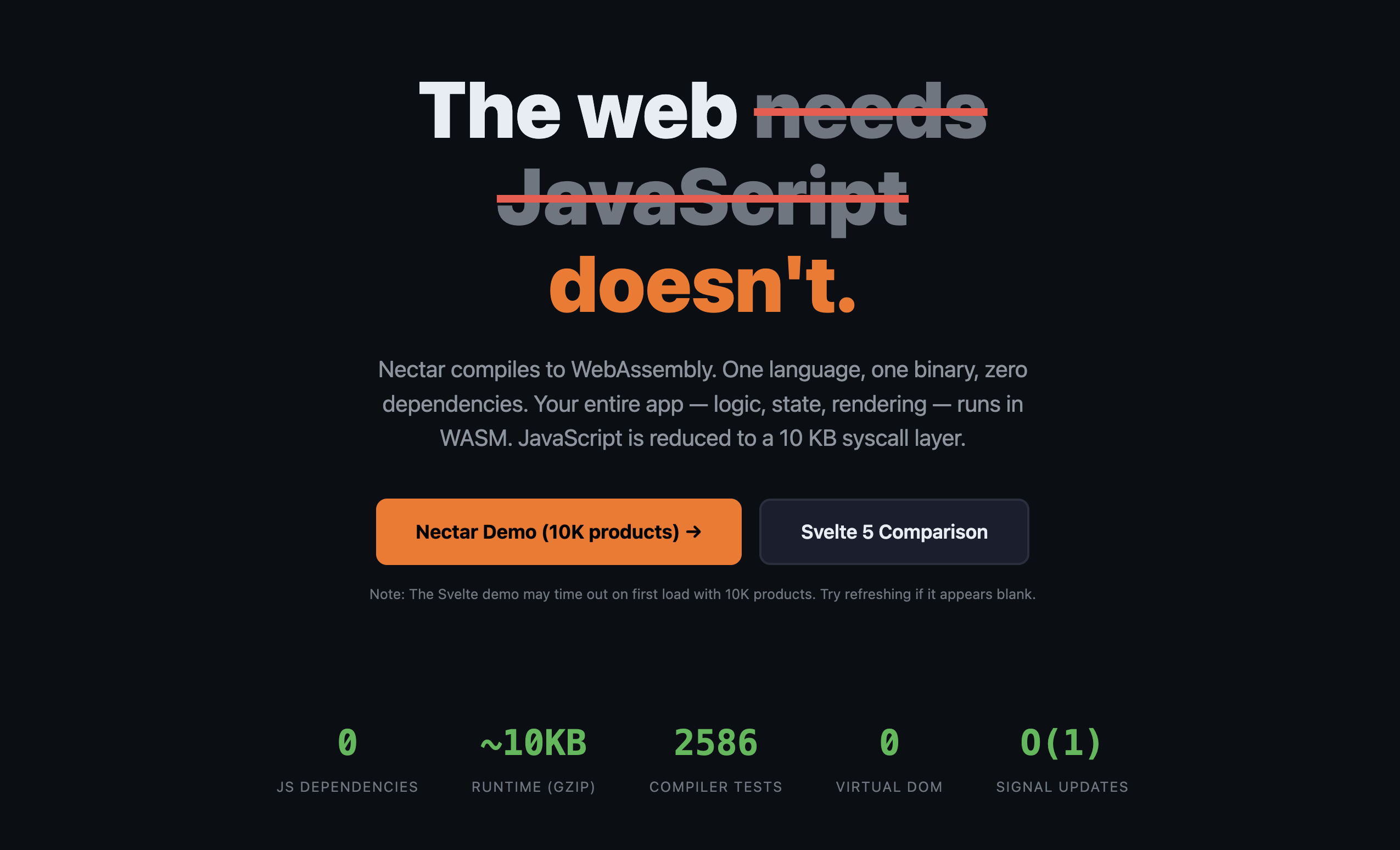
Nectar : un langage compilé en WebAssembly qui élimine JavaScript de votre stack. Un seul binaire Rust gère tout (compilation, tests, SSR, LSP, serveur de dev), zéro dépendance npm, et un runtime de 10 Ko dans le navigateur. ⬇️
https://buildnectar.com/
📬 Ma veille dev de la semaine → https://l.camilleroux.com/veille-3Lc
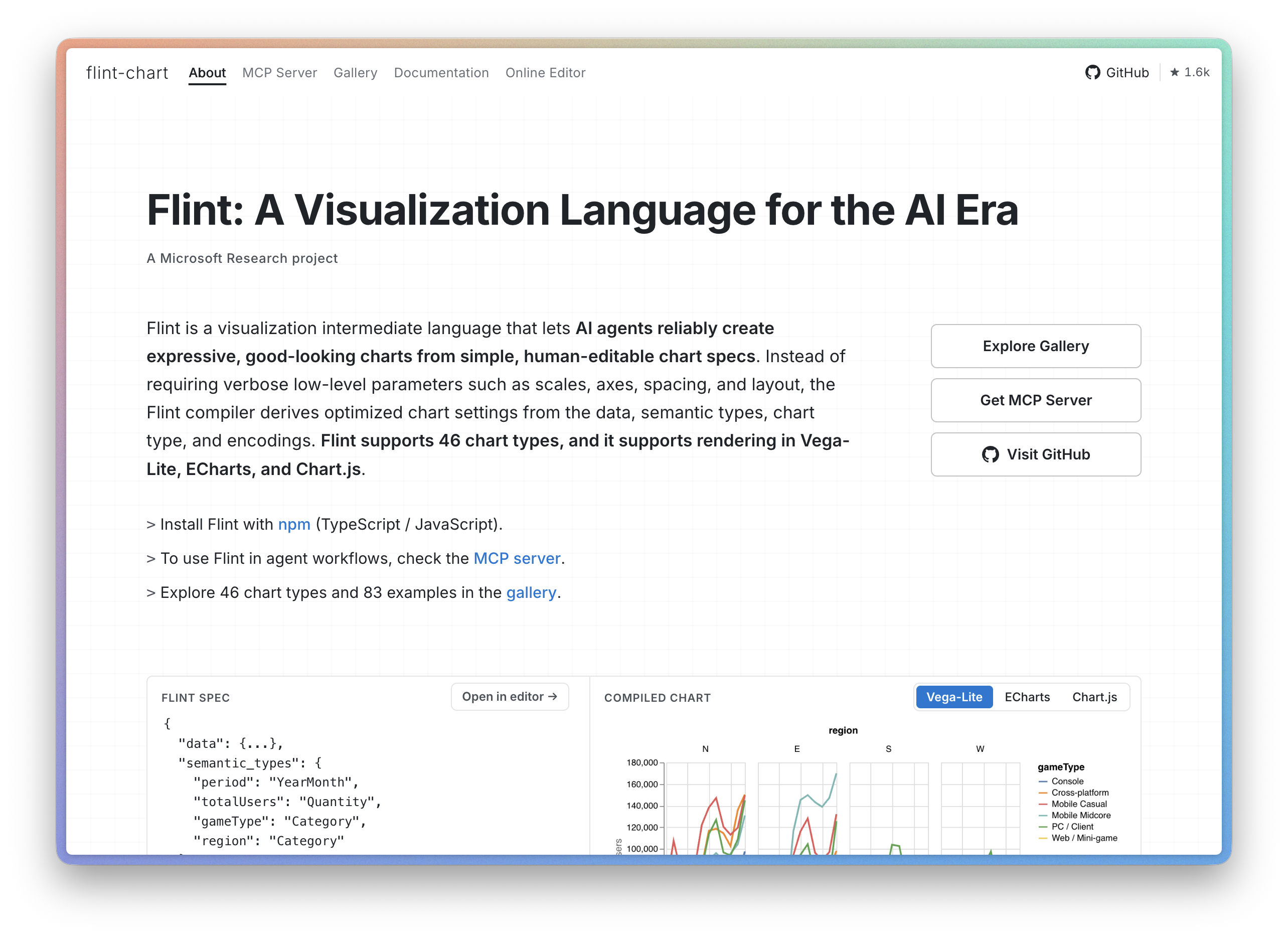
Flint : un langage de visualisation pensé pour les agents IA, qui permet de représenter leurs états internes, leurs décisions et leurs flux de données de façon lisible et traçable. ⬇️
https://microsoft.github.io/flint-chart/#/
📬 Ma veille dev de la semaine → https://l.camilleroux.com/veille-q4T
Alt...
Capture d'écran du site officiel de **Flint**, un langage de visualisation intermédiaire développé par Microsoft Research, permettant aux agents IA de générer des graphiques expressifs à partir de spécifications simples, avec support de 46 types de graphiques et des rendus en Vega-Lite, ECharts et Chart.js.
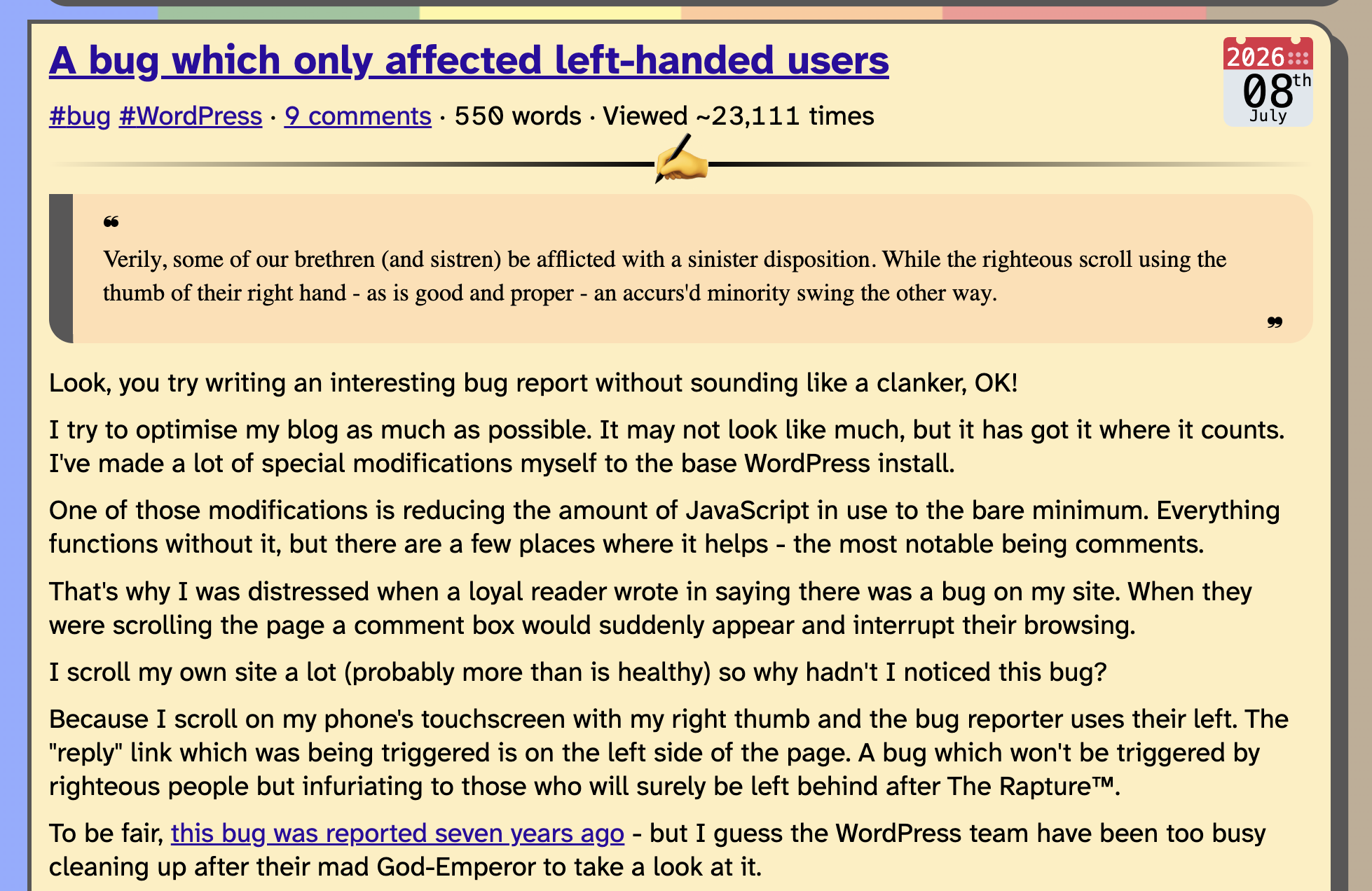
Un bug qui n'affectait que les gaucher·ères : un listener `touchstart` ajouté en 2017 pour contourner un délai de 300ms que les navigateurs avaient déjà résolu en 2015. Corrigé sept ans après le premier signalement, en supprimant deux lignes. ⬇️
https://shkspr.mobi/blog/2026/07/a-bug-which-only-affected-left-handed-users/
📬 Ma veille dev de la semaine → https://l.camilleroux.com/veille-n8j
Alt...
Logo WordPress : un « W » blanc stylisé sur un cercle bleu-gris foncé, entouré d'un anneau blanc et d'un second cercle de la même couleur bleue.
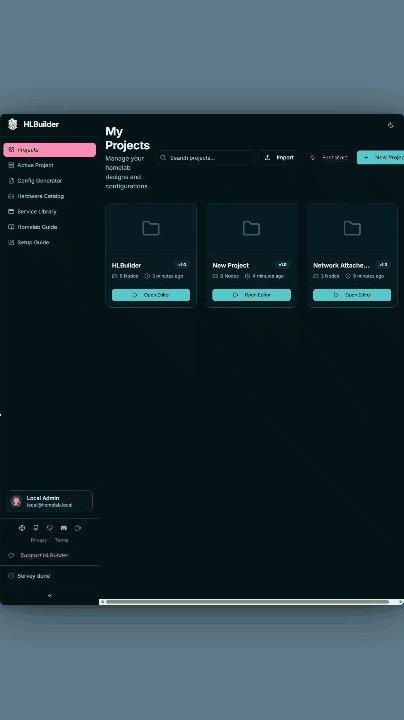
HLBuilder offre une interface visuelle pour planifier son homelab : topologie réseau en drag-and-drop, recommandations hardware selon vos besoins et liste de courses avec estimations de prix. Open source et self-hosted. ⬇️
https://github.com/Butterski/homelab-builder
📬 Ma veille dev de la semaine → https://www.camilleroux.com/veille
Alt...
Capture d'écran de l'interface web de HLBuilder, une application de planification d'infrastructure homelab, affichant le tableau de bord "My Projects" avec trois projets listés dans un thème sombre.
Cloud Mail : un service mail self-hosted sur Cloudflare Workers, sans serveur. Envoi via Resend, pièces jointes sur R2, notifications Telegram et détection automatique des codes de vérification par Workers AI. ⬇️
https://github.com/maillab/cloud-mail/blob/main/README-en.md
📬 Ma veille dev de la semaine → https://www.camilleroux.com/veille
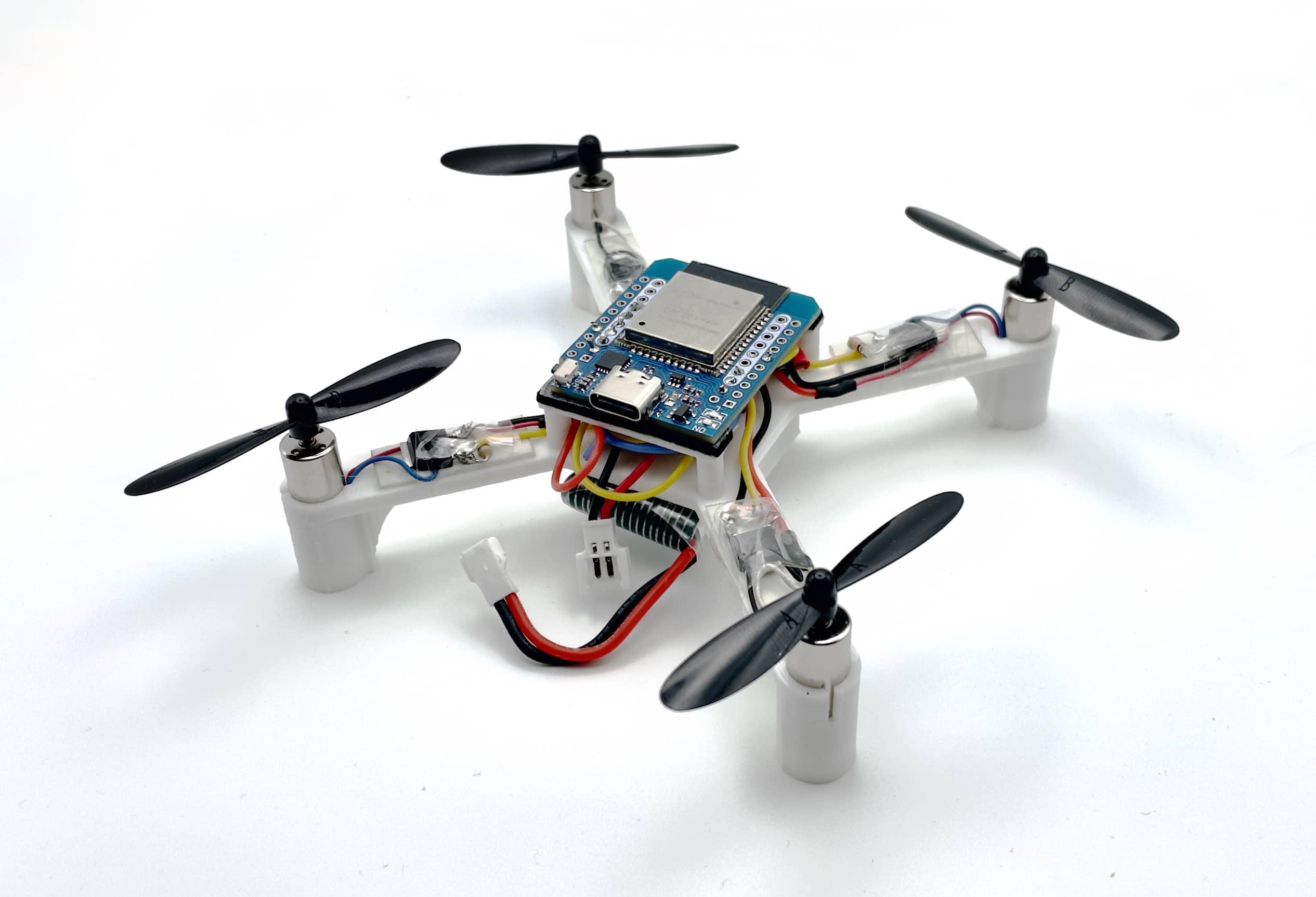
Flix : un quadcopter open source à base d'ESP32, conçu pour l'éducation et la recherche. Firmware Arduino en moins de 2 000 lignes, simulation Gazebo, bibliothèque Python, protocole MAVLink. Le châssis s'imprime en 3D. ⬇️
https://github.com/okalachev/flix
📬 Ma veille dev de la semaine → https://www.camilleroux.com/veille
Alt...
Un mini quadcopter fait maison à cadre blanc, équipé de quatre hélices noires et d'une carte de développement ESP32 bleue montée au centre, avec des câbles multicolores apparents.
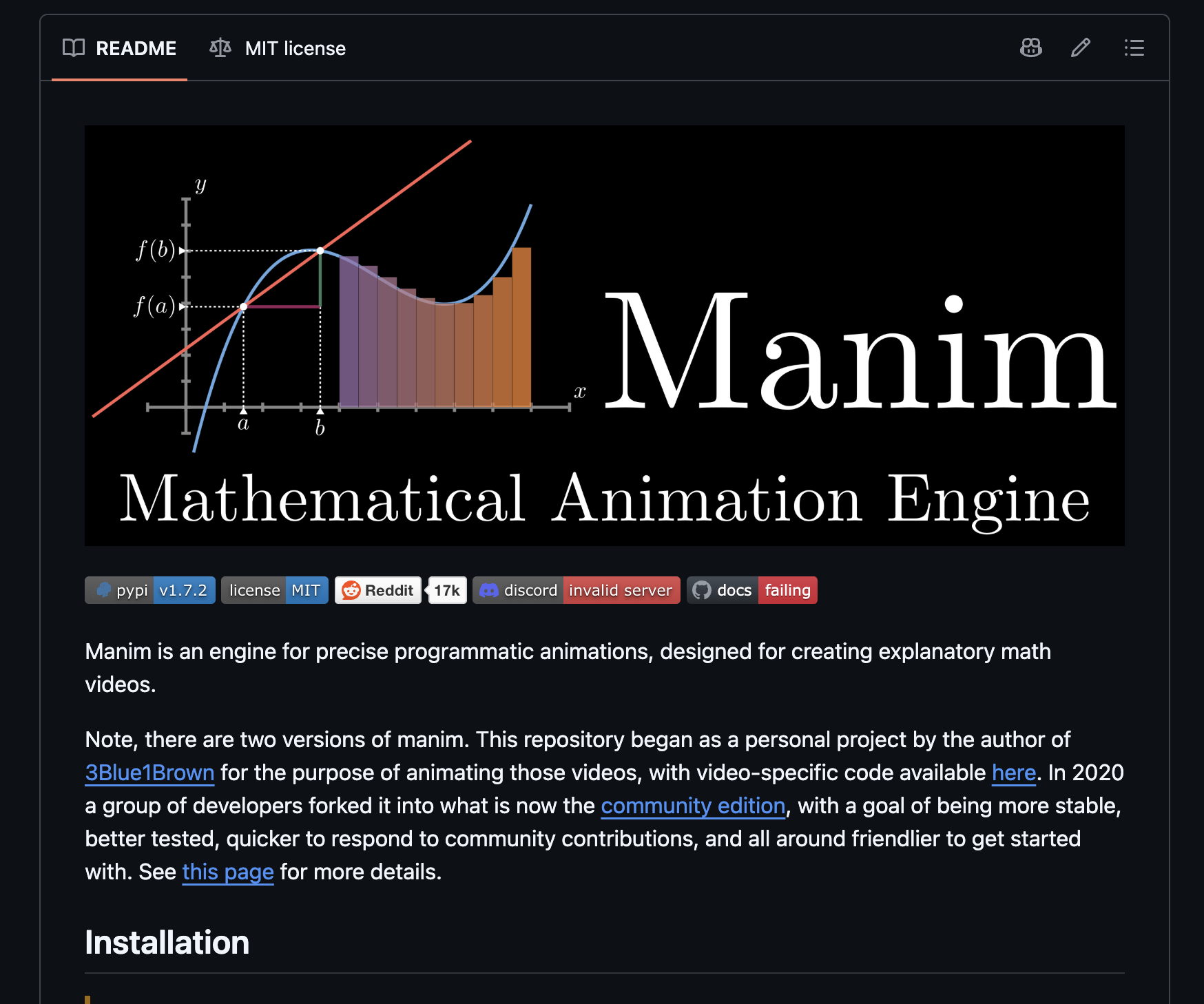
Manim : le moteur Python derrière les vidéos de 3Blue1Brown, disponible en open source. Du code Python vers des animations mathématiques précises, avec support LaTeX et rendu OpenGL. `pip install manimgl` suffit pour démarrer. ⬇️
https://github.com/3b1b/manim
📬 Ma veille dev de la semaine → https://www.camilleroux.com/veille
Alt...
Capture d'écran du dépôt GitHub de Manim, un moteur d'animation mathématique open source, affichant son logo avec un graphique illustrant une intégrale de Riemann et la description « Mathematical Animation Engine ».
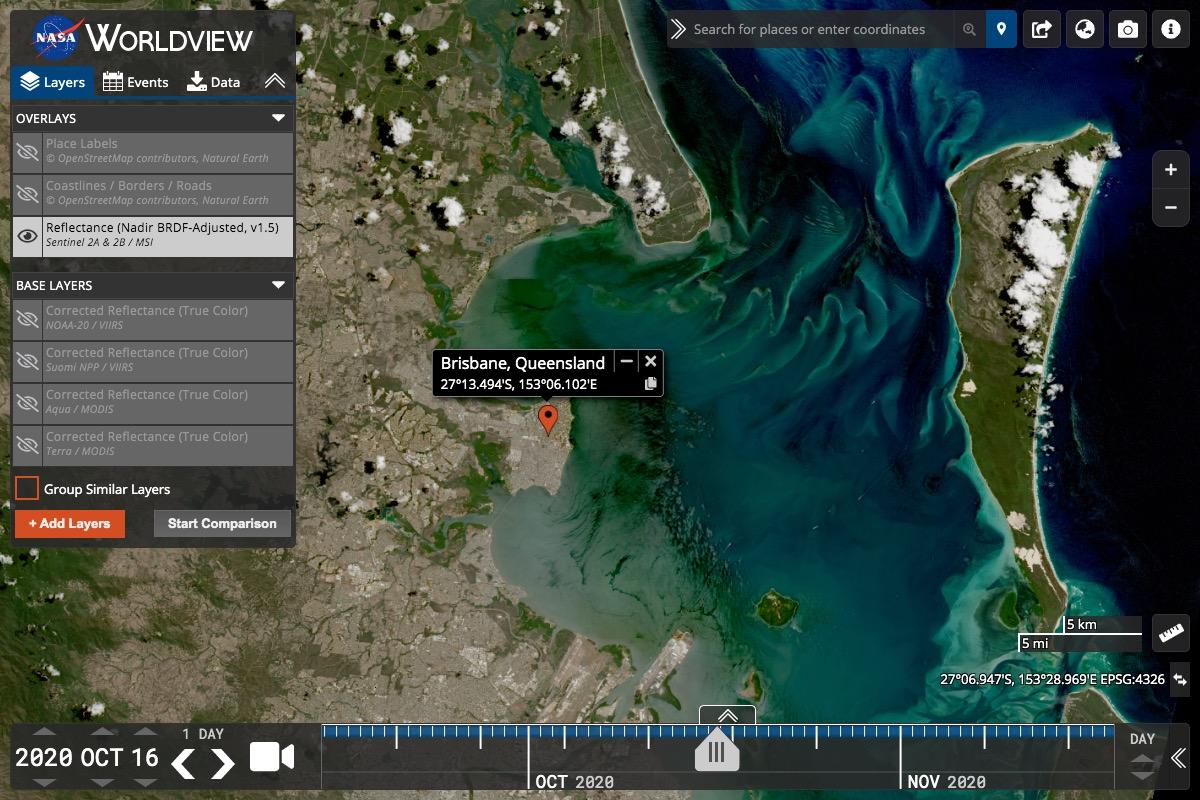
NASA Worldview : plus de 1000 couches satellite mondiales en haute résolution, avec certaines données disponibles 3h après observation. Open source, compatible OpenLayers, Leaflet et Cesium. ⬇️
https://github.com/nasa-gibs/worldview
📬 Ma veille dev de la semaine → https://www.camilleroux.com/veille
Alt...
Capture d'écran de l'application NASA Worldview affichant une image satellite de Brisbane, Queensland (Australie), datée du 16 octobre 2020, montrant la côte et les eaux turquoise de la mer avec des sédiments visibles près des embouchures des rivières.
reqlog génère un dashboard live de toutes vos requêtes HTTP.
Headers, body, latence, replay et diff entre appels. Trois lignes pour l'intégrer sur Express, NestJS, Fastify ou Go. ⬇️
https://github.com/FirasLatrech/reqlog
📬 Ma veille dev de la semaine → https://www.camilleroux.com/veille
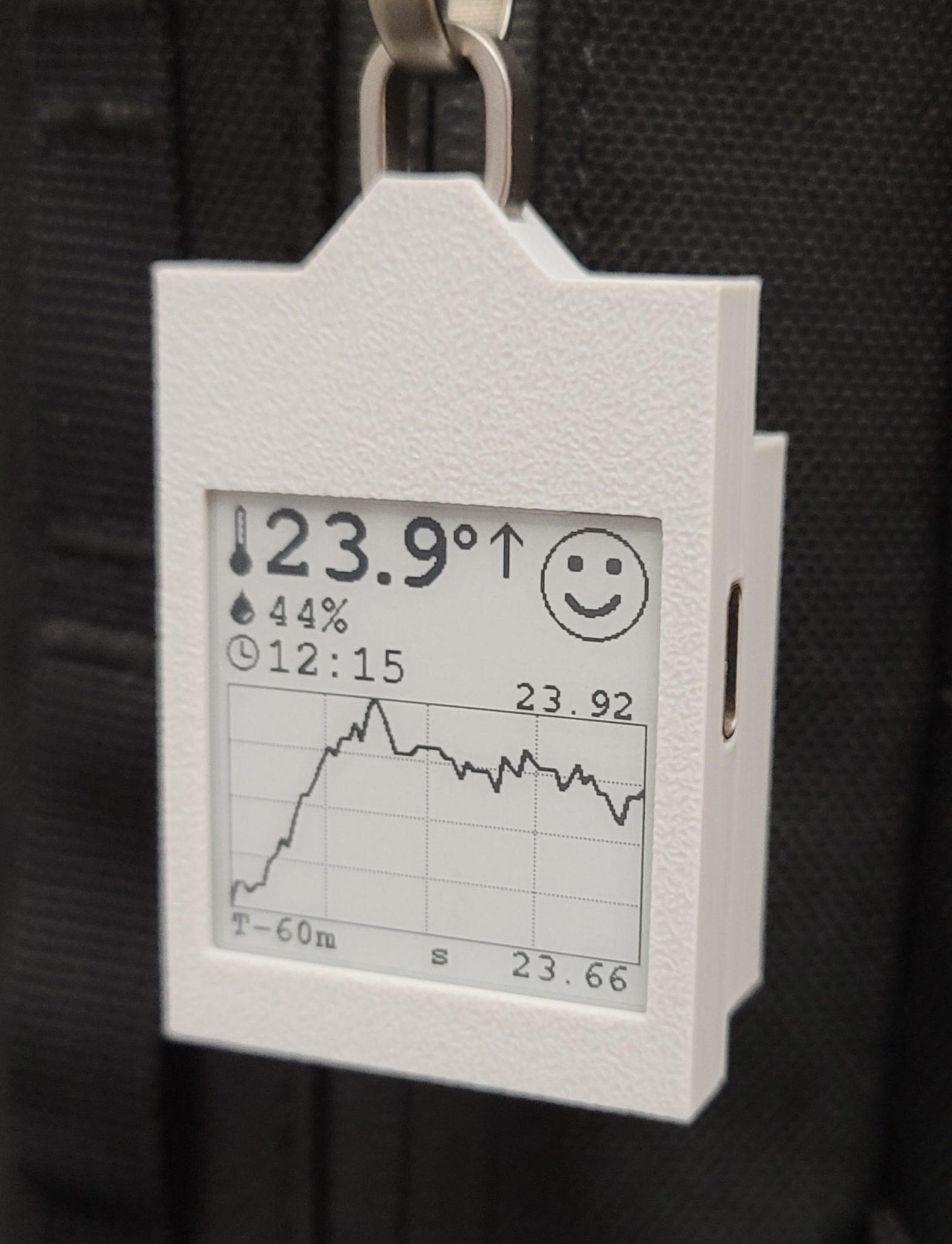
Weathergotchi : un petit appareil autonome qui mesure en continu la température et l'humidité, affiche les données sur un écran basse consommation et garde l'historique en mémoire. Open source, schémas et firmware inclus. ⬇️
https://github.com/Michael-Manning/E-Paper-Climate-Logger
📬 Ma veille dev de la semaine → https://www.camilleroux.com/veille
Alt...
Petit capteur de température et d'humidité portable à écran e-paper, affichant 23,9°C, 44% d'humidité à 12h15, accompagné d'un graphique des relevés sur les 60 dernières minutes, le tout suspendu à un sac par un mousqueton.
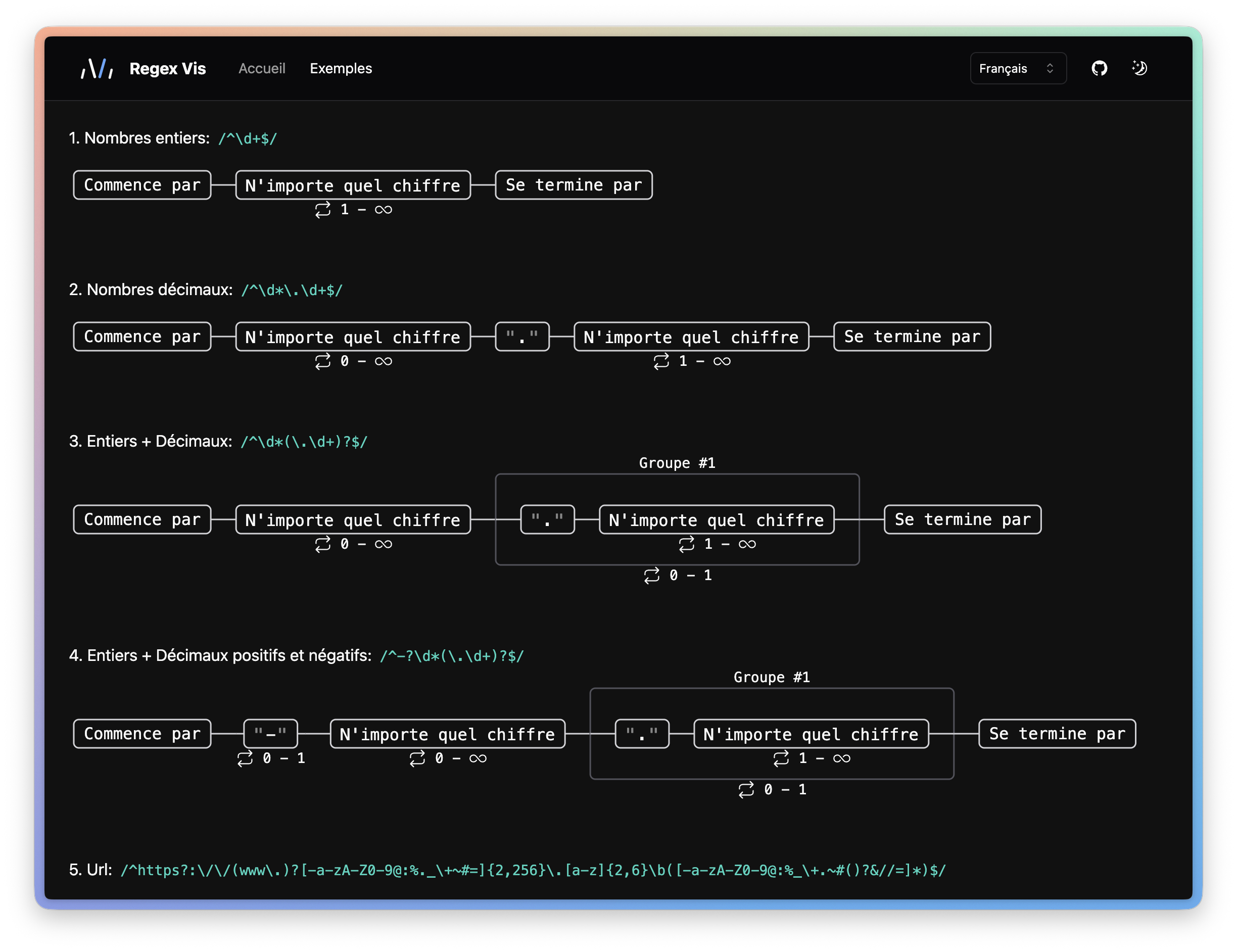
Le plus bel outil de visualisation de regex que j'ai vu depuis des années.
Regex Vis est un visualiseur et éditeur de regex qui rend les expressions régulières plus lisibles. ⬇️
https://regex-vis.com/
Alt...
Capture d'écran de l'outil **Regex Vis**, un visualiseur d'expressions régulières, affichant cinq exemples de regex (nombres entiers, décimaux, positifs/négatifs et URL) sous forme de diagrammes de flux interactifs sur fond sombre.
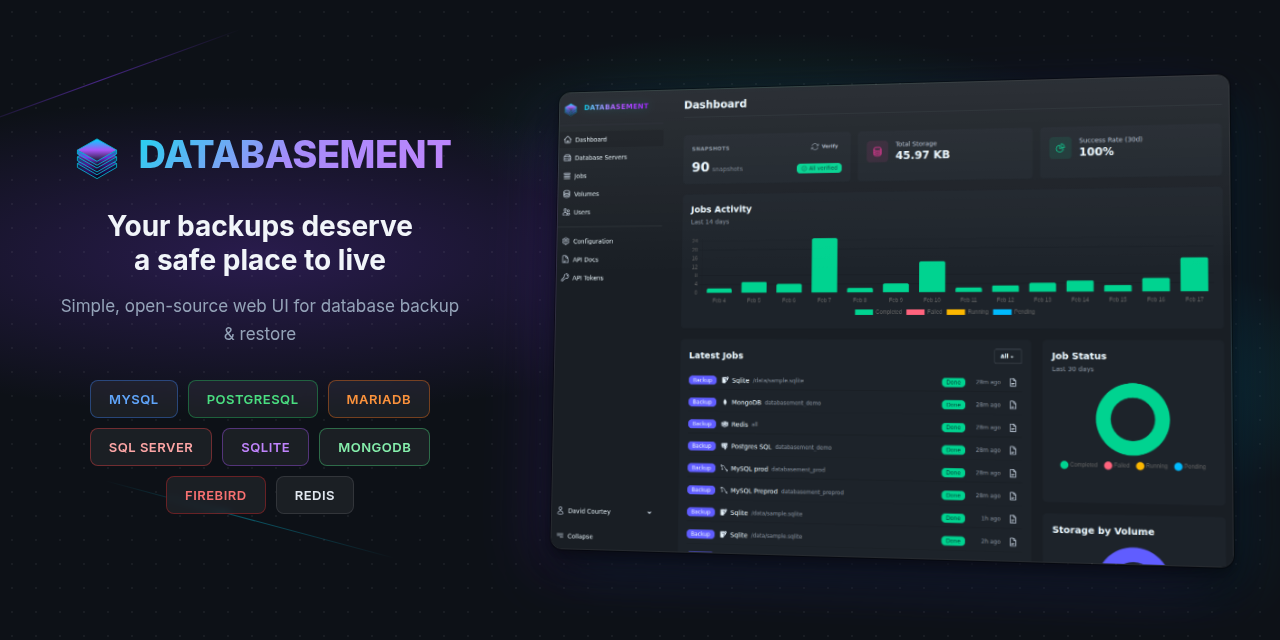
Databasement : sauvegardes de bases de données via une interface web, self-hosted. MySQL, PostgreSQL, MongoDB, Redis, planification, rétention GFS, restore cross-serveur, stockage S3/SFTP/local, SSH tunnel. Un conteneur Docker suffit. ⬇️
https://github.com/David-Crty/databasement
Alt...
Capture d'écran promotionnelle de **Databasement**, un outil open-source d'interface web pour la sauvegarde et restauration de bases de données, présentant son logo, sa compatibilité avec MySQL, PostgreSQL, MariaDB, SQL Server, SQLite, MongoDB, Firebird et Redis, ainsi qu'un aperçu de son tableau de bord affichant des statistiques de snapshots, l'activité des jobs et l'état du stockage.
Les devs n'aiment pas le CSS parce qu'ils ne le maîtrisent pas vraiment. L'article déconstruit les idées reçues : CSS est un vrai langage, avec ses règles de cascade qui déroutent les habitué·es des langages généralistes. ⬇️
https://csscade.fr/articles/pourquoi-les-devs-naiment-pas-le-css/
Native SDK : un toolkit pour construire des apps desktop natives avec du markup déclaratif et Zig comme logique, aucun browser, aucun WebView, un binaire de quelques mégaoctets. ⬇️
https://github.com/vercel-labs/native

Alt...
Capture d'écran d'une interface de lecteur de musique desktop développée avec **vercel-labs/native**, affichant une bibliothèque d'albums avec des pochettes colorées et minimalistes, ainsi qu'une barre de lecture en bas avec le titre "Glass" d'Aurora Fields en cours de lecture.
Infrastructure as code pour un homelab Proxmox et Kubernetes, géré en GitOps avec Flux, Ansible et Talos. Le repo expose l'ensemble de la configuration : VMs, cluster K8s, automatisations et networking, tout versionné et déployé via CI/CD. ⬇️
https://github.com/Mafyuh/iac

🔎 x402 : paywaller une API sur un site statique sans pub ni bouton de don, via le protocole x402 et un Cloudflare Worker. Un exercice concret qui montre enfin à quoi peut servir le code HTTP 402, resté inutilisé depuis des décennies. ⬇️
https://shtein.me/posts/x402-poc/

Alt...
Interface de paiement Web3 demandant 0,01 USDC sur le réseau Base Sepolia pour accéder à une blague premium, avec un wallet connecté (0xAF40...5a0e) et un bouton "Pay now".
🔎 asciinema : enregistrer son terminal dans des fichiers texte ultra-légers, rejouables à la demande, exportables en GIF via `agg`. Utile pour documenter des procédures ou illustrer des formations sans passer par la vidéo. ⬇️
https://www.linuxtricks.fr/wiki/asciinema-enregistrer-son-terminal-rejouer-les-replays-export-en-gif
🔎 DNSGlobe : un checker de propagation DNS en TUI Rust, qui interroge 34 resolvers en parallèle dans le monde entier et affiche les résultats sur une carte dans le terminal, avec un mode watch qui refresh automatiquement jusqu'à propagation complète. ⬇️
https://github.com/514-labs/dnsglobe
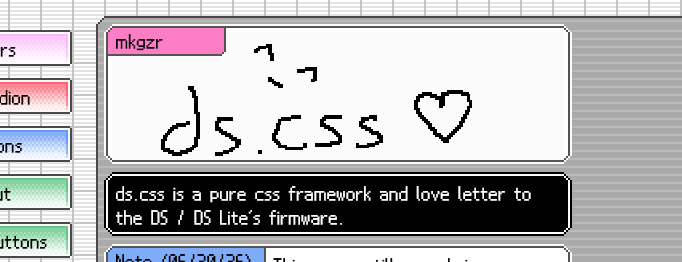
🔎 ds.css : un framework CSS qui recrée fidèlement l'interface de la Nintendo DS Lite, double écran compris ⬇️
https://github.com/spiritov/ds.css
Alt...
Capture d'écran d'un dépôt GitHub nommé **spiritov/ds.css**, décrit comme un framework CSS recréant l'interface utilisateur de la Nintendo DS / DS Lite, affichant 330 étoiles, 2 forks et 1 contributeur.
🔎 Flyline : un plugin Bash écrit en Rust pour remplacer readline, avec coloration syntaxique, recherche dans l'historique, prompts enrichis, tooltips et intégration d'agents, sans plugin manager ni configuration laborieuse. ⬇️
https://github.com/HalFrgrd/flyline
🔎 QUALITY.md : un format de fichier ouvert pour déclarer ce que "bon" signifie sur un projet, sécurité, maintenabilité, qualité du code, des tests, avec un contexte explicite et des critères évaluables par des humains ou des agents. ⬇️
https://getquality.md/
Alt...
Page de documentation de bienvenue pour **QUALITY.md**, un format open source permettant de modéliser la qualité d'un projet pour que les équipes et les agents puissent l'évaluer et s'aligner sur une définition commune de la qualité.
🔎 Oak, une couche de versioning pensée pour les agents de code : une branche par session, des descriptions plutôt que des commits, et un montage lazy pour attaquer n'importe quel dépôt en quelques secondes. ⬇️
https://oak.space/docs

Alt...
Peinture à l'huile représentant la canopée d'un chêne vue d'en bas, avec des feuilles vertes, des glands et un ciel bleu nuageux, sur laquelle est superposé un logo pixélisé blanc en forme de losange.
🔎 Cloudflare Drop : déposez un dossier ou un zip dans le navigateur, le site est en ligne sur le réseau Cloudflare en quelques secondes. Sans compte. Le déploiement expire après 60 minutes, sauf si vous le réclamez. ⬇️
https://www.cloudflare.com/drop/
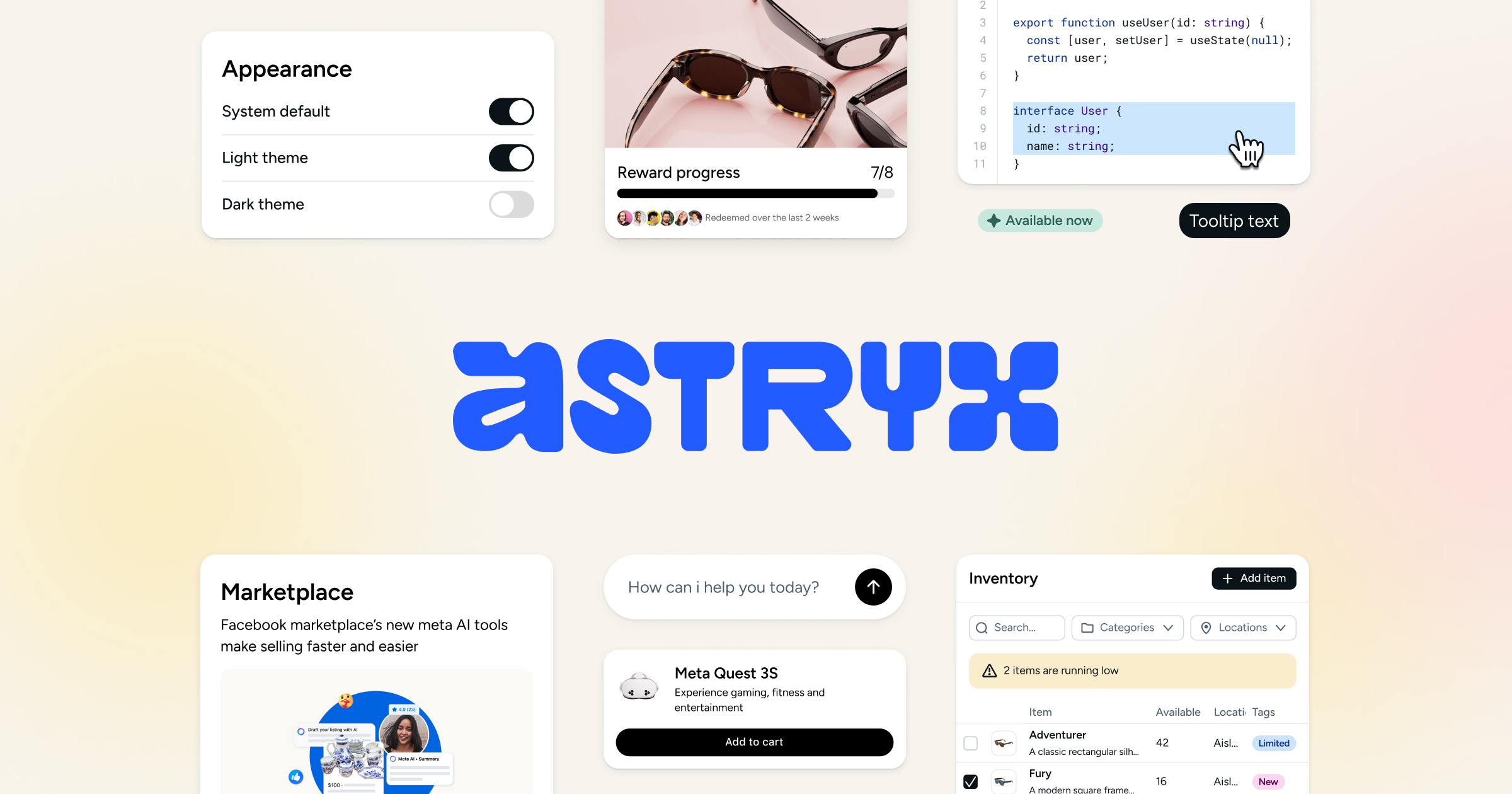
Astryx : le design system open source de Meta, en beta, 160+ composants React, thèmes personnalisables et support MCP pour l'intégrer directement dans un workflow avec des agents IA. ⬇️
https://astryx.atmeta.com/
Alt...
Présentation du système de design open source **Astryx**, illustrée par plusieurs composants d'interface utilisateur : paramètres d'apparence, progression de récompenses, extrait de code TypeScript, interface de marketplace et d'inventaire, sur un fond dégradé pastel.
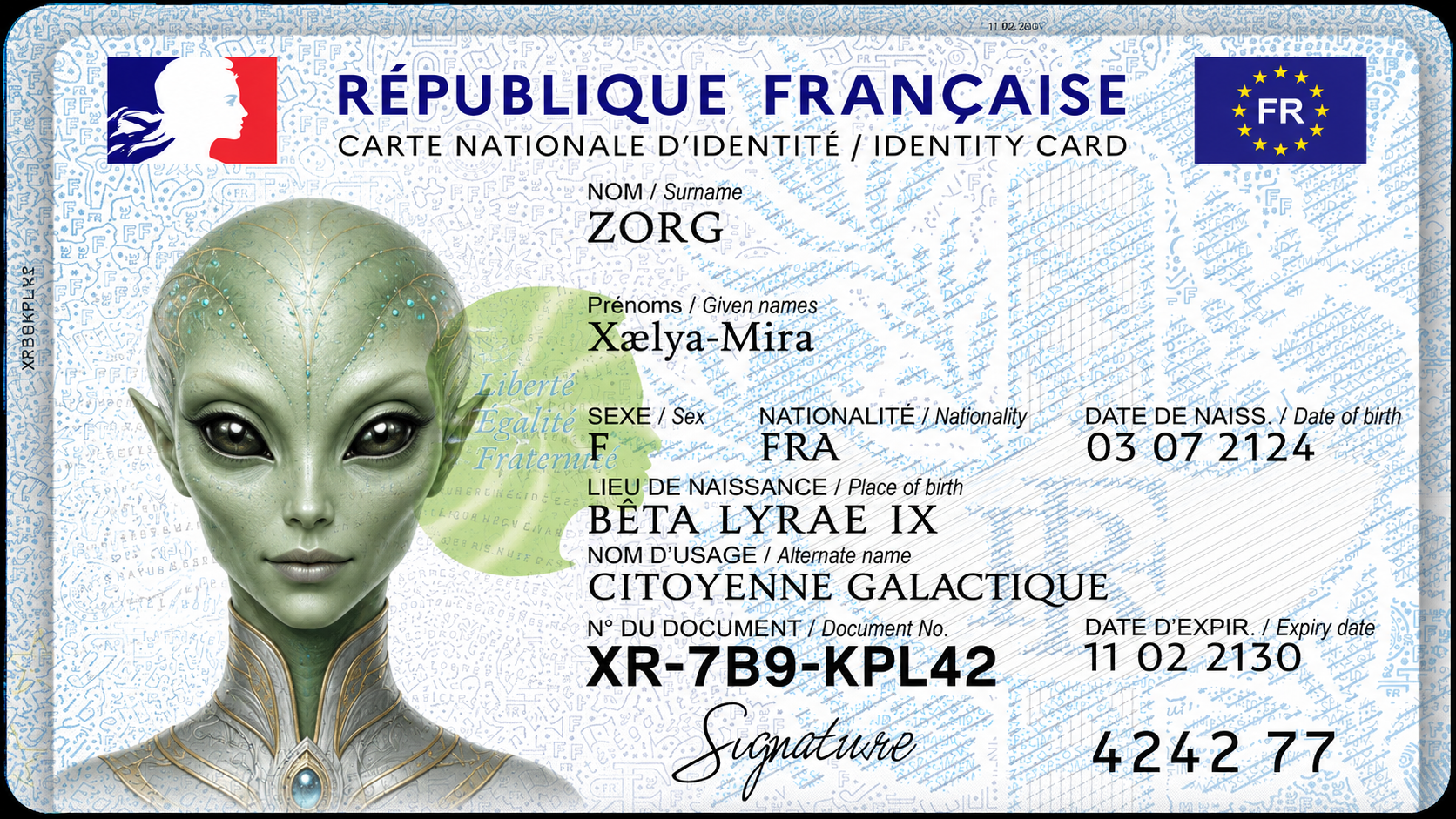
cnie-python-tools lit la puce NFC de la carte d'identité française sous Linux : état civil, adresse, photo JPEG 2000. Les empreintes restent hors de portée, protégées par l'EAC. ⬇️
https://korben.info/carte-identite-electronique-lire-puce-python.html
superfile : un file manager en terminal qui fait enfin attention à son apparence, navigation clavier, thèmes, plugins, support macOS/Linux/Windows, installation en une ligne. ⬇️
https://www.opensourceprojects.dev/post/superfile
Hanami 3.0 : mailers, i18n et Minitest au programme, avec des perfs qui donnent envie, jusqu'à 3x plus de throughput et 14x moins d'allocations par requête, sans toucher au code existant. ⬇️
https://hanakai.org/blog/2026/06/30/hanami-3-0-in-full-bloom
![[?]](https://files.mastodon.online/accounts/avatars/000/133/698/original/59ca7f89f4e30234.jpg)
One thing I've learned during my time writing software release manuals (from before the time we automated much of that), is that reading a manual is a skill that few people possess. Many people, especially tech-savvy people, will open a manual halfway to orient themselves, fail to notice when their brain switches to do-mode when it recognizes something, and simply ignore the first steps. Following a manual requires attention and discipline.