Search results for tag #selfhosting
![[?]](https://media.pan.rent/accounts/avatars/113/973/931/272/530/551/original/86718d05cde85cf7.jpg)
I’d like to start experimenting self-hosting with a Raspberry Pi + YunoHost, but I’m struggling to wrap my head around the security risks.
If I expose it to the internet via my home router, this could potentially put all devices on my family’s home Wi-Fi at risk.
Any security experts who can share advice on a safe setup for a beginner? 🙏
All tips and suggestions are much appreciated! #selfhosting
![[?]](https://media.bsd.network/accounts/avatars/000/145/966/original/1de4841040b8a78c.jpg)
Automated watch of vulnerabilities affecting my infrastructure
In this blog post, I share how I get notifications, tickets and fix pull requests for newly published vulnerabilities affecting my infrastructure
https://dataswamp.org/~solene/2026-10-23-automated-vulnerability-watch.html
gemini://perso.pw/blog/articles/automated-vulnerability-watch.gmi
 boosted
![[?]](https://nb-fedi.de/fileserver/01FYQ1QFB0N3T9D2MM45C1C933/attachment/original/01JTQH3PZVKJAM4PPVR2CNMQNK.jpeg)
Wow. The updates to the #php packages in #pkgsrc were updated to 8.5.12, 8.4.27 and 8.3.36, respectively, by 1358Z. Building and in-place update went smoothly. My #nextcloud is patched and back in operation.
I'm impressed. Thank you!
#NetBSD #homeserver #selfhosting.
![[?]](https://cdn.fosstodon.org/accounts/avatars/116/523/088/119/933/282/original/64a1be4ea97eab78.png)
FitPub 1.3 is out! 🚀
Some highlights of the new release:
🏃 Manual activities, TCX & multisport imports
🔑 Passkey sign-in
🚀 Federated boosts & rocket reactions
🔒 More control over sharing & privacy
⚡ Power meter data, race results & air quality
🗺️ Redesigned profiles
🛠️ Better tools for instance admins
… and much more!
FitPub is a self-hosted fitness tracker for the Fediverse. Your workouts, your data. Check it out: https://fitpub.social
#FitPub #Fediverse #OpenSource #SelfHosting #Training
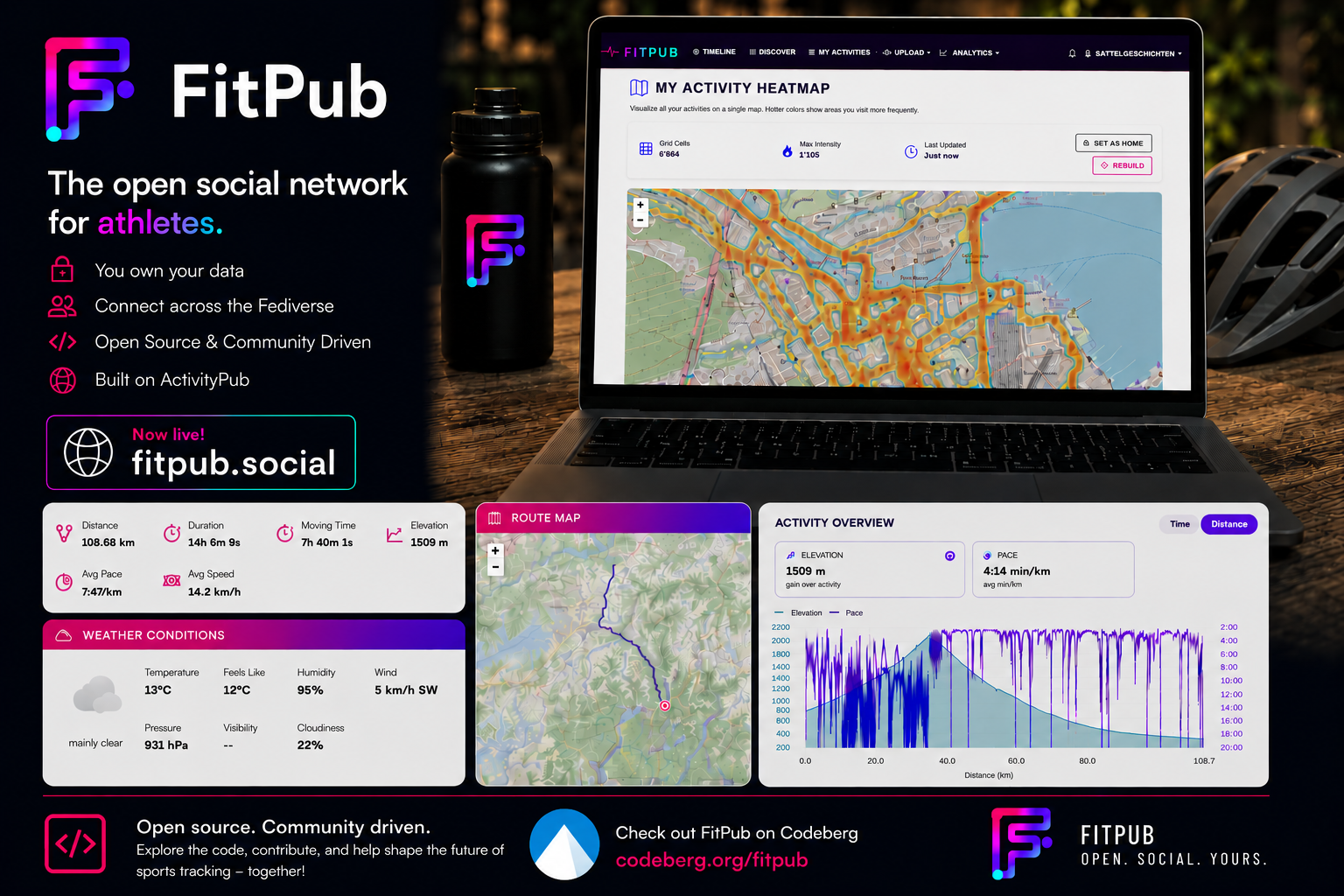
Alt...
FitPub flyer with informations about the project, some screenshots, and links.
![[?]](https://assets.chaos.social/accounts/avatars/108/135/149/956/177/501/original/d1ef6c9a9d64dfaa.jpeg)
#selfHosting ist auch ein gefährliches Rabbit Hole. Wenn das eigene Setup erstmal klappt, hat man wirklich schnell mal was ausprobiert oder deployt einfach mal ein eigenes Tool.
![[?]](https://object.ceph-waw3.hswaw.net/mastodon-prod/accounts/avatars/109/360/274/978/913/890/original/30fe75c6bcdfe430.gif)
Sigh, #salt is slop, and dropping features.
I've looked at https://www.rexify.org/ and I failed to find how it deals with secrets.
I guess I either switch to #puppet by way of #OpenVox, or unify my systems on #NixOS (and swallow linux sloppification). Sigh.
![[?]](https://snac.smithies.me.uk/justine/s/avatar-270304302821a87b50026a5768a00c56.png)
![[?]](https://media.bsd.cafe/bsdmmedia01/accounts/avatars/116/268/246/190/462/981/original/62500699fca4854a.png)
Finally turned attention to getting Immich up and running tonight. I like it, seems snappy enough with tens of thousands of photos imported.
The Immich website has a handy form driven page for generating a docker compose file so it took like 30 seconds to get it running once mutated to follow my way of doing things on my server (persistent storage, naming, cert proxy, etc).
I struggled a bit with using the Immich command line tool to import my photo collection and in the process of trying to figure out why --recursive didn't work, stumbled upon the immich-go project on github. It's also a command line tool and works very well; immediately was able to recursively import photos, etc. Compiles cleanly on Alpine Linux (ofc, it's just golang).
Immich-go has a migrate function that allows you to connect to one Immich server and copy the files to another Immich server (but no 'delete source' as far as I could tell).
I set up a second Immich instance on a different port and started to use the migrate function to finally start moving all the photos of my computer electronics and vehicle technical projects out of the whole household's photo collection. My wife will appreciate that. Ha. Managed to split out 2026-2025, only ~25 more years to go. Ugh.
Anyway, Immich (the server) and Immich-go (the CLI tool) are cool. Recommended.
Fun!
#immich #immichgo #AlpineLinux #cli #photography #photos #HomeLab #SelfHosting #SelfHosted
![[?]](https://files.mastodon.social/accounts/avatars/000/155/698/original/45671137a1f3c90a.png)
🎤 Upcoming at SeaGL 2026:
📍 10:30 AM on October 23
🗣️ "BadgeFed: Open, Decentralized Badges via ActivityPub"
👥 Speaker(s): Maho Pacheco
📍 Room: Room 250
🏷️ Track: Everything Else
📝 Digital badges promise portable, verifiable recognition, but in practice, they’re locked behind prop...
#SeaGL2026 #tech #activitypub #selfhosting #fediverse #linux
🔗 https://pretalx.seagl.org/2026/talk/UC3VVG/
![[?]](https://cdn.masto.host/socialwildeboernet/accounts/avatars/000/000/001/original/7a247866b9436e4b.jpeg)

I just had a thought. Some people talk about #SelfHosting and #Homelabs as some prepper like thing for weird people. I want to change that, as it certainly doesn't reflect how I feel about my mailserver, my various web servers and other services I run myself.
And that's where the thought comes in. From now on I will call it:
#PersonalComputing instead (or again, depending on your age :)
![[?]](https://mylittlefedi.capella-ember.uk/media/01a144aa-0930-7f3f-9ecf-bfbf35680a1c/image.png)
Hi everyone from my littlefedi instance, this is my first test post with a media file.
This is one of my dogs when she was very young
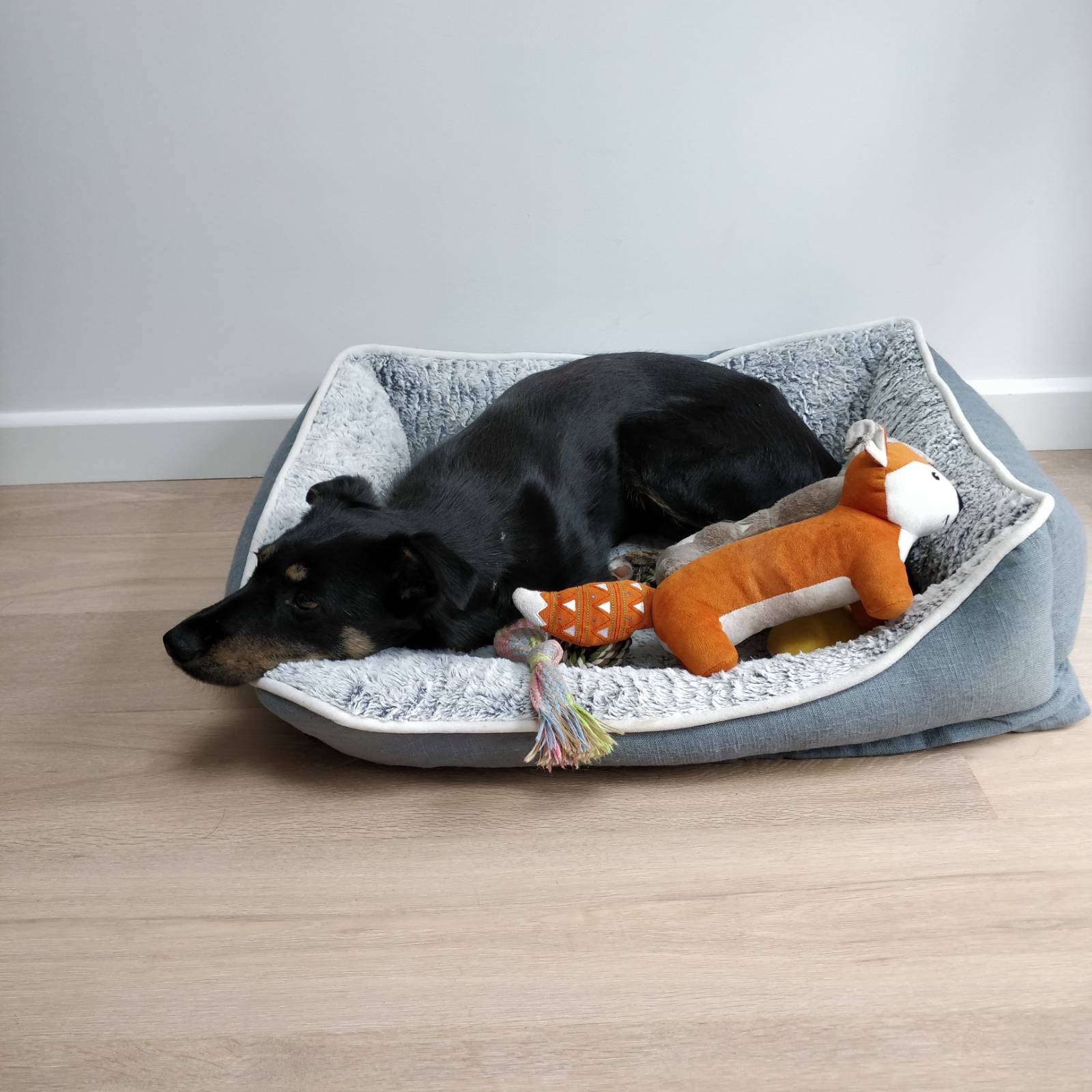
Alt...
a medium size black dog lying in a white and blue bed. Inside the bed is some of her toys, the one in the foreground is a little orange fox. The wall behind is white and the floor is a light coloured.wood
![[?]](https://cdn.masto.host/socialgrowyourownservices/accounts/avatars/107/729/744/625/286/769/original/81f869582bb4abda.jpeg)
There's a new very lightweight Fediverse platform that's just been released called littleFedi. You can follow its new official account at:
Its official website including download and source code is at:
LittleFedi is intended for techy people who want to create their own Fediverse server using as few resources as possible.
It's written by @stefano (who also created the weather service FediMeteo).
![[?]](https://media.infosec.exchange/infosec.exchange/accounts/avatars/000/070/798/original/d20ead2f85c91066.jpg)
I love getting #TheOnion in print, but this time they’ve gone too far. I don’t know how they broke into my basement but I did not give them permission to use photos of my stuff in their mock ads.
#selfhosting #homelab

Alt...
Photo of a printed coupon in the onion. It pretends to be from Best Buy and shows a big cardboard box full of random computer cords like USB and power cables. The coupon says “good for one free pull from the Tub O’ Cords”
![[?]](https://media.bsd.cafe/bsdmmedia01/accounts/avatars/111/360/189/352/809/556/original/c41657304ba422ab.png)


I think I'm slowly going to make my way back to self-hosting my repositories (via cgit, most likely). Most providers now either have too strict of rules or none at all...
Probably better to have full control anyway 🤷

 boosted
![[?]](https://cdn.famichiki.jp/accounts/avatars/111/077/317/488/961/969/original/d9631d637caf5d6f.jpg)


Alright, I like NetBird a lot. It’s not perfect, and there’s some gotchas (especially with self hosting), but overall I think I prefer it over Tailscale.
Will do a full blog post with the good, the bad and the ugly.

Alt...
Friendship ended with Tailscale, now NetBird is my best friend
![[?]](https://media.burningboard.net/accounts/avatars/109/892/422/024/311/931/original/f22e604f554272c0.png)

It started as a gag: a tiny popup telling IPv4 visitors that their provider hasn't yet discovered 1998.
To do that honestly I needed something to echo the client address.
Using ipify felt wrong when you run your own AS. So now it's a service. 🙃
curl https://ip.hofstede.it
curl https://v6.ip.hofstede.it/json
curl https://v4.ip.hofstede.it/asn
One Rust binary, server-rendered, zero JavaScript.
![[?]](https://media.bsd.cafe/bsdmmedia01/accounts/avatars/116/623/464/239/450/556/original/39451234193e9fcc.jpg)
Now I even have enough space for all the pictures my wife takes of our kid. <3
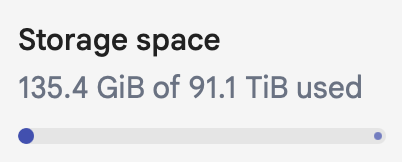
Alt...
Storage space 135.4 GiB of 91.1 TiB used text from Immich
![[?]](https://social.opencloud.eu/system/accounts/avatars/113/639/434/437/427/882/original/f1822b259e5113de.jpg)
Morgen ist es soweit: OpenCloud auf der FrOSCon 2026!
Am 15. und 16. August sind wir mit einem Vortrag von Tobias Baader und Jannik Stehle vertreten.
Alle Informationen: https://opencloud.eu/de/news/opencloud-auf-der-froscon-2026
Wir freuen uns auf den Austausch mit der Open-Source-Community!
Amazon's Twitch is now quietly feeding its streamers' content into GenAI/LLM by default 🤮 (Source: https://kotaku.com/twitch-is-now-using-your-content-to-train-amazon-ai-models-and-has-hidden-the-option-to-opt-out-2000723891)
If you want an alternative where you have total control and ownership of your own streams, @owncast is worth a look:
🌱 https://owncast.online (website)
🌱 @owncast (account)
OwnCast accounts can be followed from Mastodon etc. People who follow you will see in their timelines when you go live, and can click straight through to your stream.
![[?]](https://files.mastodon.social/accounts/avatars/114/022/439/482/466/131/original/bdfc2cc65fa8ac49.jpg)
Hello self-hoster friends, I have a question that seems to be a little divisive.
I am building a new Proxmox server on an olde computer and I was wondering if I should install the Proxmox OS on an HDD or an SSD.
Another similar question is, should I put the VMs on an HDD or an SSD? I guess it depends on the type of services and access speed to storage they require, but still, what are your opinions?
#selfhosting #self-hosting #linux #homelab #homeserver #proxmox #vm #lxc #stprage #ssd #hdd
![[?]](https://cdn.fosstodon.org/accounts/avatars/109/860/465/494/023/450/original/eb2faa9c8053bd7a.jpg)
Its been some time since I've setup a home server, and even then I only used it to store backups from devices on the LAN.
Never hosted anything that is reachable from the internet (besides SSH). I want to learn how to self-host a few services, starting with a Google Photos replacement; and littleFedi by @stefano .
Thought of using a old laptop, but decided to step up to a ThinkCentre M720q. I've installed FreeBSD as the host OS.
Onward!
#SelfHosting #MiniPC #FreeBSD #RunBSD #littleFedi
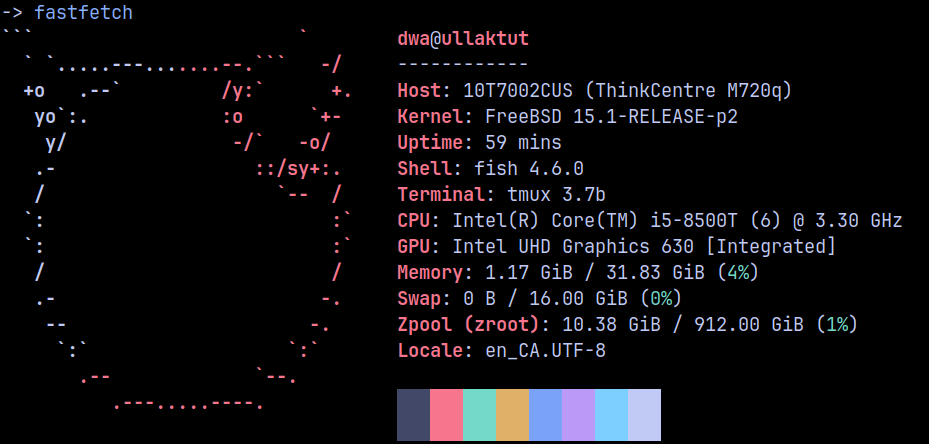
Alt...
Output of the 'fastfetch' command, showing the system stats for a ThinkCentre M720q mini pc running FreeBSD 15.1 with 32GB RAM and 1TB drive.
Stefano Marinelli (creator of the excellent FediMeteo) is working on a new type of lightweight Fediverse server called "littleFedi".
It's still in its early days and under development, but the first test server is now open and Stefano is gathering feedback about it. More info in the quoted post at https://littleone.littlefedi.social/@stefano/a105002b-5749-437d-a3cd-da54dfa70395 and more detail at https://littleone.littlefedi.social/@stefano/4252ae6f-b949-42f8-a021-fd2b698f8b37
You can follow Stefano at @stefano@bsd.cafe or on his littleFedi account at @stefano@littleone.littlefedi.social
If you're into photography, there is a free open Flickr-style photography platform which you can host yourself called Vernissage. It also has Fediverse compatibility so people can follow Vernissage accounts from Mastodon, Pixelfed etc. More info at:
You can follow at:
For techy people who want to install their own Vernissage manually, docs are at:
🌱 https://docs.joinvernissage.org/documentation/vernissageserver
#SelfHosting #Fediverse #ActivityPub #Flickr #Alternatives #Photography
![[?]](https://aseachange.com/fileserver/01ENCW3D083ATDAP5WGJEMSJC8/attachment/original/01JG469Y8X2DXVNGTWEZ8BPAGX.jpeg)
Come join me and @Gina in Luxembourg this October!
#OSCL26 (Open Source Conference Luxembourg) has a brand new track devoted to “Decentralized Technologies for Digital Sovereignty”:
🔗: https://conference.opensource.lu
We are looking for speakers interested in discussing these topics:
- Federated technologies in the public sector
- Decentralized platforms for video, chat, communications, code, etc.
- Fediverse successes and challenges
- Self-hosted solutions for individuals and institutions
- Interoperability for resilience
Apply here:
🔗: https://pretalx.com/open-source-conference-luxembourg-2026/cfp
The conference takes place on Wednesday October 7th in Belval, Luxembourg.
Please share! 🚀
#Fediverse #FediAdvocacy #conferences #OpenSource #FOSS #FLOSS #TheFutureIsFederated #selfhosting #interoperability #DigitalSovereignty #activism
![[?]](https://media.bsd.cafe/bsdmmedia01/accounts/avatars/112/128/517/396/540/486/original/8309cfc719e55203.png)
![[?]](https://cdn.masto.host/indiewebsocial/accounts/avatars/112/536/017/792/352/435/original/a87e9128d6303e02.png)
Why do I run FreeBSD for my home servers // Mathieu Aumont
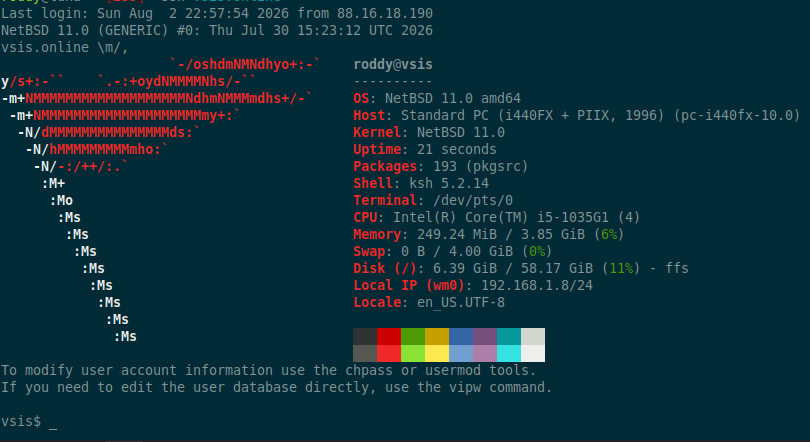
My homelab has been upgraded to 11.0 🎉
#NetBSD #NetBSD11 #homelab #selfhosting #RUNBSD
Alt...
A screenshot of a NetBSD 11.0 system.