Search results for tag #macos
![[?]](https://cdn.masto.host/rubysocial/accounts/avatars/109/406/456/999/487/139/original/c2436ca4120bc9a6.jpg)
I dug my Kinect v2 out of a cupboard and got it streaming on my M4 Pro. A successful build hid a missing Metal backend; the CPU pipeline helped me narrow it down. First steps toward Kinect Lab.
https://www.bounga.org/projects/2026/10/27/my-kinect-still-works/
![[?]](https://media.beige.party/accounts/avatars/115/797/678/182/105/227/original/cfb42d53aaf91fa0.png)
I recently tested out a new open source download app called Rayburst on my Mac. Since it was doing everything I needed, expect catching downloads from real debrid plugin, I decided to put a feature request up @ Github.
Within a few days I received a 'completed' notification and there was separate Chrome extension ready for me.
I absolutely love this. And the community spirit, for someone like me who's not a developer ,is absolutely unbeatable. 🧡
If you're interested, it's a very stable and light weight multi downloader with great UI👉🏻https://rayburst.pages.dev/
![[?]](https://mastodon.sdf.org/system/accounts/avatars/114/205/366/579/623/449/original/2eeba344bc5e17ba.png)
New #tigersrc packages for PowerPC Mac OS X 10.4! Updated PostgreSQL, ImageMagick, Apache, nginx, Python 3.10, cURL, sqlite3, and mozilla-rootcerts (no more number 4!)
I'm rebuilding #tigersrc packages for the fun security bugs of the past week, but "unfortunately" I have to drop PHP since it no longer compiles on such an old OS.
https://netbsd.org/~nia/tigersrc/ will be updated soon(tm).
![[?]](https://files.mastodon.social/accounts/avatars/000/033/231/original/06101f6861148350.jpg)
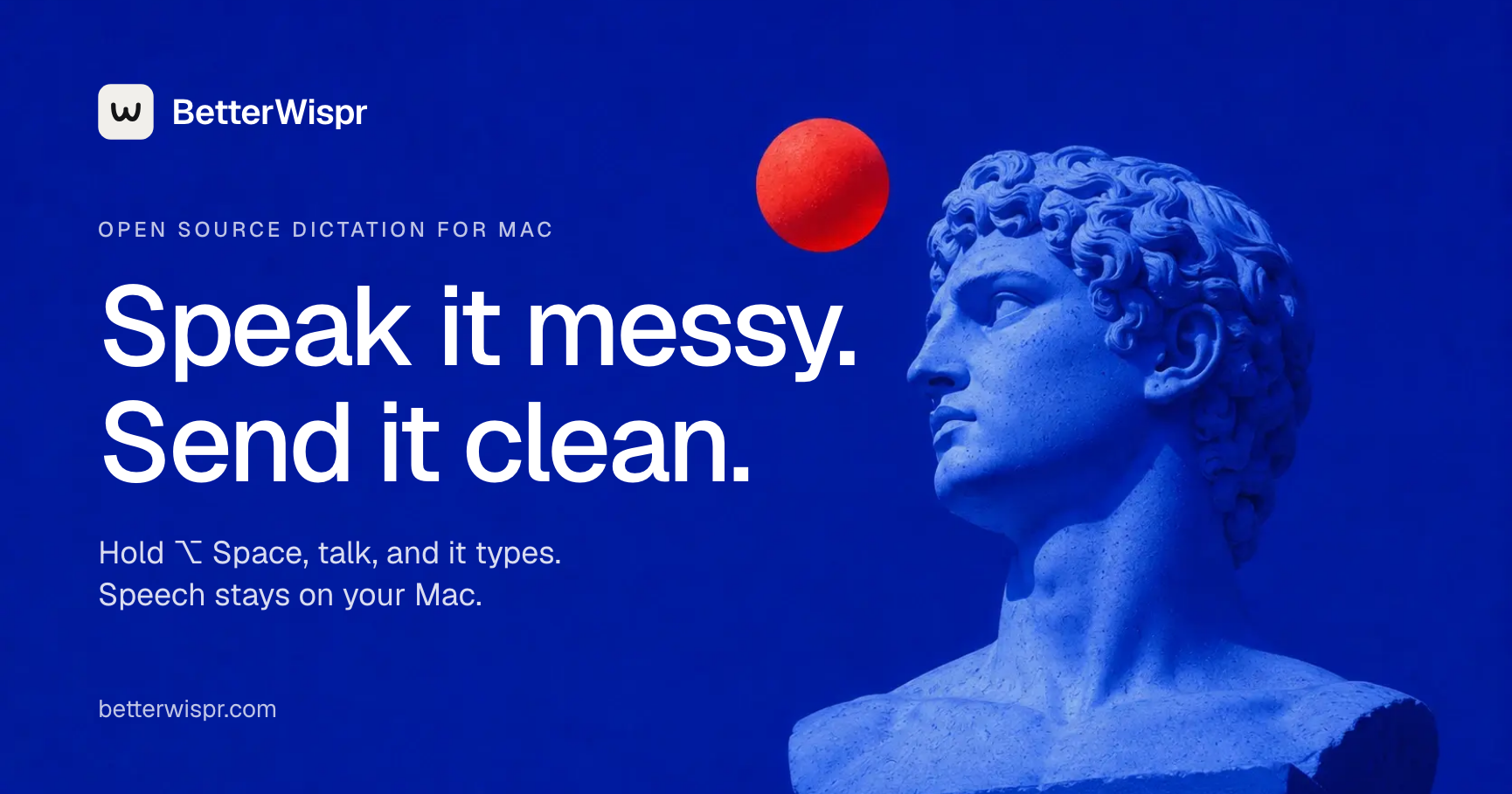
BetterWispr : une app de dictée pour Mac qui transforme votre voix en texte propre dans n'importe quelle application. Maintenez ⌥ Espace, parlez, relâchez.
Modèles en local (Parakeet, Whisper, Apple speech), sans compte ni cloud. Gratuit et open source ⬇️
https://betterwispr.com/
📬 Ma veille dev, chaque vendredi par email → https://l.camilleroux.com/sig-Xtd
Alt...
Présentation de BetterWispr, une application de dictation open source pour Mac, affichant une sculpture classique bleue sur fond bleu avec le texte "Speak it messy. Send it clean." et la description de son fonctionnement : maintenir une touche, parler, et le texte s'inscrit automatiquement.
Arc s'arrête le 22 décembre 2026 sur macOS et Windows. Les comptes seront désactivés, puis les données supprimées sous 30 jours.
Les nouveaux comptes sont fermés dès le 22 octobre. Vous migrez sur quoi ? ⬇️
https://arc.net/
📬 Ma veille dev, chaque vendredi par email → https://l.camilleroux.com/sig-bKR
Alt...
L'image montre le logo coloré d'Arc (composé de formes géométriques en bleu, rose et rouge) avec le texte "A farewell to Arc" en blanc sur fond noir, annonçant l'arrêt du service prévu pour le 22 décembre 2026.
![[?]](https://cdn.masto.host/graphicssocial/accounts/avatars/110/854/990/838/032/375/original/9cfb5f3bbd877b4f.png)
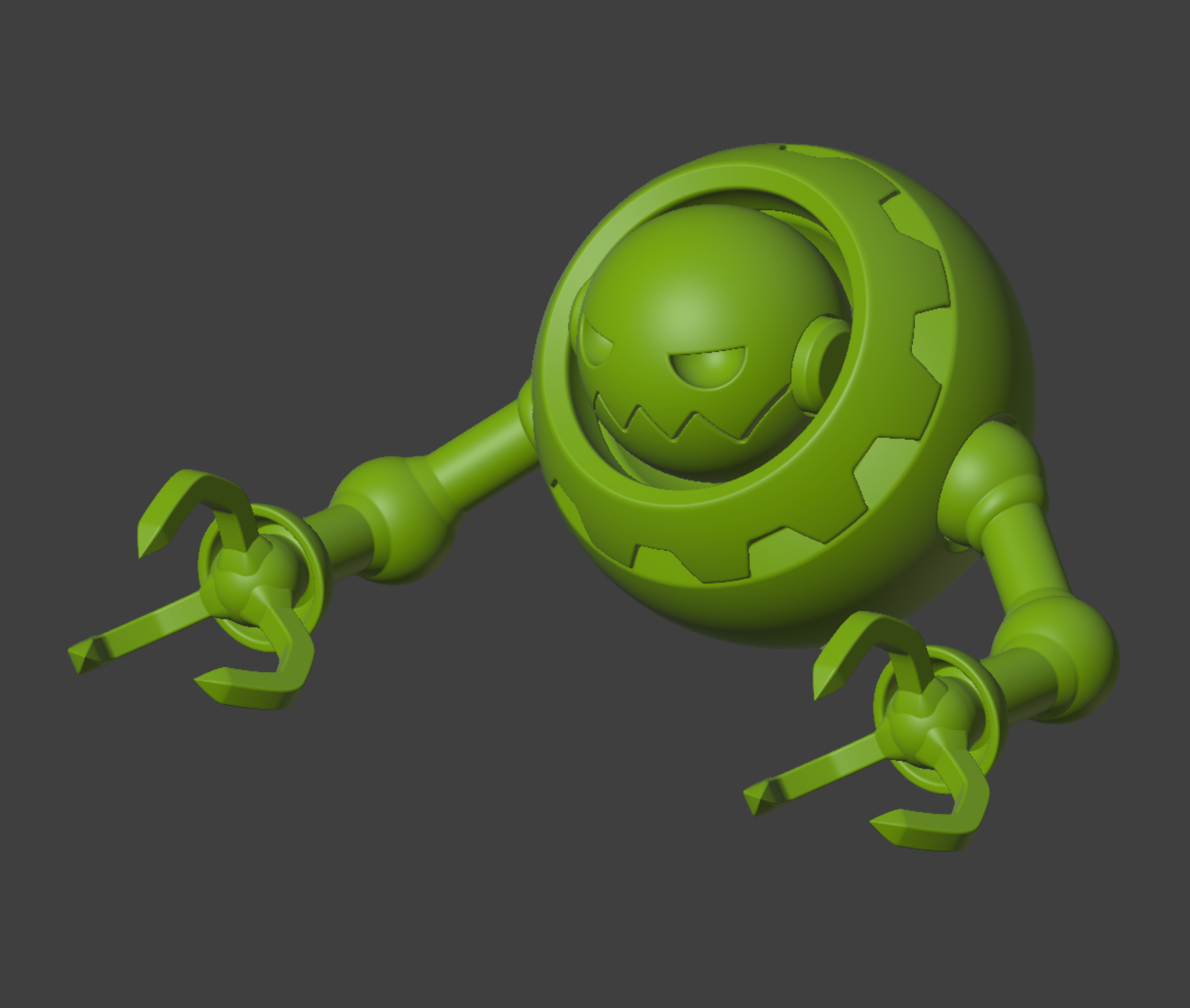
WIP of a Halloween drone bot I'm modeling while beta-testing the SDF toolset in an upcoming big update of the Speedsculpt Blender add-on.
#SDF #3D #3DModeling #sculpture #3DRendering #CGI #graphics #editor #app #apps #tools #software #tech #technology #Mac #macOS #linux #windows #Blender #Blender3D #B3D #CharacterDesign #design #artwork #3DArt #illustration #art #artist #arts #arte #NoAI #3D #DigitalArt #OriginalArt #ArtLovers #MastoArt #FediArt #MastodonArt #CreativeToots #ArtistsOnMastodon
Alt...
Work in progress impression of a Halloween-themed drone robot 3D model.
![[?]](https://social-cdn.vivaldi.net/system/accounts/avatars/109/285/647/274/948/175/original/e525f028371d329d.jpeg)
For a long time we have made our selves gradually more and more dependent on Big Tech. This applies when it comes to operating system, to browsers, to various services, to storage and now when it comes to AI.
More and more are realizing this was and is wrong.
You can take the first steps to be independent as a person or company. Obviously, given that you are here, you have already taken some steps. Here are some suggestions:
1. Switch browser... to Vivaldi. :)
2. Switch desktop OS. Personally I have switched to Linux. Currently running Kubuntu, Ubuntu and Zorin on different computers.
3. Switch mail service. Proton and Fastmail are good services, but there are others. Choose one that allows use of a mail client.
4. Switch calendar service. Most mail services also offer a calendar service.
5. Switch office package. Personally I use LibreOffice.
6. Switch Web conferencing software. Personally I use Whereby.
7. Switch search. Startpage, Ecosia, Qwant and DDG are great alternatives.
There are a lot of other great choices. The point is to start taking those steps away from Big Tech and Silicon Valley.
#Windows #Linux #Apple #MacOS #BigTech #Politics #Technology #Vivaldi
![[?]](https://files.mastodon.social/accounts/avatars/108/196/830/335/980/023/original/6d8d5ae7e48f7419.png)
Announcing WindowShade Redux 1.0*!
WindowShade Redux brings back the beloved WindowShading and Minimize-In-Place window management actions to a modern macOS! Make sure to check out the Feature Showcase video that shows the over 20 animations available.
https://paradisefacade.com/blog/2026/10/23/announcing-windowshade-redux-10
![[?]](https://cdn.masto.host/appdotnet/accounts/avatars/000/000/079/original/2ceb9d395f4b8110.jpeg)
So I have gigs and gigs of node_modules and python deps all over the place. I’m very certain that half of them are duplicates. So I made `node-mash`: https://github.com/brandonscript/node-mash
it uses APFS clones to deduplicate all these dependencies. you can run it once or as a service. so far I've saved myself almost 5 GB.
![[?]](https://media.mstdn.social/accounts/avatars/109/287/431/436/273/223/original/550d8d6162cf1a22.png)
Examining the macOS gcc binary
If you’ve ever written C (or c++) on a mac, you’ll know that the so-called gcc is just clang in disguise. Most people (fairly) assume that this is just an alias, but this is not true! It’s a binary! Now, what is this binary? I naively assumed that it would just be shelling out to clang but it turns out the answer is more interesting than that.
↫ juliethefoxcoon
It's all smo
https://www.osnews.com/story/146215/examining-the-macos-gcc-binary/
![[?]](https://files.mastodon.social/accounts/avatars/000/298/811/original/e1d75561ec39ffc4.png)
"Are there workarounds for macOS curl, git, and Python?
macOS blocks the compromised intermediates, but the built-in curl, git, python3, perl, ruby, and openssl verify certificates against /etc/ssl/cert.pem without checking revocation, and that file has not been updated. To remove the affected roots from it, run:"
See https://emudhra.we-have-a-problem.com/ for fix and also pip update for python
#InfoSec #CLI #python #curl #git #perl #ruby #OpenSSL #pip #MacOS
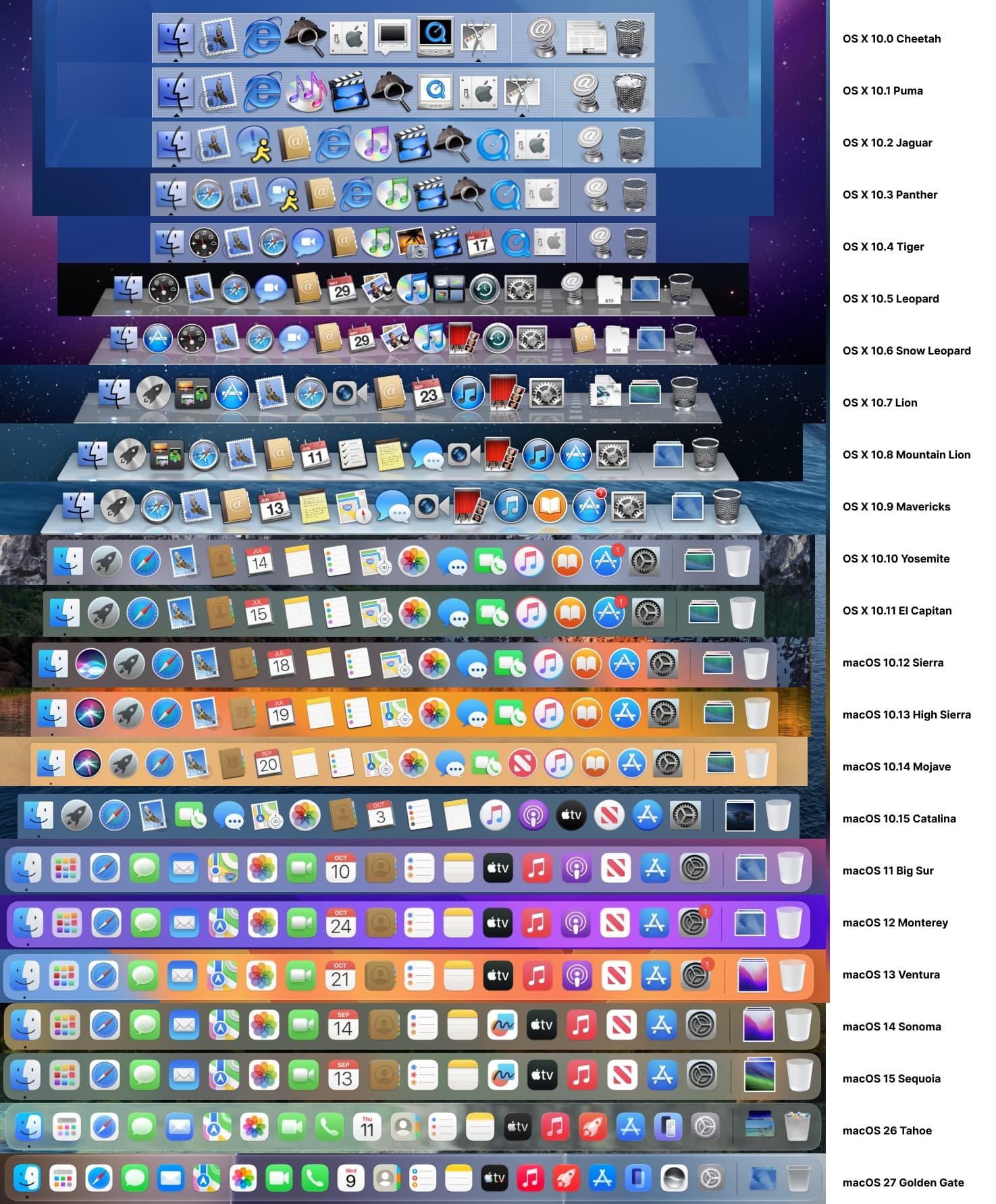
The Dock de macOS, de Mac OS X à macOS 27, réuni dans une seule image.
Elle compile toutes les versions du Dock au fil des années, à partir d'une bibliothèque de captures d'écran Aqua. ⬇️
https://blog.jim-nielsen.com/2026/macos-dock-icons-over-time/
📬 Ma veille dev, chaque vendredi par email → https://l.camilleroux.com/sig-T1L
Alt...
Comparaison visuelle de l'évolution du Dock macOS à travers les années, montrant les changements progressifs de design, de disposition et d'icônes d'applications depuis OS X 10.0 Cheetah jusqu'à macOS 27 Golden Gate, illustrant l'histoire du design des interfaces Apple sur plus de deux décennies.
Apple stops pretending macOS is UNIX
Early 2025, I wrote about how I think macOS' UNIX certification was basically a lie. It required so many convoluted and cumbersome changes to macOS that literally nobody applies to their system that it the certification had kind of become a farce. At the end of the article I wondered for how much longer Apple would be playing this little charade to hammer macOS thr
https://www.osnews.com/story/146203/apple-stops-pretending-macos-is-unix/
![[?]](https://media.tacobelllabs.net/accounts/avatars/111/076/512/255/444/350/original/8e3c8ac1ca09fd7a.png)
xtool : un remplaçant d'Xcode qui vous permet de builder, signer et installer vos apps iOS depuis Linux, Windows (via WSL) ou macOS, avec SwiftPM.
L'outil s'utilise en ligne de commande, par exemple depuis VSCode. Il donne aussi accès aux Apple Developer Services ⬇️
https://github.com/xtool-org/xtool
#Linux #macOS #iOS #Programming #WebDev
📬 Ma veille dev, chaque vendredi par email → https://l.camilleroux.com/sig-Kcf
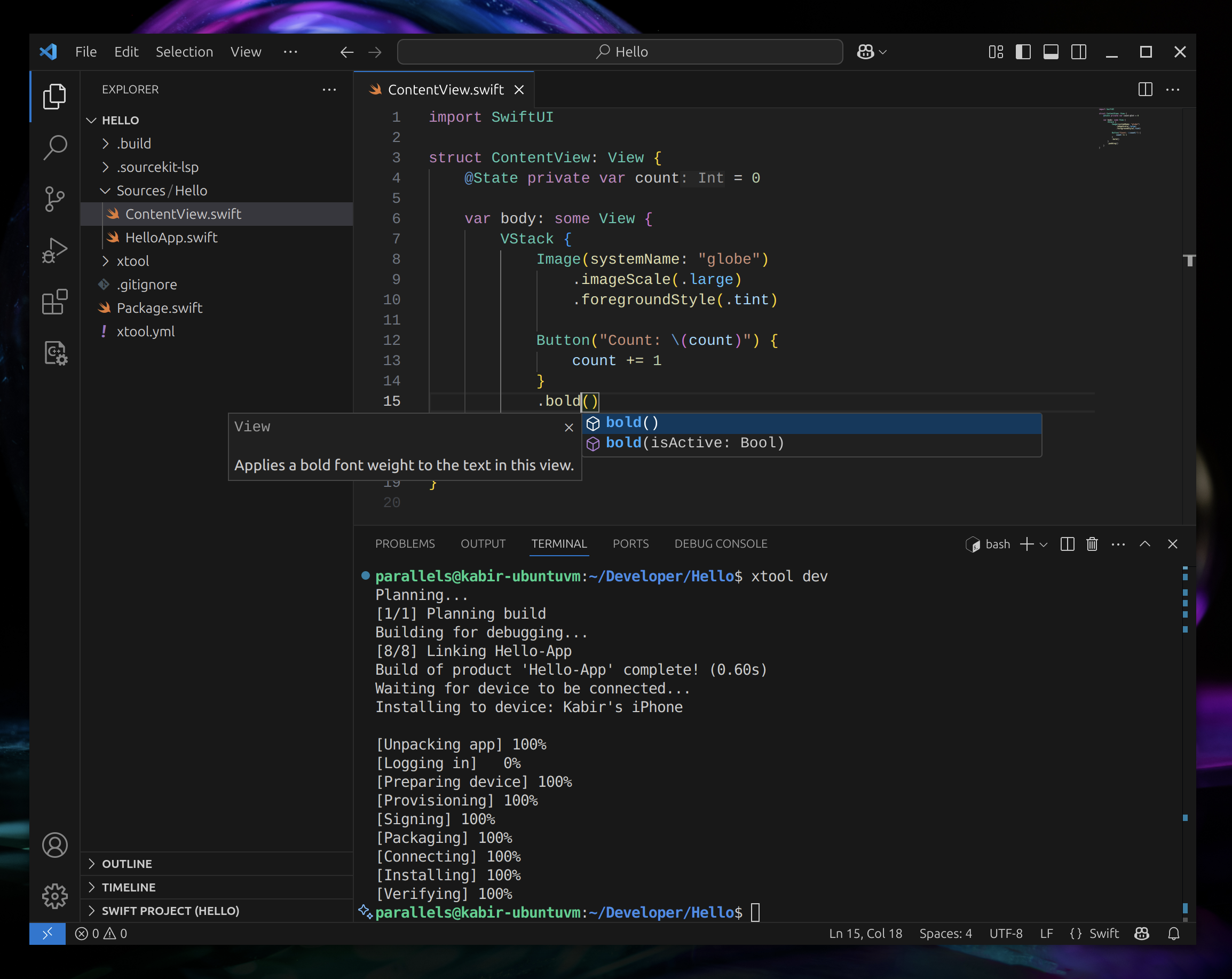
Alt...
L'écran montre VS Code avec un projet Swift en cours de développement, affichant le fichier ContentView.swift avec du code SwiftUI. En bas, le terminal terminal affiche la progression de la compilation et du déploiement d'une application iOS sur un appareil via xtool, alternative cross-platform à Xcode.
Apple adds mystery folder to your PATH and everyone is apparently just okay with that
Apparently, macOS 27 comes with a small mystery people are trying to figure out.
Recently, while troubleshooting a PATH issue, I noticed an entry for /pkg/env/global/bin. At first, I worried that something had gone horribly wrong. Turns out, this is part of macOS 2
zerobrew : une alternative à Homebrew qui accélère l'installation de vos packages sur macOS et Linux. Même Brewfile, commandes proches (zb install, zb bundle, zb upgrade).
Sur 100 packages, le benchmark donne 6,6x plus vite à froid et 68x avec le cache. ⬇️
https://github.com/zerobrewhq/zerobrew
#Linux #macOS #Programming #WebDev
📬 Ma veille dev, chaque vendredi par email → https://l.camilleroux.com/sig-wFE

Alt...
Une créature orange avec des pics hérissés et deux yeux expressifs émerge d'un tas de sable jaune sur fond beige clair.
Un piano entier simulé en C++17, sans un seul sample.
coopiano modélise le marteau, la corde, la table d'harmonie et les résonances sympathiques.
Il rend vos notes ou fichiers MIDI en WAV, sans bibliothèque tierce, et se joue en live sur macOS. ⬇️
https://github.com/peterc/coopiano
#macOS #CreativeCoding #Design
📬 Ma veille dev, chaque vendredi par email → https://l.camilleroux.com/sig-9hq
![[?]](https://federate.me.uk/system/accounts/avatars/109/309/886/224/077/101/original/5413a04479190d6c.jpg)
If you are using my macOS packages available from https://pkgsrc.smartos.org/install-on-macos/ then note that due to newer compiler and SDK requirements, the 14.5 package set will no longer be updated, and there is a newer 15.5 SDK target now available.
Upgrade instructions are available here: https://mail-index.netbsd.org/pkgsrc-users/2026/10/15/msg043607.html
![[?]](https://gyptazy.com/fedi/gyptazy/s/avatar-1aa83a84ee47c864bc90216a89d0efcf.png)
So I crafted "a Keyboard Switcher" which is an open-source macOS menu bar application that makes it easier to switch paired Bluetooth input devices between Macs. Instead of manually reconnecting everything, you can simply release devices on one Mac and connect them on the other with just a few clicks.
Some of the features include:
- Connect or release individual Bluetooth devices
- Group multiple devices, such as a Magic Keyboard and Magic Mouse, and switch them together
- Use global hotkeys to switch device groups without opening the menu
- Get an overview of paired and connected devices directly from the macOS menu bar
Blog: https://gyptazy.com/blog/akeyboardswitcher-quickly-switch-apple-keyboard-mouse-trackpad-between-multiple-macs/
Download: https://cdn.gyptazy.com/macos/akeyboardswitcher/
Source (Github): https://github.com/gyptazy/akeyboardswitcher
Source (gyptazy): https://git.gyptazy.com/gyptazy/akeyboardswitcher
#opensource #Mac #macOS #bluetooth #akeyboardswitcher #foss #swift #swiftui


![[?]](https://media.bsd.network/accounts/avatars/000/001/413/original/d113a02fb84e4f5a.jpg)

Sad news for #macOS #OpenSSH users.. 
sshd(8): On OS X SDK >= 27, sandboxing is no longer supported as the API we depended upon has been removed and no obvious alternative provided.
https://github.com/openssh/openssh-portable/commit/d4b4c304a202f5099f2f60be9af9ba266212bb74
Apple changes Full Disk Access permission in macOS
Apple's macOS has a Full Disk Access permission, designed to allow backup applications full access to, well, the disk, so they can perform their job properly. Apple posted a notice on its website that it's going to further restrict this permission, because some applications were abusing this permission to gain access to users' messages,
https://www.osnews.com/story/146071/apple-changes-full-disk-access-permission-in-macos/
Bit disappointing.
Upgraded pkgsrc macOS build host from 14.x to 27.0.1, and MacFUSE to latest.
First run is showing consistently slower builds.
bindfs CPU usage seems higher, but I don't have accurate numbers on that. Also there is still the 2 minute delay to unmount /System.
Maybe next year?
The Mac Studio M5 Ultra can't give a proper Logic Pro X graph, because software wise Logic Pro is limited by 1000 concurrent tracks. 😱😂
What a beast of a machine and at 6200 EU for the base model this dream machine will stay a dream.
#xp #Macstudio #M5Ultra #MacOS #Apple #AppleSilicon
Alt...
M5 Ultra SOC Logo
“macOS Golden Gate is a buggy mess”
In June 2008 Apple announced Mac OS X Snow Leopard, proudly boasting that it would have "no new features". Instead of piling on new things, Snow Leopard aimed to build on the success of its predecessor, Leopard, opting to focus on under-the-hood performance and stability improvements throughout the system.
18 years later, Apple is taking a similar approach with
https://www.osnews.com/story/146050/macos-golden-gate-is-a-buggy-mess/
![[?]](https://cdn.masto.host/twitsocial/accounts/avatars/109/306/234/943/667/459/original/6576cb6077c2eca0.png)
Search : un navigateur Mac de 3 Mo qui tourne sur le moteur WebKit déjà présent dans macOS. Fenêtre ouverte en 320 ms, contre 526 ms pour Chrome et 730 ms pour Safari. Bloqueur de pubs intégré, extensions Chrome supportées, open source sur GitHub. ⬇️
https://officecommun.com/search
📬 Ma veille dev, chaque vendredi par email → https://l.camilleroux.com/sig-6vq
iPhone 18 Pro : score DXOMARK de 172 sur la caméra, en hausse grâce à l'aperture variable qui étend la profondeur de champ sur les portraits de groupe. Zoom longue portée en retrait, dominantes de couleur persistantes sur la balance des blancs. ⬇️
https://www.dxomark.com/apple-iphone-18-pro-camera-test/
📬 Ma veille dev, chaque vendredi par email → https://l.camilleroux.com/sig-Y8E
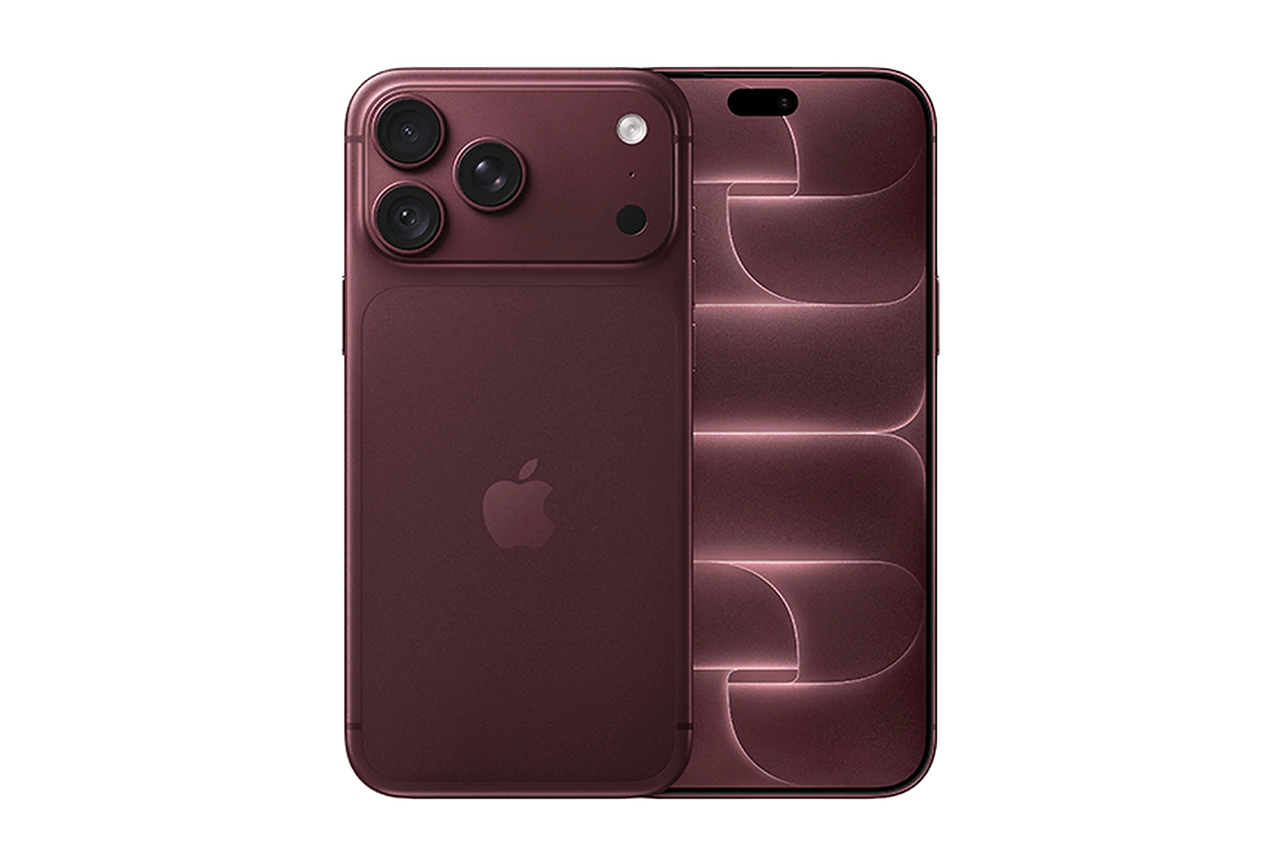
Alt...
Deux iPhone 18 Pro en couleur bordeaux présentés de face et de dos, mettant en avant le système de triple caméra circulaire et l'écran avec encoche, sur fond noir.
 boosted
![[?]](https://media.mstdn.social/accounts/avatars/109/521/442/245/107/734/original/9303ae5bd9aebaa5.jpeg)
Advanced Programming in the #UNIX Environment
Week 2: File Sharing
In this final video lecture segment for our week 2 materials, we take a look at what it means when multiple processes access the same files and what the implications of that are on the syscalls we know. We conclude with a look at /dev/fd on different operating systems, including #NetBSD, #macOS, and #Linux.
Apple Configurator : transformer son iPhone en dumbphone en désactivant l'App Store via un profil de configuration. Icône disparue, plus d'installation ni de mise à jour possible. Le profil ne se retire qu'en effaçant tout le contenu du téléphone. ⬇️
https://korben.info/apple-configurator-iphone-dumbphone-temps-ecran.html
📬 Ma veille dev, chaque vendredi par email → https://l.camilleroux.com/sig-ocb
Alt...
Affiche rétro de style vintage présentant un smartphone bleu et rouge avec un écran affichant une grille de carrés colorés, surmonté du texte "FERME" en lettres blanches sur un bandeau rouge traversant l'image.
macOS 27 Golden Gate abandonne définitivement les Mac Intel : il faut au minimum une puce M1. Apple Intelligence devient impossible à désactiver, avec des modèles téléchargés de force sur le disque. Les modèles les plus avancés exigent une puce M3 et 12 Go de RAM. ⬇️
https://arstechnica.com/gadgets/2026/09/macos-27-golden-gate-the-ars-technica-review/
📬 Ma veille dev, chaque vendredi par email → https://l.camilleroux.com/sig-aaQ
Alt...
Le Golden Gate Bridge de San Francisco se dresse majestueusement au coucher du soleil, ses arches rouge-orange illuminées par la lumière dorée, tandis que des rochers parsèment la plage rocheuse au premier plan.
There are clearly many reasons why people are switching to Vivaldi. Interestingly, my little survey shows that the top reasons have more to do with our values than particular features.
The #1 reason (77%) is the fact that we do not have built in AI. #2 is that we do not build profiles on our users (67%). #3 is that we are made in Europe. #4 and #5 is that we do not build in Crypto currencies and the built in ad and tracker blocker.
We will continue to listen to our users. We have chosen a different path to our competitors and we continue to try to do the right thing.
Thank you for your support!
#Vivaldi #Browser #Windows #Macos #Linux #Android #iOS #Technology #EU #Politics #Europa #AI

Alt...
Image shows survey results about things important to our userbase, also referred in the text.
I'm happy to report that MacOS 27 Golden Gate seems to run stable 24/7 on my Mac Mini M4 server. However there's not a lot installed on there.
I have decided not to upgrade my production machine YET. There's limited information available about audio plugin compatibility. Moreover Ableton Live doesn't seem to be officially supported yet.
Adobe Lightroom Classic/CS seem to have contrasting user experiences.
#xp #MacOS #GoldenGate #Apple #Macbook
Alt...
MacOS Golden Gate logo
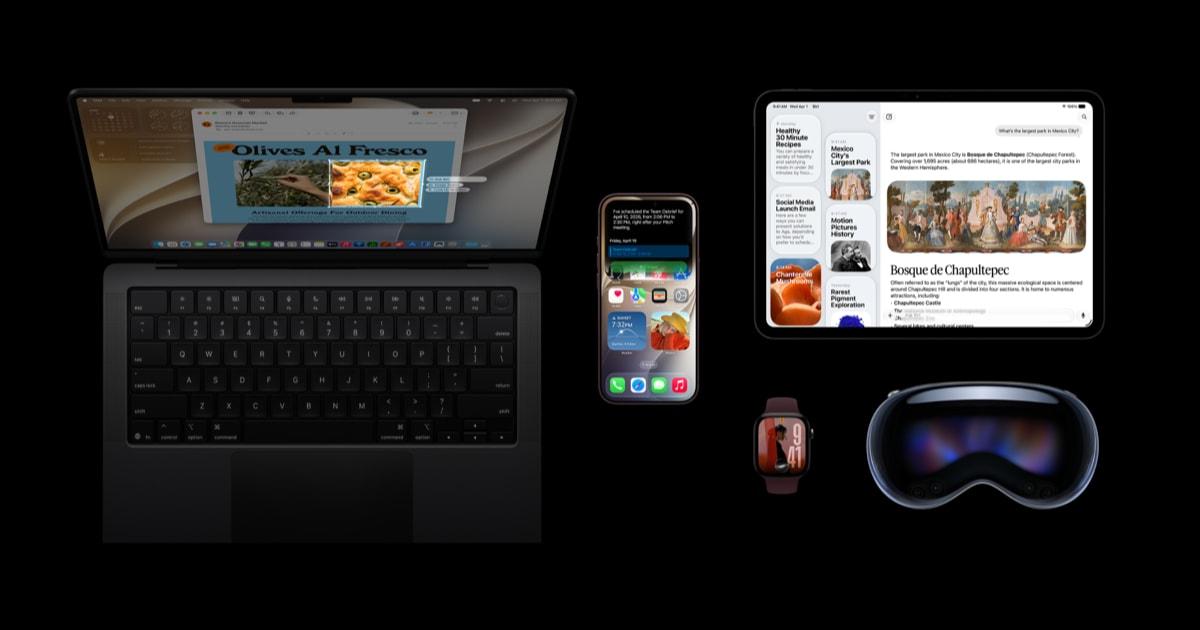
Siri AI arrive avec iOS 27, iPadOS 27 et macOS 27 : compréhension du contexte personnel, prise en compte de l'écran, actions système poussées. Historique synchronisé via iCloud sur tous les appareils Apple. Beta en anglais, français prévu en octobre. ⬇️
https://www.apple.com/newsroom/2026/09/major-updates-for-apples-software-platforms-are-now-available/
📬 Ma veille dev, chaque vendredi par email → https://l.camilleroux.com/sig-YcT
Alt...
Affichage des appareils Apple avec les nouvelles mises à jour logicielles : un MacBook Pro affichant une présentation sur les olives, un iPhone avec des applications variées, un iPad montrant un article sur le Bosque de Chapultepec, une Apple Watch rouge et une Apple Vision Pro, tous illustrant les fonctionnalités d'Apple Intelligence.